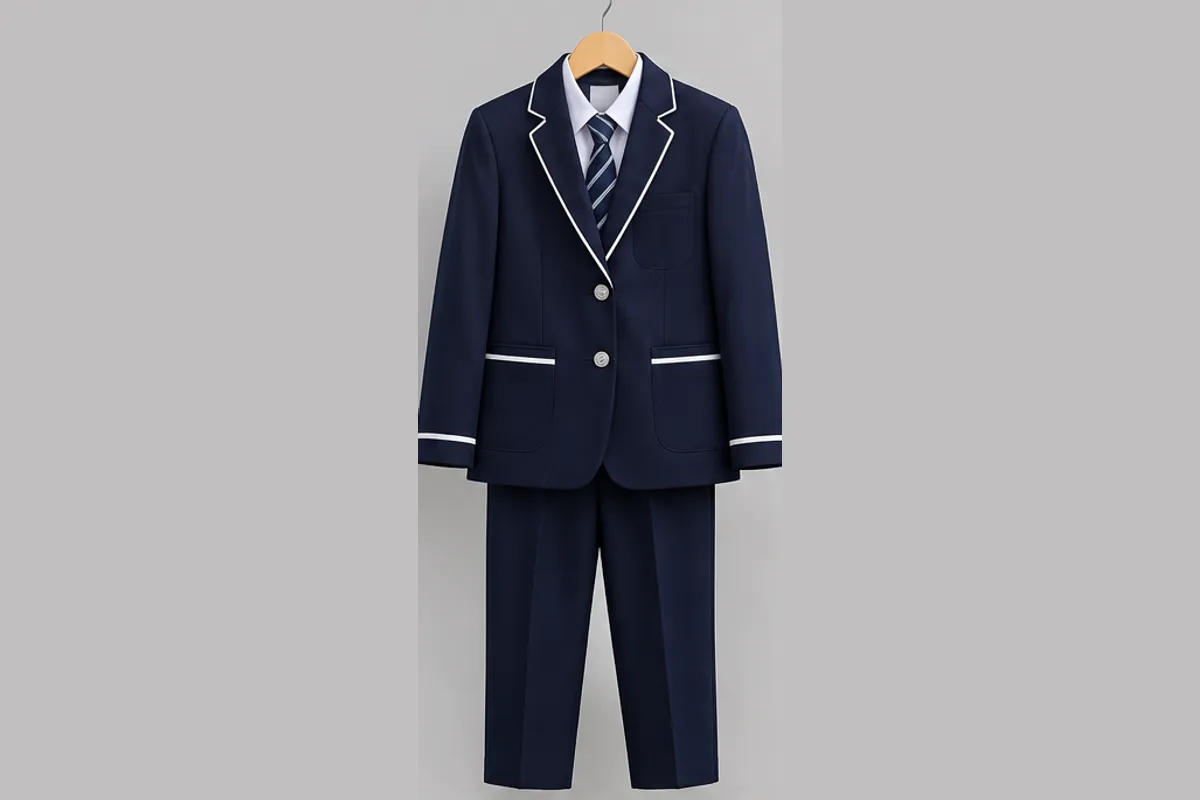
A school blazer inside pocket is a pocket set into the lining or front facing, on the inside of the chest. Most school blazers have one or two, and the main choices are which side they sit on, how deep they are and whether they close with a button, a flap or a zip. Inside pockets are where students keep bus passes, phones and pens, so they take real wear and are worth specifying carefully.
Unlike the outer pockets, nobody sees the inside pockets in a photograph. They matter for a different reason: a torn or sagging inside pocket is one of the commonest reasons families bring a blazer back to the shop.
How many inside pockets should a school blazer have?
| Number | Typical layout | Suits |
|---|---|---|
| None | Lining only | Very young students; simplest blazers |
| One | Left inside chest | Junior and primary blazers |
| Two | Left and right inside chest | Senior blazers; students carrying phones and passes |
| Two plus a pen pocket | Chest pockets with a narrow pen slot beside one | Senior years, exam seasons |
For a blazer used from age five to sixteen, many schools give younger sizes one inside pocket and older sizes two. Since each size chart can carry its own details, this can be written into a single style. Ask us to show both variants if you want to see them before deciding.
Which closures work for inside pockets?
Open welt. A plain slot in the lining. Quick to use, but items can fall out when the blazer is hung up.
Button and loop. A small button with a fabric loop or buttonhole. Secure and traditional; the button needs to be flat so it does not press through.
Flap. A small flap over the opening. Keeps items in, with no hardware.
Zip. The most secure for phones and passes. It adds a little stiffness, so the zip should be light and sit flat.
The choice depends on what students will carry. If the school allows phones but expects them out of sight, a zip or button closure is sensible.
Depth and position details
The pocket bag, the hidden fabric that forms the pocket, should be deep enough for what students carry, and made from a firm material. Points to agree on the sample:
- pocket depth, judged against a phone or a pass in a holder
- position, high enough that items do not knock against the lower pockets
- reinforcement at the corners of the opening, where tears begin
- whether a name tape or label sits inside one of the pockets
On a half-lined blazer, inside pockets are still possible; they are set into the front facing, which extends far enough to carry them. Blazers are lined or half-lined, as specified, and the pocket layout is shown on the sample in either case.
Inside pockets and safeguarding of belongings
Schools sometimes ask whether an inside pocket helps keep phones secure. A closed inside pocket does reduce lost items and makes phones less visible, though no pocket replaces a school’s own rules on devices. If the school has a policy, design the pocket around it: for example, a zip pocket if phones must be kept away during the day.
Checklist to include with your specification:
- number of inside pockets for each size range
- closure type
- pen pocket, yes or no
- depth, described by what it must hold
- name label position, if any
Schools writing a full specification can read more on our page for schools and school groups. Send your pocket details with the rest of the blazer specification and your size list; we quote each style on our school blazers range by fabric, quantity and branding.
Questions buyers ask
Can inside pockets be added to a blazer we already order?
Yes, at the next order. The change is made to the pattern and shown on a new sample before bulk. Blazers already in stock stay as they are, so expect both versions in school for a while.
Will a phone in the inside pocket pull the blazer out of shape?
A heavy phone can drag the front over time, especially on lighter cloths. A firm pocket bag and an interfaced front help the blazer keep its line. Placing the pocket high on the chest also spreads the weight better.
Is a zip inside pocket uncomfortable for young children?
It can feel stiff on small sizes. Many schools use a button or flap closure on junior blazers and keep zips for senior sizes, where students carry phones and passes more often.