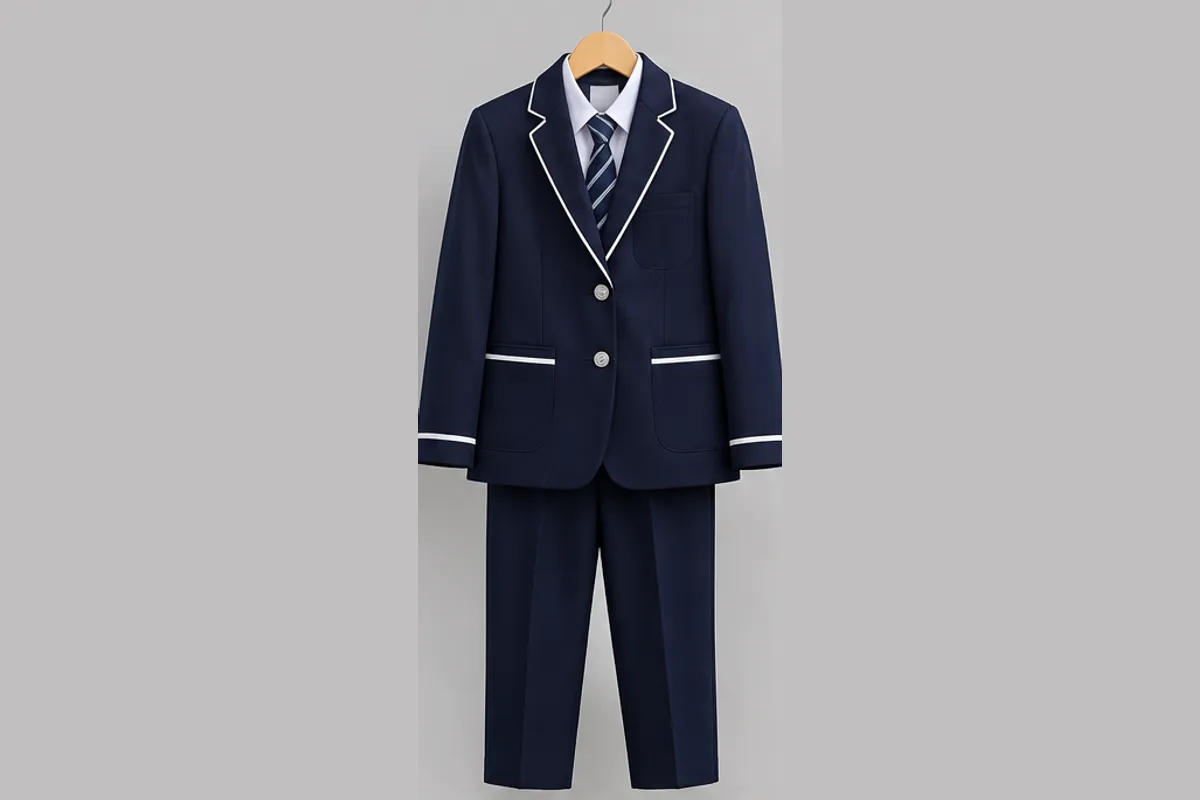
Blazer interfacing is a layer of support fabric placed inside parts of the blazer to give them body and shape: mainly the fronts, the collar, the lapels, the pocket openings and the hems. Without it, a blazer would hang limp like a shirt. Most school blazers use fusible interfacing, bonded to the cloth with heat, in the areas that need it, though sewn interfacing is also used in places.
Interfacing is invisible from the outside, but it decides whether a blazer keeps a crisp front after a year of wear or goes soft and wrinkled. It is also behind one of the most common blazer complaints: bubbling on the front after washing.
Where does interfacing go in a blazer?
| Area | What the interfacing does |
|---|---|
| Fronts | Gives the chest a smooth, firm shape and supports the buttons |
| Lapels and collar | Helps them roll cleanly and lie flat |
| Pocket openings | Stops the opening stretching and keeps the badge pocket flat |
| Hem and sleeve ends | Gives a clean, weighted fold |
| Vent edges | Keeps the vent lying straight |
| Buttonhole area | Supports the stitches so holes do not distort |
The amount and weight vary by area. The chest needs more body than the hem; the collar needs firmness that still allows it to roll.
Fused or sewn interfacing?
Fused (fusible) interfacing has a heat-activated adhesive on one side. It is pressed onto the cloth and bonds to it. It is quick, consistent and suits bulk school blazers.
Sewn-in interfacing is attached with stitching rather than adhesive. It moves more freely with the cloth and is common in traditional tailoring, particularly in chest pieces.
Many blazers combine both: fused across the front, with extra support layers sewn in where shape matters. The construction is set for the pattern and confirmed on the sample.
Why does a blazer front bubble?
Bubbling, sometimes called delamination, shows as small blisters or ripples on the front after washing or cleaning. Typical causes:
- the adhesive was not bonded fully during fusing, so it lifts later
- the interfacing and cloth shrink at different rates
- the blazer is washed or pressed hotter than its care label allows
The first two are construction matters, which is why the interfacing is matched to the cloth, whether polyester or poly-viscose. The third is a care issue that shops can help with by passing on the care advice. Our fabrics and colour matching page explains how cloth choices are agreed.
How can a buyer check interfacing on a sample?
You cannot see interfacing directly, but you can test its effects:
- the front feels smooth and evenly firm, with no stiff patches
- the lapel rolls softly rather than folding flat like cardboard
- the badge pocket stays flat when a pen is put in
- buttonholes do not distort when the blazer is fastened
- after a gentle press, the front shows no ripples
- if you care-test the sample as directed on its label, the front stays smooth
If you have had bubbling problems with a previous supplier, send an affected blazer with your enquiry. It shows exactly what to avoid.
Interfacing and weight
Heavier interfacing makes a firmer blazer but adds weight and warmth. For warm climates, or for younger students, a lighter construction with interfacing only where needed keeps the blazer comfortable. For a formal senior blazer, more structure in the chest looks sharper. Both can be specified, and comparing samples is the surest way to judge.
When you are ready to quote, describe the feel you want, firm and structured or soft and light, and send your size list. We quote school blazers by fabric, quantity and branding, with the construction confirmed on the sample.
Questions buyers ask
Can bubbled blazer fronts be repaired?
Sometimes a careful press with steam re-bonds small areas, but widespread bubbling usually cannot be fixed. The blazer will look worn early, so preventing it through suitable construction and correct care is much better.
Does interfacing make blazers hotter to wear?
A little, in the areas it covers. Light interfacing adds very little warmth. In hot climates, ask for a lighter construction and consider a half-lined blazer to reduce weight further.
Is sewn interfacing always better than fused?
Not for school blazers. Sewn interfacing suits traditional tailoring and moves naturally, but well-chosen fused interfacing gives consistent results in bulk. The match between interfacing and cloth matters more than the method.