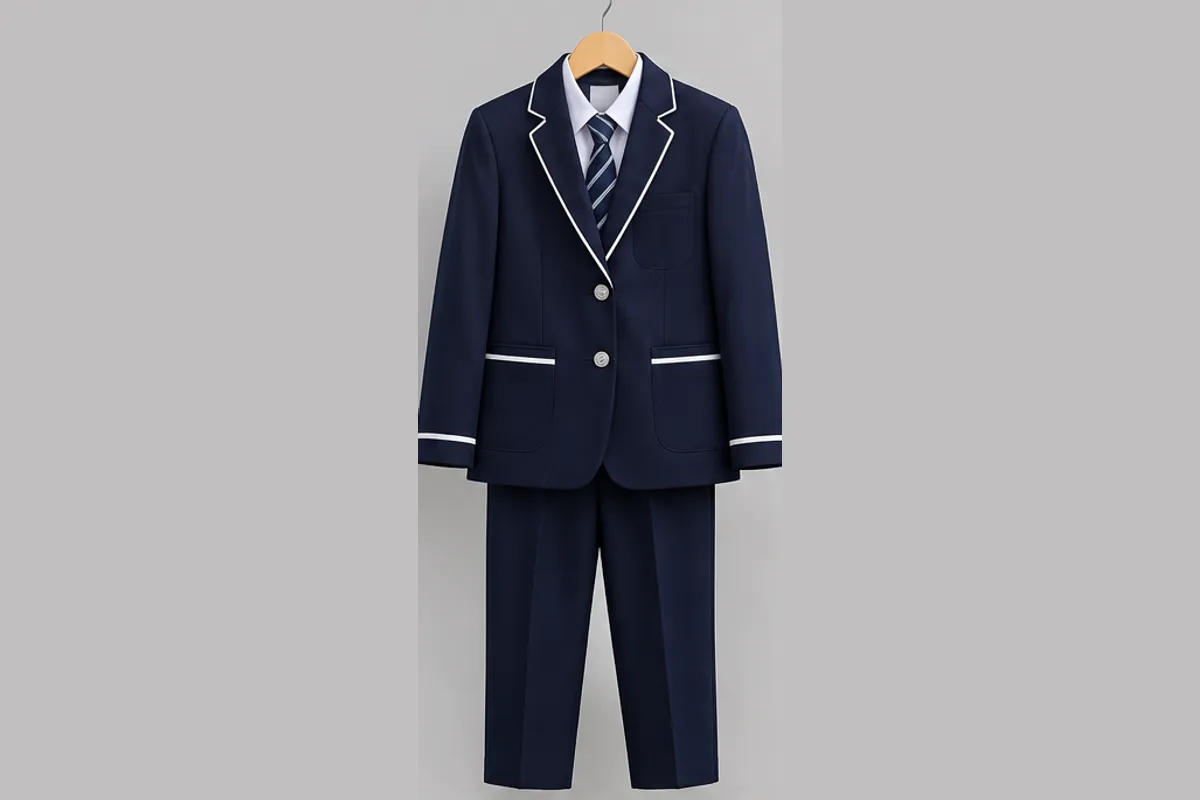
School blazer cloth weight is how heavy the fabric is for a given area, and it affects warmth, drape, how the blazer holds its shape and how it feels to wear all day. Heavier cloth looks substantial and keeps a crisp front; lighter cloth is cooler and more comfortable in warm classrooms. Weight is only part of the story: handle, the way the cloth feels and moves in the hand, matters just as much, and both are easiest to judge on a sample.
Buyers sometimes ask for a number, a fabric weight figure, as a shortcut to quality. A number helps compare two cloths of the same type, but it does not say how a blazer will look after a year. The sample tells you far more.
What does cloth weight change?
| Aspect | Heavier cloth | Lighter cloth |
|---|---|---|
| Warmth | Warmer | Cooler |
| Drape | Hangs straight, holds shape | Softer, moves with the body |
| Creasing | Fewer creases from sitting | Creases more easily |
| Comfort in heat | Can feel heavy | More comfortable |
| Look | Substantial, formal | Lighter, more relaxed |
| Suits | Cool climates, senior years | Warm climates, junior years |
There is no single right weight. A school in a cool climate wearing blazers over jumpers will want something different from a school whose students wear blazers through hot weather.
What is “handle” and why does it matter?
Handle is the feel of the cloth: soft or firm, smooth or dry, springy or limp. Two cloths of similar weight can have very different handles depending on the fibre, the yarn and the finish. On a blazer, handle decides:
- how the lapels roll
- whether the front stays smooth or ripples
- how the blazer feels against the neck and wrists
- whether creases from sitting drop out overnight
Polyester tends to feel firmer and springs back from creases; poly-viscose usually feels softer and drapes more fluidly. Both are used for school blazers, and the choice depends on the look and feel you want.
How to judge cloth on a sample
These hands-on checks need no equipment:
- Scrunch test. Squeeze a corner of the hem in your fist for a few seconds, then release. Note how quickly the creases fall out.
- Drape test. Hold the blazer up by the shoulders and look at how the front hangs. It should fall cleanly, without stiffness.
- Light test. Hold a single layer, such as a pocket flap, up to a window. Very thin cloth lets more light through.
- Surface test. Rub the cloth lightly with a finger. Note whether it feels smooth, dry or slippery.
- Wear test. If time allows, have a member of staff wear the sample for a day and report back.
Compare the sample with a current blazer if you have one. Feeling them side by side is the quickest way to describe what you want: “a little softer than this”, or “firmer, like the old one”.
Weight, lining and climate together
Cloth weight works with lining and interfacing. A medium cloth with full lining can feel as warm as a heavier cloth that is half-lined. For warm regions, a lighter cloth, half lining and light interfacing together make a much cooler blazer. Blazers are lined or half-lined, as specified, so you can adjust the whole package rather than only the cloth. Our fabrics and colour matching page outlines the cloth options and how they are chosen.
Describe your climate, how long students wear the blazer each day, and the feel you want when you enquire. We quote school blazers by fabric, quantity and branding, and the cloth is confirmed on the sample you approve.
Questions buyers ask
Is a heavier blazer cloth always more hard-wearing?
Not necessarily. Wear depends on the fibre, the weave and the finish as much as weight. A well-made lighter cloth can outlast a heavier but loosely woven one. Judge durability on the sample, not by weight alone.
Can we use a lighter cloth for junior sizes only?
It is possible, but it becomes a separate style with its own quantity, and the two cloths may differ slightly in shade and texture. Most schools keep one cloth across all sizes for a consistent look.
Does cloth weight affect how the badge looks?
Slightly. Embroidery sits more firmly on a heavier, denser cloth. On a lighter cloth, interfacing or a backing behind the pocket keeps the badge flat, and this is checked on the sample.