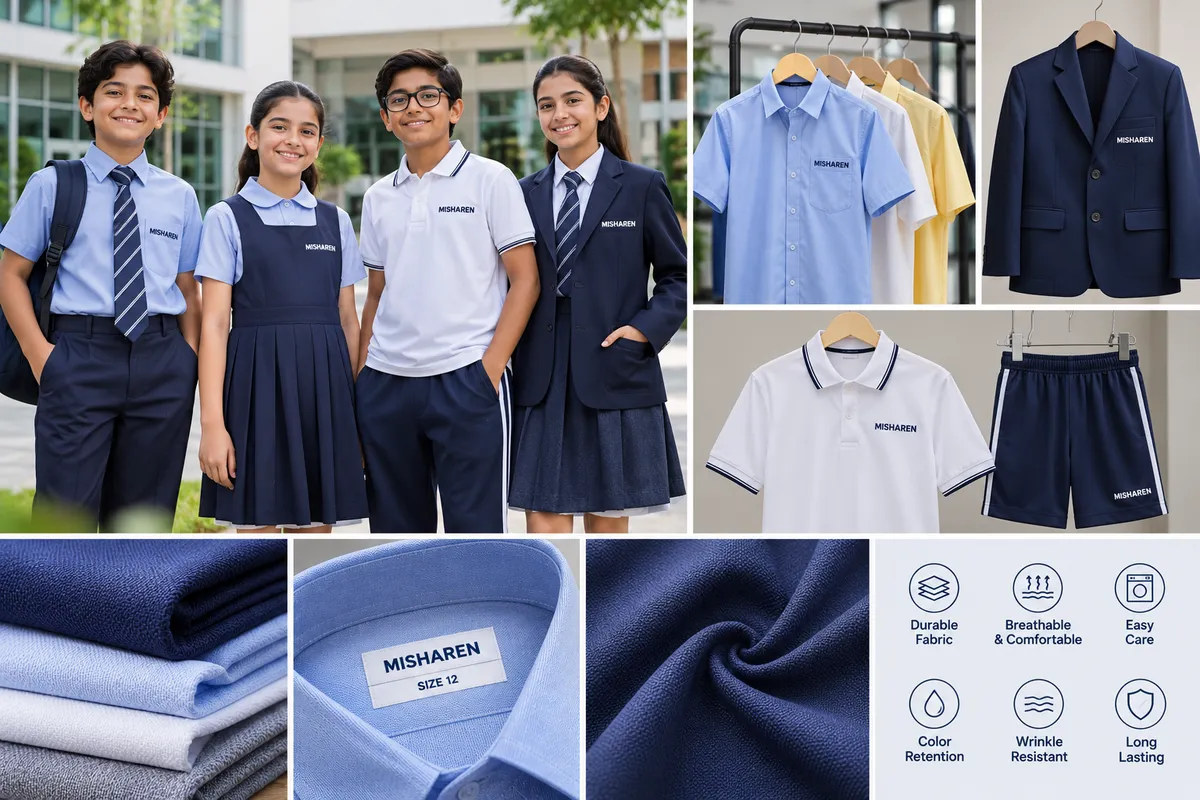
Choosing between single or multiple uniform suppliers comes down to a trade-off: one manufacturer for the whole uniform makes colour matching, paperwork and delivery simpler, while splitting between two, often one for woven garments and one for knitwear and sportswear, spreads risk and lets each garment go to a specialist. For most schools and shops, one maker is simpler unless it cannot make part of the uniform well.
Neither choice is permanent. Many buyers start with one maker and add a second for a single garment, or bring a split uniform together when a supplier stops making something.
One maker or two: how they compare
| Point | One manufacturer | Two manufacturers |
|---|---|---|
| Colour matching across garments | One colour reference, one place matching it | Two makers matching the same reference; needs more checking |
| Logo consistency | One artwork file, set up once | Set up twice; size and colours compared across both |
| Minimum order per style | Unchanged | Unchanged, but each maker’s minimums apply to its own styles |
| Quotations and orders | One to compare, one to place | Two of each |
| Payments | One advance, one balance | Two of each, possibly at different times |
| Shipping | One shipment, one set of documents | Two shipments unless coordinated |
| Delivery risk | One delay affects everything | One delay affects only part of the uniform |
| Specialism | Depends on the maker’s range | Each garment can go to the maker that suits it |
The rows that tend to decide it are colour matching and delivery risk. A uniform where the navy trousers, navy jumper and navy tracksuit must look the same is easier with one maker. A shop that cannot afford a whole range to be late may prefer two.
Common ways buyers split a uniform
When buyers do use two makers, the split usually follows garment type:
Woven and knitted. Shirts, trousers, skirts, pinafores, dresses and blazers with one maker; polos, jumpers, sweatshirts, PE kit and tracksuits with another. This follows the way garment-making itself divides.
Everyday and sports. The day uniform with one maker, PE kit and tracksuits with another, perhaps because house colours or prints are handled differently.
Core and specialist. Most of the uniform with one maker, and one specialist garment, such as blazers, with another.
Each split brings a seam in the uniform where two makers’ garments meet. That seam is where colour and logo differences show, so give it the most attention at the sample stage.
Making two manufacturers work together
If you split the uniform, a few habits stop the two halves drifting apart.
- Send both makers the same physical colour reference for each shared colour
- Send both the same logo artwork file and a garment showing the agreed size and position
- Ask both to sample before production, and compare their samples side by side
- Keep one specification file covering every garment, whoever makes it
- Plan both orders to the same required-in-school date
- Review both makers each year using the same scorecard
Do not ask one maker to match the other maker’s garments. Match both to your own reference. Otherwise any difference compounds each time.
Questions to settle the choice
Answer these honestly and the decision usually becomes clear:
- Can one manufacturer make every garment on the list to the standard you need?
- How visible would a small colour difference between garments be on your uniform?
- How much would a delay to the whole uniform hurt, compared with a delay to half of it?
- Does your team have time to manage two sets of quotations, samples and deliveries?
- Would splitting push any style below a maker’s minimum?
We manufacture in India across woven garments, knitwear and sportswear: shirts, trousers, skirts, pinafores, dresses, blazers, polos, PE kit, sweatshirts, jumpers, tracksuits and nursery uniform. Minimums are 50 pieces per style for woven garments and 100 for knitwear and sportswear, with sizes mixed. Buyers can order the whole uniform from us or only the garments they want, and we sample each style against your reference either way.
Our page for schoolwear suppliers and distributors explains how we handle part or whole ranges. Two garments often split between makers are school trousers and tracksuits and jackets. Send us your full uniform list, mark the garments you want quoted, and we will quote each style.
Questions buyers ask
Is it risky to depend on one uniform manufacturer?
It concentrates risk: a delay or problem affects the whole uniform. Buyers reduce that risk by ordering early, keeping a stock margin of the fastest sizes and holding sealed reference samples, so another maker could match the uniform if ever needed. Many judge that simpler than managing two makers.
Can two manufacturers match the same school colour?
Yes, if both match the same physical reference and you compare their samples side by side before production. Woven and knitted fabrics take dye differently, so a small difference may remain even with care. Approve the closest match that looks right together in daylight.
Should a uniform shop use different manufacturers for different schools?
It can, but each additional maker adds quotations, samples and deliveries to manage. Shops often keep shared core garments with one maker and use another only where a school’s requirements need it. Keep a specification file for every school either way.