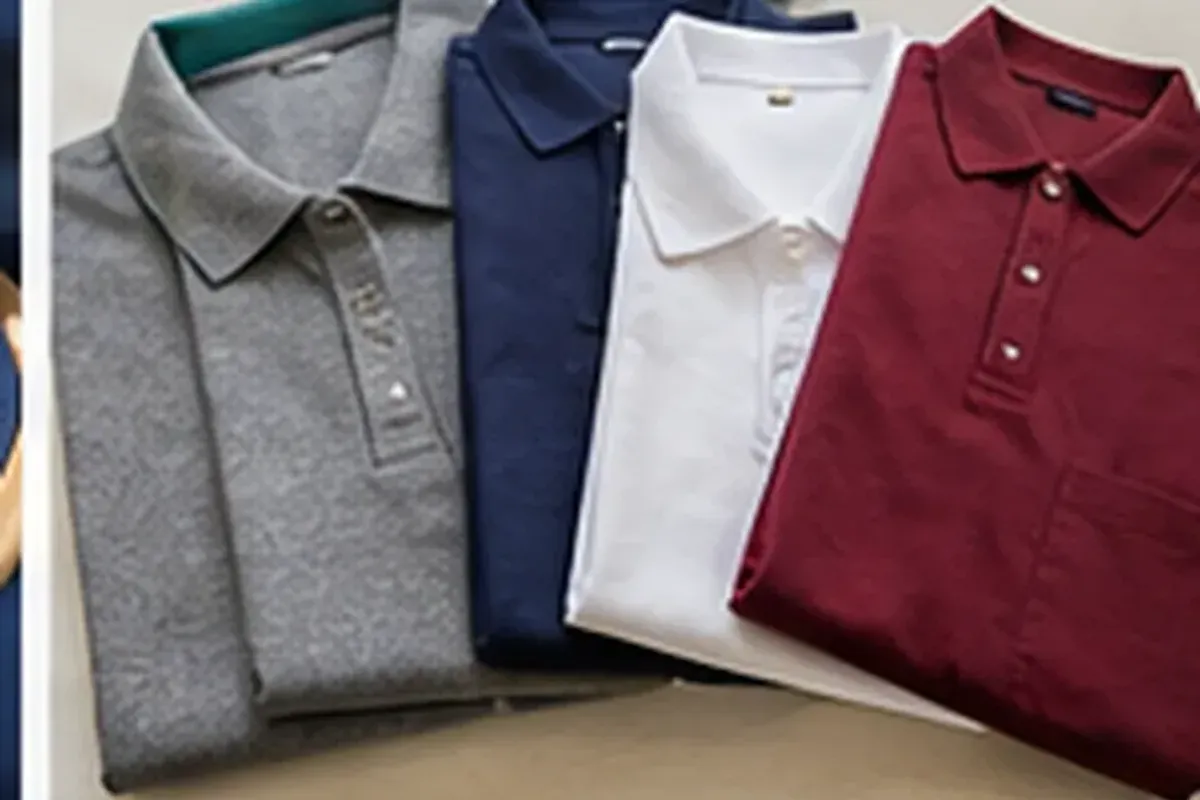
Uniform open to buy is the quantity a shop can still order for a coming period, once expected sales, stock on hand and orders already placed are taken into account. Worked out in units for each garment, it tells you how many shirts, trousers, jumpers or PE tops you can add without ending the period overstocked. It is a planning ceiling: if the figure is zero or negative, you hold off; if it is positive, that is the room for your next order.
How is open to buy calculated?
Open to buy is usually worked out in money by large retailers, but for uniform it is clearer in units, garment by garment.
Open to buy = planned closing stock + planned sales − opening stock − stock already on order
Each part means:
- Planned closing stock: how much you want left at the end of the period, such as a term. This is usually your safety stock for the next period.
- Planned sales: what you expect to sell during the period, from last year’s records adjusted for roll changes.
- Opening stock: what you hold at the start.
- On order: what has been ordered but not yet received.
A worked example across the uniform
Here is one shop’s plan for a single school’s autumn term. The figures are illustrations; use your own.
| Garment | Planned sales | Planned closing stock | Opening stock | On order | Open to buy (units) |
|---|---|---|---|---|---|
| White shirts | 600 | 120 | 180 | 300 | 240 |
| Grey trousers | 300 | 60 | 140 | 120 | 100 |
| Navy jumpers | 250 | 80 | 200 | 0 | 130 |
| Blazers | 90 | 30 | 110 | 0 | 10 |
| PE T-shirts | 200 | 50 | 60 | 100 | 90 |
| Summer dresses | 20 | 60 | 90 | 0 | −10 |
Reading the table:
- Shirts have room for 240 more units. That comfortably exceeds the woven minimum of 50 pieces per style.
- Blazers have room for only 10, below the minimum. Either skip this period or plan the next blazer order to cover two periods.
- Summer dresses are negative. You already hold more than you need, so no order this term.
- Jumpers have room for 130, above the knitwear minimum of 100 per style.
Breaking open to buy down by size
A garment total is only the start. Split it across sizes using your sales pattern, then compare each size with stock on hand.
- Spread planned sales across sizes in line with last year’s sales by size.
- Spread planned closing stock in the same way, with extra in fast sizes.
- Subtract stock on hand and on order for each size.
- Add the positive results. This is the order for that style.
Some sizes will come out negative, meaning you hold too many already. Do not let those cancel out shortages in other sizes; order the sizes you need and leave the overstocked ones alone.
Using open to buy through the year
Open to buy is not a one-off calculation. Recalculate it:
- Before each planned order round, as the basis for quantities.
- When sales run ahead of or behind plan, to see whether to bring forward or delay the next order.
- After a large unexpected event, such as a school’s uniform change or a big mid-year intake.
It is especially useful for keeping seasonal lines in check. Knitwear open to buy should fall as winter ends, and summer items should show little or no room once the warm term is under way.
Common pitfalls
- Forgetting stock already on order, which leads to double buying
- Using total garment figures without checking sizes
- Setting closing stock too high, which keeps the shop permanently overstocked
- Ignoring the minimum, which leaves small open-to-buy figures that cannot be ordered alone
- Planning sales from one unusual year rather than a typical one
Open to buy in units pairs naturally with a lead time confirmed in each quotation: once you know the room for each style, you know what to order and when. Our uniform shops and retailers page explains how we work with shops ordering this way. PE kit often shows sharp swings in open to buy around sports seasons, so our PE kit and sports uniforms page is a helpful reference. Send us your open-to-buy quantities by style and size, and we will quote by fabric, quantity and branding.
Questions buyers ask
Is open to buy only for large retailers?
No. Any shop that plans orders ahead can use it, and working in units makes it simple. A spreadsheet with one row per garment and size, and columns for sales, closing stock, opening stock and orders, is enough for most uniform shops.
What period should open to buy cover?
Match it to your order rounds. If you order once a term, plan by term. If you order main stock once a year with top-ups, plan the main order for the year and recalculate before each top-up.
What if open to buy for a style is below the minimum?
You can skip ordering that style this period, combine its need with the following period to reach the minimum, or add other sizes of the same style that you will need later. Each choice avoids ordering stock you do not yet need.