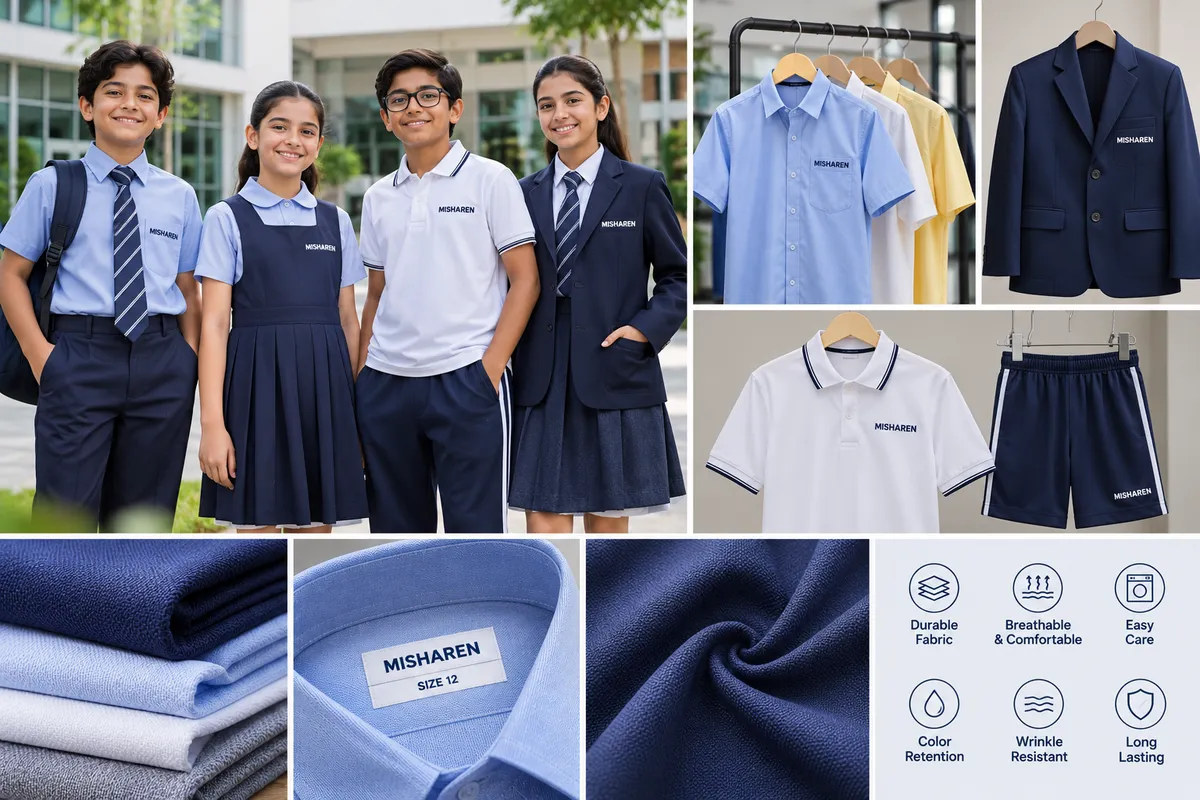
How many school uniforms to buy depends on the garment: families usually buy several of the items washed daily, such as shirts and polos, and only one or two of the outer layers, such as blazers and jumpers. For a uniform shop, the useful number is sets per student for each garment, multiplied by the number of students you expect to serve. That figure, not a single “uniform” count, is what drives a sensible order.
How many sets of school uniform does a student need?
A family thinks about getting through a school week with washing in between. That gives a natural count for each garment. The table below is a planning example to adjust against your own sales; it assumes a five-day week and washing at home.
| Garment | Typical sets per student | Why |
|---|---|---|
| Shirts, blouses or polo shirts | 3 to 5 | Worn next to the skin and washed after one or two days |
| Trousers, skirts or shorts | 2 to 3 | Can be worn more than once between washes |
| Pinafores or tunics | 2 to 3 | Same pattern as skirts, often over a blouse |
| Summer dresses | 2 to 3 | Seasonal, washed often in warm weather |
| Jumpers, cardigans or sweatshirts | 1 to 2 | Outer layer, washed less often |
| Blazers | 1 | Worn over everything, cleaned rarely |
| PE T-shirts and shorts | 1 to 2 | Worn once or twice a week |
| Tracksuits or fleece jackets | 1 | Outdoor sport and cold-weather layer |
The low end of each range suits older students and families who wash mid-week. The high end suits younger children, families who wash less often, and schools where students wear the same top to PE.
Turning sets per student into a shop order
Sets per student tell you what one family needs. To reach an order quantity, multiply across the students you expect to buy from you, then adjust.
A worked example for one primary school with 240 students, where you expect most families to buy from your shop:
- Estimate buyers. Not every family buys every item from you in one year. Some children still fit last year’s sizes, and some families buy second-hand. Start with the share of new purchases you expect, based on past sales or the school’s advice.
- Apply sets per garment. If 160 children each buy three polo shirts, that is 480 polos over the year.
- Split by when they buy. Families do not buy all their sets at once. Many buy two before term and the rest later, so plan an opening order and a top-up.
- Spread across sizes. Use roll numbers by year group to share each garment across your size range.
- Check each style against the minimum. Each style needs 50 pieces for woven garments or 100 for knitwear and sportswear, with sizes mixed within it.
The result is a quantity per garment rather than per “uniform”. A school that lists five garments may need five quite different order sizes.
What changes the number of sets?
Several local factors push the count up or down. Note which apply to each school you supply.
- Climate. In hot weather, shirts and dresses are changed more often, so more sets are needed. In cooler climates, knitwear and tracksuits carry more weight.
- Laundry habits. Families who wash daily need fewer sets; those who wash once a week need more.
- Uniform rules. A school that allows a polo or a shirt gives families a choice, which splits demand between two styles.
- Age. Nursery and early primary children get messier, so parents buy extra tops and bottoms.
- Price sensitivity. Where budgets are tight, families buy the minimum and replace later, which shifts demand into mid-term.
- Boarding. Boarders need enough sets to last between laundry days, which raises the count for daily garments.
Avoiding the two common mistakes
The first mistake is ordering one “set” per student across all garments. That leaves you short of shirts and polos within weeks, while blazers and jumpers sit unsold.
The second is ordering the full year’s sets in one go. Families spread their buying across the year, and children change size within it. Holding back part of the quantity for a later order keeps money free and lets you buy the sizes that actually sold.
When your sets-per-student figures are ready, send them with your styles and size range. We manufacture in India for shops and suppliers worldwide, and the uniform shops and retailers page explains how we work with you. Shirts are often the largest line, so our school shirts and blouses page is a good reference when you build the order.
Questions buyers ask
How many school shirts should a parent buy?
Most families buy three to five shirts or polos per child, enough to get through a week with washing. Younger children and families who wash less often sit at the top of that range, while older students who change less often may manage with three.
Do schools recommend a number of uniform sets?
Some schools include a suggested number of each item in the uniform list sent to families. If yours does, use it as the basis for your sets-per-student figures, then adjust once you see how families actually buy over a full year.
Is one blazer per student enough?
For most students, yes, because blazers are worn as an outer layer and cleaned rarely. Replacement blazers are usually bought for growth or loss rather than wear, so a shop holds a small depth in the sizes just above the main intake.