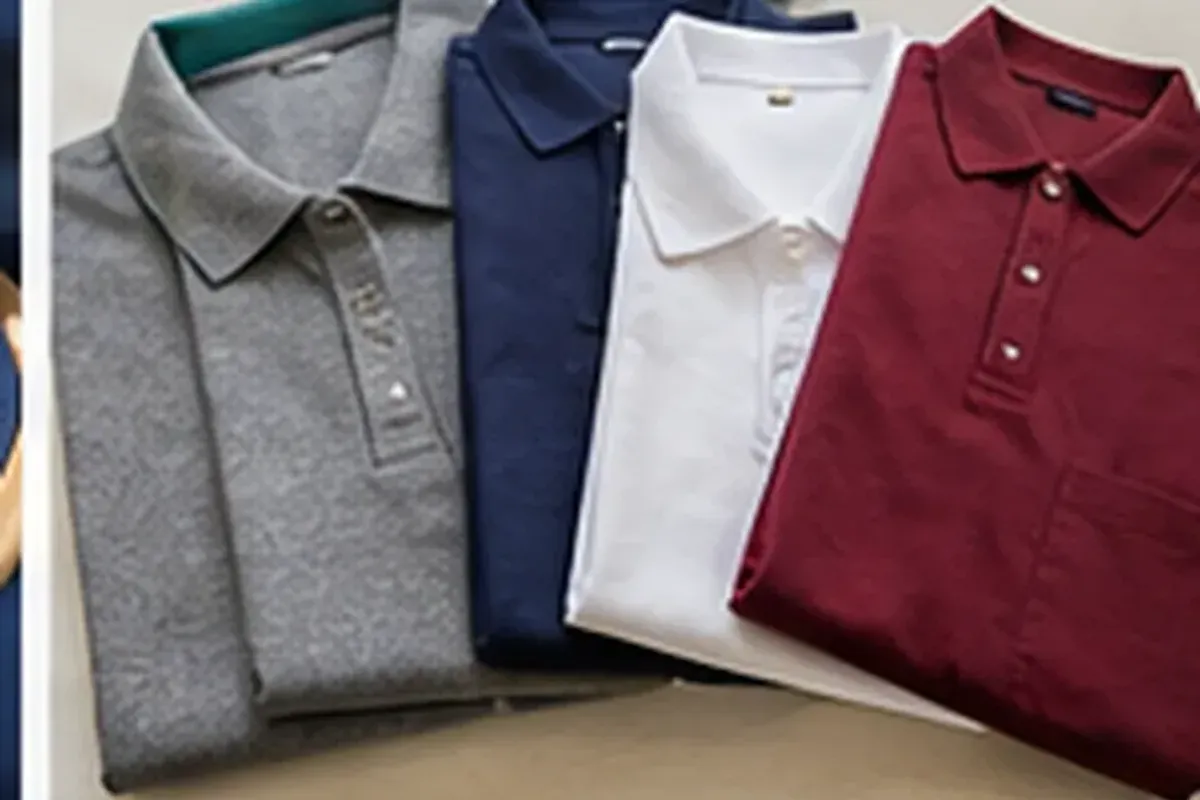
Small school uniform stock should cover every size the roll needs with only a few pieces in each, ordered less often and in larger time blocks than for a big school. With a small roll, a single style may need fewer pieces in a year than the minimum order, so the plan is to order logo items once a year or less, keep plain items in shared stock, and accept that some sizes will hold one or two pieces for a long time.
A small school here means one where each year group has only a handful of students per size: a village primary, a specialist school, a new school in its first years, or a small private school.
Why small schools need a different approach
In a large school, demand spreads smoothly across sizes, and every style comfortably exceeds the minimum each term. In a small school, three problems appear.
- Thin demand per size. One or two students may need a given size each year, so some sizes sell nothing for months.
- Minimums against need. The minimum is 50 pieces per style for woven garments and 100 for knitwear and sportswear, with sizes mixed. A small school’s need for a logo sweatshirt may be below that for a whole year.
- Long shelf life. Stock bought today may still be selling in two or three years, so it must be stored well.
Planning by style: three questions
For each garment on the uniform list, decide which of three routes it takes.
| Question | If yes | Typical garments |
|---|---|---|
| Can it be plain, with no logo? | Buy it as a plain style, shared with other schools if a shop supplies them | Shirts, blouses, trousers, skirts, pinafores, summer dresses |
| Does it need a logo but sell steadily? | Order once a year, covering the full year’s need | Polo shirts, sweatshirts, PE T-shirts |
| Does it need a logo and sell slowly? | Order once every two years or more, and store carefully | Blazers, cardigans, tracksuits, fleece jackets |
The aim is to keep the number of styles that need their own minimum as small as possible, and to give slow logo styles enough time to sell through.
How many pieces per size?
Start from the roll. For each size, estimate how many students will need that garment new over the period the order must cover.
- List students by year group. Map each year group to the sizes it will wear across the period.
- Add starters. Count expected entrants for each year the order will cover.
- Apply sets per student. Use realistic counts: several for shirts and polos, one or two for knitwear.
- Remove reuse. Small communities often pass uniform between families, so reduce for this.
- Spread to the minimum. If the total is below the minimum, spread the extra across the sizes most likely to sell, usually the middle ones.
The extra pieces that bring a style up to the minimum are not waste. They are next year’s stock, bought now. Store them well and they will sell.
Ways to keep stock manageable
Small schools and the shops that serve them use a few practical tactics:
- Choose plain where the school allows it. A plain navy sweatshirt or white polo can be bought as part of a shop’s shared range, with no school-specific minimum.
- Reduce colour variety. One knitwear colour instead of two halves the number of knitwear styles.
- Join with a neighbouring school. Where two small schools share a supplier, plain garments in shared colours can be ordered together.
- Order slow lines in one wide run. A blazer order that covers several years removes the need to reorder small quantities.
- Store carefully. Keep stock packed, dry, labelled and out of sunlight, since some of it will wait a long time.
Keeping the long view
For a small school, every order should be planned over a longer horizon than one term. Keep a simple record of what each order covered and how fast it sold, and you will learn how long each style lasts. That record is what tells you when the next order is needed.
Our schools and school groups page explains how we work with schools ordering directly. Sweatshirts are often the line where a small school feels the minimum most, so our school sweatshirts and hoodies page is a useful reference. Send us your roll, uniform list and how long you want each order to last, and we will quote each style by fabric, quantity and branding.
Questions buyers ask
Can a small school order fewer than the minimum?
Each style needs to reach the minimum: 50 pieces for woven garments and 100 for knitwear and sportswear. Because sizes can be mixed, a small school can spread that quantity across its whole size range and treat the extra as stock for later years.
How long can uniform stock be kept before it is sold?
Packed garments kept dry, clean and away from sunlight keep well for several years. Check stored stock once a year for damp or packaging damage, and sell older stock first so nothing waits on the shelf longer than necessary.
Is it worth asking the school to drop the logo from some items?
It is a reasonable suggestion, and many small schools agree for bottoms and shirts. Logo-free items can be bought as plain shared stock, which reduces the number of school-specific styles and makes the uniform easier to keep in stock.