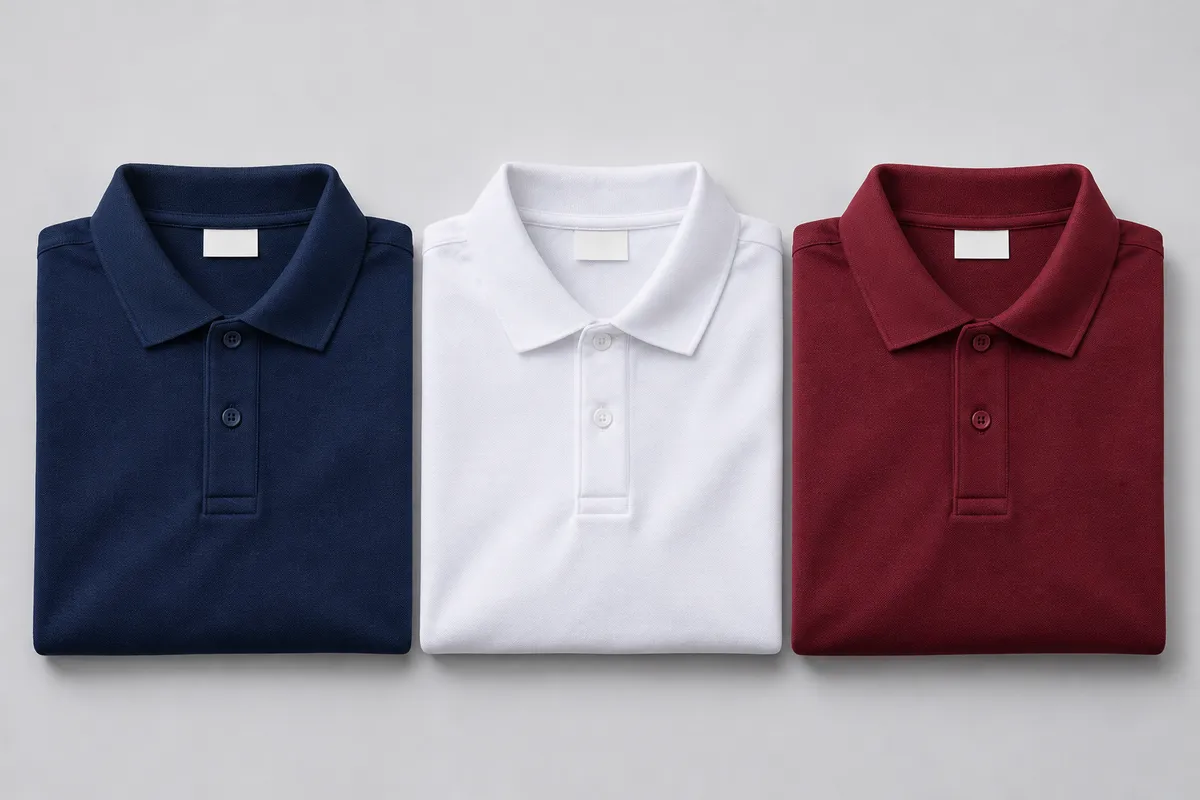
A white polo shirt turning yellow or grey is usually caused by washing habits rather than the fabric: body oils and deodorant left in the collar and underarms, too little or too much detergent, washing with coloured items, or drying in strong heat. Piqué’s textured surface can hold residue more than smooth fabric, so white polos benefit from simple, regular care.
Shops hear this complaint often. This post explains the causes and gives care notes that can be shared with families.
What makes a white polo go yellow?
Yellowing tends to start at the collar, the underarms and the back neck. The common causes:
| Cause | Where it shows | Why it happens |
|---|---|---|
| Body oils and sweat | Collar, underarms | Residue builds up wash after wash |
| Deodorant | Underarms | Some ingredients react with sweat and fabric |
| Too much detergent | All over | Residue left in the fabric attracts dirt |
| Overuse of bleach | Patchy or all over | Can yellow some fibres rather than whiten them |
| High heat drying | All over | Heat can set stains and discolour |
| Long storage in plastic | Fold lines | Trapped moisture and fumes |
What makes a white polo go grey?
Greying is more gradual and usually comes from:
- Washing whites with darker colours, so dye transfers
- Washing at too low a temperature for very dirty items
- Using too little detergent for the load
- Hard water leaving mineral deposits
- Overloading the machine so polos do not rinse properly
A grey cast often shows first in the piqué texture, where the small cells hold onto dull residue.
Care notes shops can share with families
A short card at the till, or a few lines on the shop website, can save a lot of complaints:
- Wash white polos with other whites only
- Treat collars and underarms before washing on heavily worn polos
- Use the detergent amount on the pack, not extra
- Wash at the temperature on the care label
- Rinse well and avoid overloading the machine
- Dry in the shade or on low heat, as hot sun and hot dryers can set marks
- Use bleach only if the care label allows it, and sparingly
- Let deodorant dry fully before putting on a polo
Families who follow these steps usually keep white polos white for much longer.
It also helps to explain that white polos are not all washed the same way as coloured ones. A navy polo forgives a cool, quick wash; a white polo worn on a hot day needs the collar treated and a full rinse. Shops that sell both colours can make that difference clear on the card, so families do not apply one routine to every polo in the house.
What can a buyer do at specification stage?
Some choices at order stage help white polos stay looking good:
- Fabric choice. Poly-cotton and polyester piqué both work in white. Discuss with us how the polo will be worn and washed, and we suggest a fabric.
- Fabric weight. A white polo in very light piqué can look dull sooner because what is underneath shows through.
- Care label wording. You decide the care label text. Clear, simple instructions help families care for the polo correctly.
- Approving the white. Whites vary from bright to soft. Approve the white on the sample against your other white garments.
Our page on fabrics and colour matching describes the fabrics we use and how the shade is approved before production. The white and coloured polos we make are shown on our school polo shirts page.
If families have been bringing back yellowed polos, send one with your enquiry and tell us how they have been washed. We will look at the fabric and suggest a specification for your next order.
Questions buyers ask
Is yellowing a fault in the polo?
Usually not. Yellowing mostly builds up from residue and heat over many washes. A fault is more likely if new polos are uneven in colour from the start, which would be checked against the approved sample.
Does polyester piqué stay whiter than poly-cotton?
Each fibre reacts differently to oils, detergent and heat, and both can discolour if washed poorly. Care habits make more difference than fibre. Choose the fabric for how the polo is worn, then share good care notes.
Can yellowed polos be restored?
Sometimes. Soaking in a suitable stain remover and washing at the label temperature can lift build-up. Heavily yellowed polos, especially where heat has set the marks, may not fully recover, which is why prevention is easier.