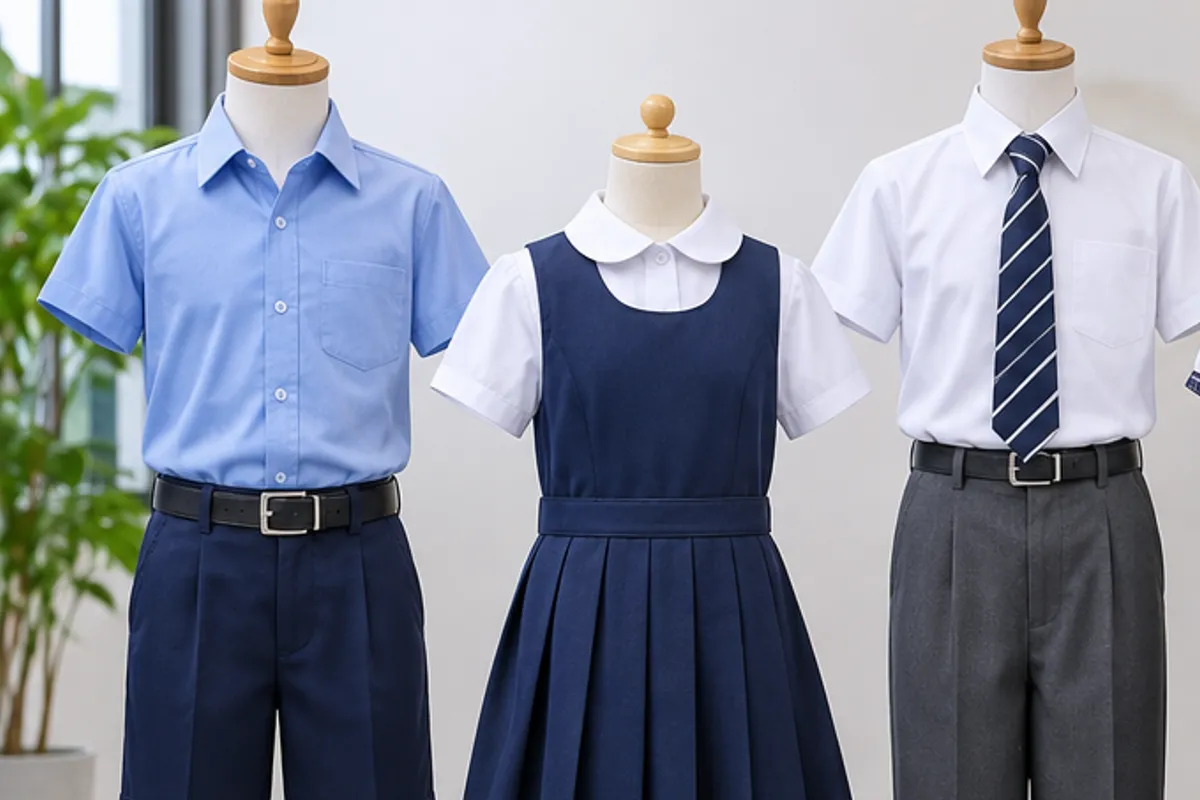
School trousers, pants and slacks are the same garment under different names: “trousers” is the usual word in the UK, Ireland and much of the Commonwealth, “pants” is usual in the United States and common in Australia and New Zealand, and “slacks” is an American word for dressier pants. Other words, such as “longs” in South Africa and “full pant” in India, name the same thing again. In a specification, the name matters less than the measurements and details behind it.
Where vocabulary does cause trouble is in the smaller trouser terms, a few of which mean different things on different sides of the Atlantic.
The main garment names by region
| Word | Where it is common | Meaning |
|---|---|---|
| Trousers | UK, Ireland, India, Gulf, much of Africa | Full-length tailored bottoms |
| Pants | USA, Australia, New Zealand, Canada | Full-length bottoms; in the UK “pants” means underwear |
| Slacks | USA | Dressier long pants, often for older students |
| Khakis | USA | Pants in a khaki colour |
| Long pants | Australia, New Zealand | Trousers, as opposed to shorts |
| Longs | South Africa | Long trousers, usually grey |
| Full pant | India and South Asia | Long trousers |
| Half pant | India and South Asia | Shorts |
| Walk shorts | New Zealand, Australia | Tailored shorts near the knee |
| Pull-on pants | USA | Elastic-waist pants with no fly |
The UK meaning of “pants” is the one to watch. A British shop receiving a quotation for “pants” might be briefly confused; an American store receiving one for “trousers” will understand it fine. We use whichever word you use.
Which detail words cause the most confusion?
The garment name rarely causes a wrong order. Detail words can. These are worth defining in writing:
Cuffs and turn-ups
In the UK, a turn-up is the folded band at the bottom of the trouser leg. In the US, that same band is called a cuff. In the UK, a cuff is at the end of a shirt sleeve. If you want a plain hem, say “plain hem, no turn-up”.
Inside leg and inseam
The UK says inside leg; the US says inseam. Both mean the length of the inner leg seam from crotch to hem. Give the figure and the unit, and the word does not matter.
Zip and zipper, fly and fly front
A zip in the UK is a zipper in the US. Both sides say fly for the front opening. Specify “zip fly” or “button fly” to be clear.
Regular, short and long
Many markets use these for leg lengths in senior sizes, sometimes as R, S and L after the waist. Define the inside leg for each on the size chart, as the same letter can mean different lengths at different makers.
Wider fits
Wider fits go by different names in different markets. Describe the fit by its measurements rather than its name.
A specification that travels
Buyers who sell in more than one country, or who send specifications to a maker abroad, can avoid most problems with a few habits:
- Name the garment once, in your own word, then describe it by its measurements
- Give every length with a unit: centimetres, inches or both
- Spell out details such as “plain hem, no turn-up” rather than relying on a single word
- Send a photo or a pair whenever a word might be read two ways
- Ask for labels and tickets in the word your customers use
- Keep the agreed size chart as the final word on every measurement
Labels in your customers’ language
Waistband labels, swing tickets and size guides should carry the word your customers know: trousers for a UK shop, pants for a US store, longs or long pants where that is what families ask for. We print labels and tickets in the wording you give us, and show them on the sample.
Our page for schoolwear suppliers and distributors explains how we work with buyers serving several markets. Every fit is shown on our school trousers and shorts page. We manufacture in India and quote each style by fabric, quantity and branding; send your specification in your own words, and we will confirm the details back in the quotation.
Questions buyers ask
Do Indian schools use “pant” or “trousers” in uniform lists?
Both appear. Many lists say “full pant” and “half pant”, while others say trousers and shorts. The garment is the same. We use whichever word appears on the school’s list so families and staff recognise it.
Is a “slack” different in construction from a “trouser”?
Not by definition. In the US, slacks usually suggests a dressier look, which may mean a pressed crease or a finer fabric. Describe those details directly in the specification rather than relying on the word.
Should size labels carry both inches and centimetres?
For buyers selling in more than one country, yes. It costs little to print both, and it lets one stock serve markets that measure differently. Choose the order of the units by your main market.