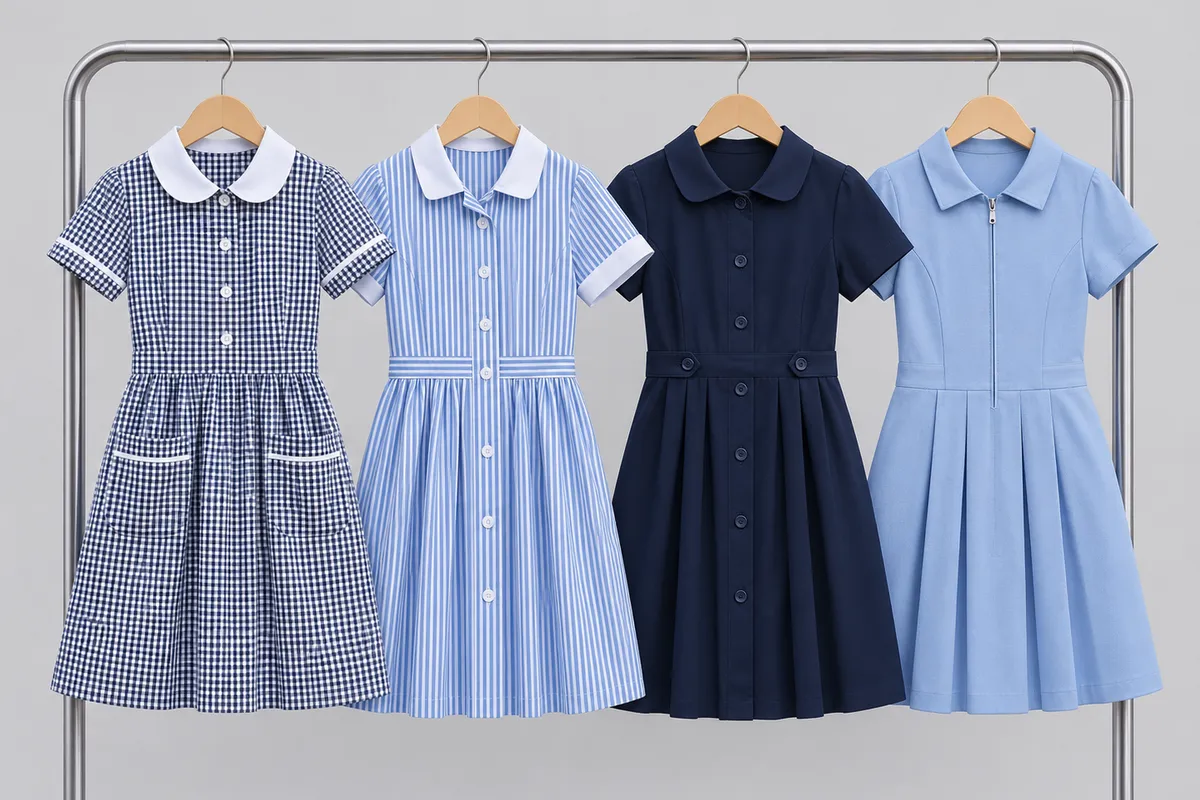
School summer dresses in the UK are sold for the summer term, which runs from after Easter to the end of the school year in July, and many families buy again in September when the new year starts warm. For a UK uniform shop or school, that means two selling peaks for one garment, and stock that must be on the shelf by early spring.
This post is for UK uniform shops, schoolwear suppliers and schools buying summer dresses in bulk from an overseas manufacturer.
When do UK families buy summer dresses?
The UK school year begins in September and ends in July, with the summer term as the last of three. Schools usually tell families when summer uniform may be worn, often after the Easter holidays or from a set date in late spring. Some keep it optional into the first half of the autumn term, while the weather is still warm.
That pattern creates two peaks:
| Peak | When | Who is buying |
|---|---|---|
| Spring peak | Before and just after the Easter holidays | Returning pupils replacing outgrown dresses |
| September peak | Before and after the new school year starts | New starters and families who wait for the new year |
| Quiet period | Late autumn and winter | Very few dress sales; occasional new pupils |
The spring peak is the larger for most shops, but the September peak catches Reception starters, who often need a full set of uniform including summer dresses.
What does a typical UK summer dress look like?
UK lists most often name a “summer dress” or “gingham dress”, with the colour chosen to match the school’s other garments. Blue, red, green and yellow gingham appear widely, along with candy stripes in the same colours. Dresses are usually short-sleeved, with a collar, and worn with the school’s cardigan or sweatshirt on cooler days.
Many primary schools offer the dress as one of several summer options, alongside a skirt, shorts or a skort with a polo shirt. Senior schools use it less often. A plain dress with no logo is common, which lets a UK shop serve several schools from one gingham colour. Where a school wants its badge, logo embroidery is available on the chest or pocket.
Sizes on UK summer dress rails
UK shops generally size summer dresses by age, in two-year or one-year bands from the Reception intake upward. The smallest band needed depends on whether the schools you serve have nursery classes. Chest sizes are used for the few senior schools that keep the dress.
Because Reception starters buy in September, the smallest bands sell more strongly in the autumn peak than in spring. A shop that orders only once a year should weigh the size ratio with both peaks in mind.
A UK ordering timeline
Working back from a spring peak, a UK buyer importing from India should plan the following:
- Autumn: review last season’s sales and leftover stock, and send the enquiry.
- Late autumn to early winter: quotation, swatch and sample approval.
- Winter: advance payment and production. Lead time is confirmed in the quotation.
- Late winter: dispatch, allowing for shipping and customs clearance.
- Before Easter: stock checked and on the shelf.
September stock can come from the same order, held back from spring, or from a smaller second order. Our shipping and documents page explains how shipping method and documents are confirmed for each order.
Placing a UK summer dress order
We manufacture school summer dresses in India for UK shops, suppliers and schools, and we take enquiries from buyers in any country. The styles are on our school summer dresses page. Tell us your colours, sizes and the date your summer term begins, and we will quote per style and confirm the timeline.
Questions buyers ask
Do UK schools require summer dresses or just allow them?
Many lists allow the summer dress as one option rather than requiring it. That makes demand depend on family choice and on the weather each spring, so UK shops tend to order cautiously and keep a top-up possible.
Should a UK shop keep summer dresses in stock over winter?
A small stock covers new pupils and early buyers, but most dresses can stay boxed until spring. Holding the main stock back keeps the shop floor clear for winter items and protects the dresses from handling.
Do UK summer dress sizes differ from Australian sizes?
Both commonly use age bands, but Australian shops often label in even numbers, such as 6, 8 and 10. The measurements behind each label are set on the size chart for your order, whatever the labels say.