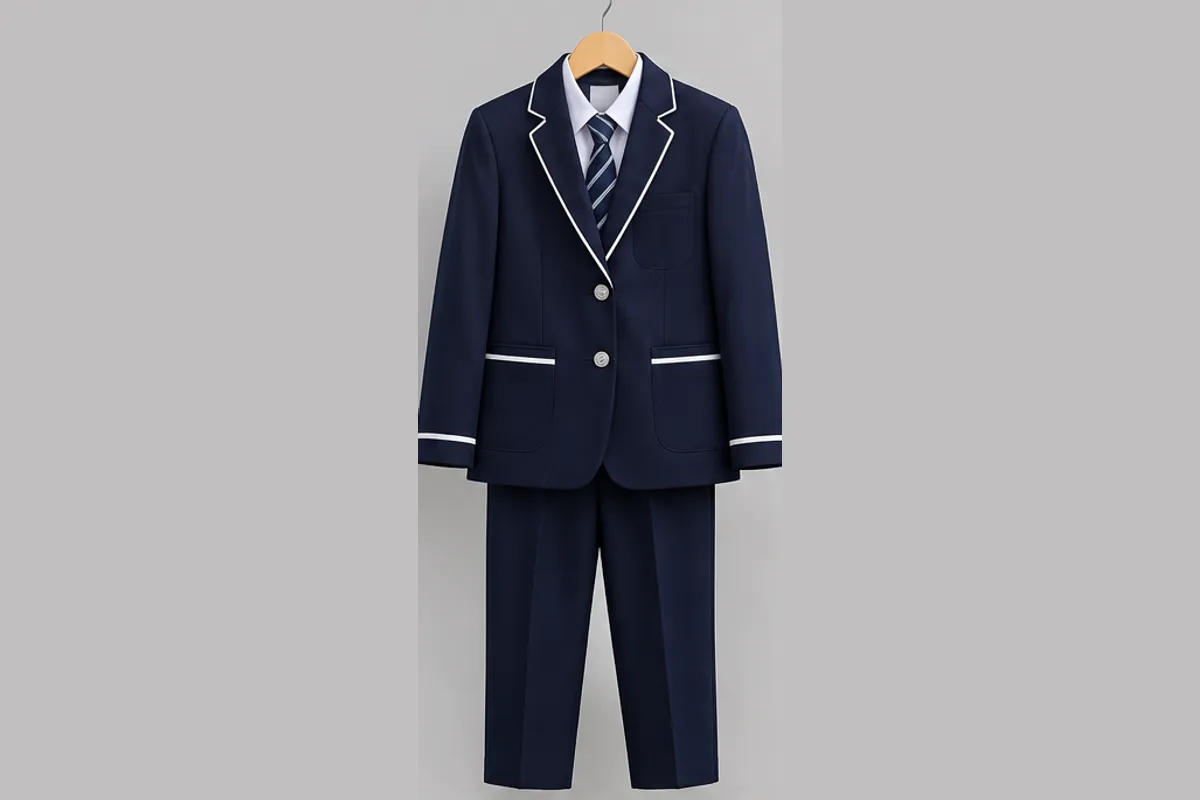
A school blazer size ratio is the share of an order given to each size, and the most reliable way to set it is from last year’s sales by size, corrected for the sizes that ran out and the sizes left over. Raw sales figures understate the sizes you could not supply. A few adjustments turn them into a ratio you can order against with confidence.
This guide is for shops and schools that already have a season or more of blazer sales. If you are ordering blazers for the first time with no history, use roll numbers and a starting example instead; this post assumes you have real data.
Start with what you actually sold
Pull sales by size for the blazer style, for the full selling year, not just the back-to-school weeks. Blazers sell in two waves: the main rush before term, and a steady trickle of replacements for growth and loss. Including both gives a truer picture.
Keep boys’ and girls’ blazers separate. They are separate styles with separate charts, and their size curves are rarely the same shape.
Correcting for sizes that sold out
Sales only record what was on the shelf. If a size ran out for three weeks in August, the sales figure for that size is lower than real demand. Note every size that sold out and roughly when. For each one, estimate the missed sales, even crudely, from waiting lists, customer requests or sales of neighbouring sizes during the gap.
Then look the other way. Sizes with stock left at year end sold less than you bought, and that leftover tells you the ratio was too high there. Do not simply carry it forward.
A worked example
The table below uses invented figures to show the method. Treat it as a starting example to adjust against your own sales or roll data, not a forecast.
| Size | Sold last year | Sold out? | Adjusted demand | Left over | Share for next order |
|---|---|---|---|---|---|
| Age 9–10 | 14 | No | 14 | 6 | Lower |
| Age 10–11 | 18 | No | 18 | 2 | Same |
| Age 11–12 | 42 | Yes, late August | 50 | 0 | Higher |
| Age 12–13 | 30 | No | 30 | 3 | Same |
| Age 13–14 | 22 | Yes, October | 25 | 0 | Slightly higher |
| Age 14–15 | 15 | No | 15 | 4 | Lower |
| Senior chest sizes | 12 | No | 12 | 1 | Same |
Adjusted demand is sales plus an estimate of missed sales. To build the ratio, divide each size’s adjusted demand by the total, then nudge the result for anything you know about next year: a larger intake, a school changing its blazer start year, a competing shop closing.
What changes the ratio from one year to the next?
Even with good data, the ratio shifts. Four things move it most for blazers:
- Intake size. The entry-year size is the biggest single line. If the intake grows or shrinks, that size moves with it.
- Second-hand supply. Schools that run pre-loved sales take some demand out of the middle sizes, where blazers are outgrown before they wear out.
- Policy changes. A school that drops blazers for juniors, or adds them for a sixth form, changes the shape of the curve.
- Last year’s leftovers. Stock still on the shelf reduces what you need to buy in that size, so subtract it before applying the ratio to a new order.
Turning the ratio into an order
Apply the ratio to the total quantity you plan to buy, then round to whole pieces. Check that every size on your list has at least a few blazers, even the slow ones, and that the style total meets the 50-piece minimum. Sizes can be mixed within a style, so a well-built ratio is exactly what we cut to.
Keep the working sheet. Next year, you will repeat the same steps, and a record of the adjustments you made, and why, makes the next ratio faster and sharper. Our size charts page covers how the sizes in your ratio line up with the agreed chart.
Our school blazers are made in your colours and size range. Send us your adjusted size ratio and total quantity, and we will quote the order by style, fabric, quantity and branding.
Questions buyers ask
How many years of sales should I use?
One full year is enough to start. Two or three years smooth out a single odd season, such as an unusually large intake. If you use several years, give the most recent year more weight, since policies and intake numbers change over time.
Should the ratio be the same for boys’ and girls’ blazers?
Rarely. Girls and boys grow at different ages, and some schools offer girls a choice of blazer or another top. Work out a separate ratio for each style from its own sales, and order each style to its own minimum.
What if a size sold out because the previous order was late?
Treat it the same way as any stock-out and estimate the missed demand. Then note the cause separately. A late delivery is a timing problem rather than a ratio problem, and fixing the order date may matter more than changing the ratio.