Pleat retention in a school skirt is how well its pleats keep their sharp folds through wear, washing and drying. It depends on three things working together: the fibre content of the fabric, how firmly the pleats were set during making, and how the skirt is treated at home. A buyer can influence the first two through the specification and the third through the care guidance passed on to families.
Shops hear about pleats more than almost any other skirt complaint. Understanding where pleat retention comes from helps a buyer choose the fabric, judge the sample and set realistic expectations with customers.
Why do some pleats hold and others drop?
A pleat is a fold set into the fabric with heat and pressure. Whether that fold stays depends on how the fibres respond.
- Polyester is a thermoplastic fibre: heat softens it slightly, and when it cools in a folded position it tends to keep that shape. That is why polyester-rich fabrics are widely used for pleated skirts.
- Viscose is a regenerated cellulose fibre. It adds softness and drape and feels more like natural cloth, but on its own it does not hold a heat-set fold as firmly.
- Blends such as poly-viscose combine the two: the polyester helps the pleat, while the viscose gives a softer hand.
So a skirt in polyester twill will usually hold a sharper pleat than one in a poly-viscose with a higher viscose share, while the poly-viscose skirt drapes and feels softer. Neither is wrong; it is a choice between crispness and handle.
How pleats are set during making
Fabric choice gives the potential. Making turns it into a result. The main steps that affect pleat retention are:
- Accurate folding. Each pleat is marked and folded to the same depth, so the folds are even before setting.
- Pressing with heat and pressure. The folds are pressed so the fibres take the shape. Enough time under the press matters as much as heat.
- Cooling in position. The skirt is left to cool with the pleats held, so the fold settles before handling.
- Stitching down. The upper part of each pleat is sewn, so it cannot drift even if the lower part relaxes.
- Final press. The finished skirt is pressed again before folding and packing.
We follow your pleat layout and set the pleats in these stages. On the sample, check the pleats both before and after a home wash, because that shows the result families will see.
What happens at home
Most pleat problems reported to shops come from washing and drying rather than from the skirt itself. High heat in a tumble dryer, wringing, or leaving a skirt crumpled while damp can all relax a pleat. Hanging the skirt by the waistband to dry, and pressing the pleats in line if they soften, keeps them looking right.
Factors at a glance
| Factor | Who controls it | Effect on pleats |
|---|---|---|
| Fibre content | Buyer, at fabric choice | Higher polyester share tends to hold folds more firmly |
| Fabric weave and weight | Buyer, at fabric choice | Firmer twill keeps an edge; very light cloth may soften |
| Pleat depth | Buyer, in the specification | Deeper folds have more fabric to hold the shape |
| Setting and pressing | Manufacturer | Even folds, heat, pressure and cooling time |
| Stitched-down length | Buyer and manufacturer | Longer stitching holds more of the pleat in place |
| Washing and drying | Families | Heat, wringing and crumpling can relax folds |
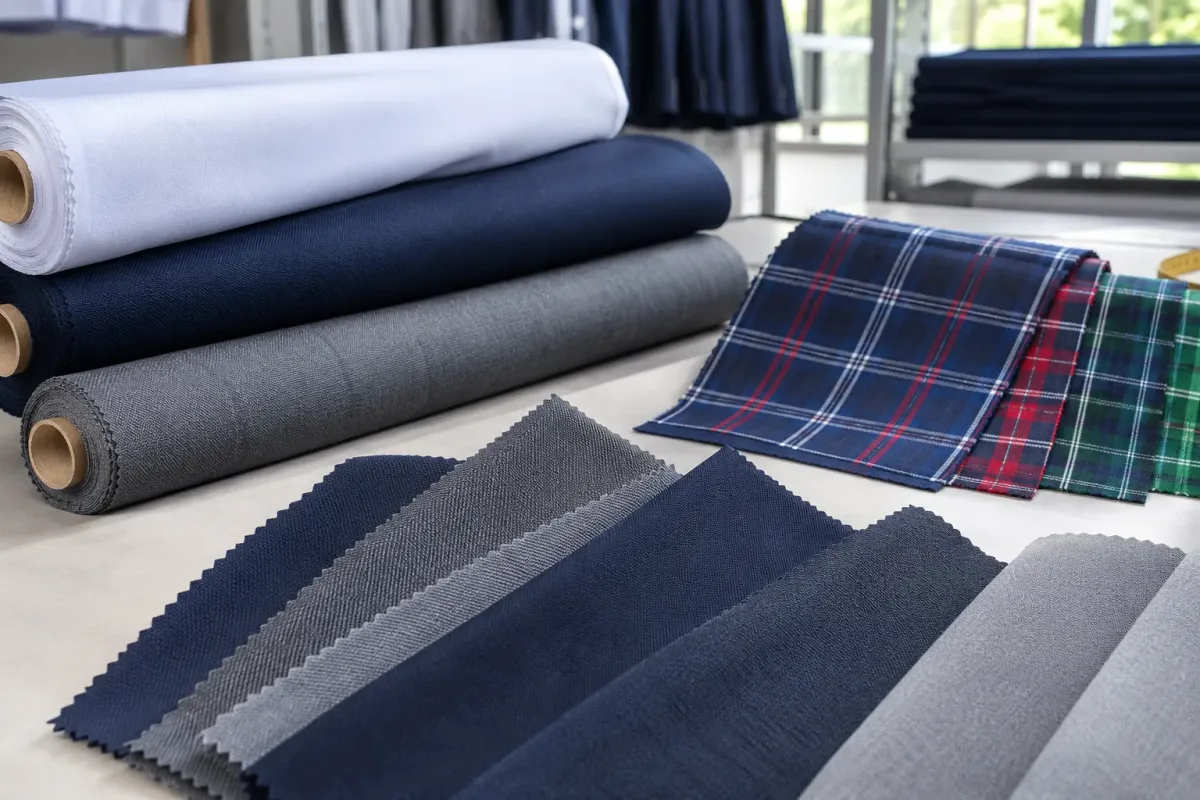
Fabric options for skirts are listed on our fabrics and colour matching page. The fabric for each style is confirmed in your quotation, and you can ask to see swatches of each before deciding.
Choosing for your customers
If your customers value a skirt that stays sharp with little ironing, lean towards polyester twill. If they value a softer, more natural feel, poly-viscose suits them, with clear advice on pressing. Some shops stock both and describe the difference on the shelf label. Our school skirts and skorts page shows every style in both plain fabrics.
We manufacture in India and fix the fabric on the approved sample, so bulk skirts behave the way your sample did. Ask us for a quotation with both plain fabrics if you would like to compare them side by side.
Questions buyers ask
Can pleats that have dropped be restored?
Usually yes. Pressing each pleat back into line with a warm iron and a damp cloth, then leaving the skirt to cool hanging, resets most folds. Polyester-rich fabrics respond to this especially well.
Do more pleats hold their shape better than fewer?
Not necessarily. Retention depends on fibre, setting and care rather than count. Many narrow pleats can show small faults more readily, while a few deep pleats tend to hang under their own weight and stay in line.
Should we test a sample skirt by washing it?
Yes. Wash and dry the sample the way a family would, then compare the pleats with an unwashed skirt. It is the most useful single test a buyer can do before approving bulk production.