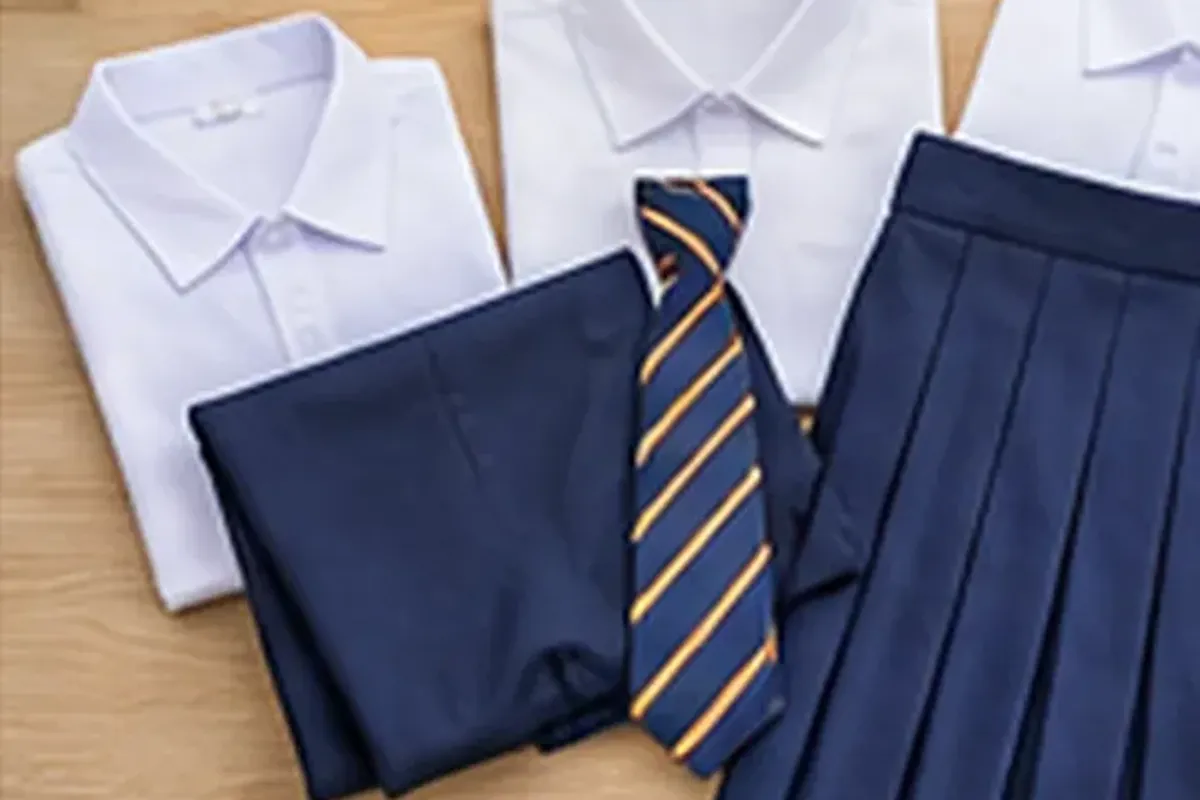
A school skirt with pockets usually has one or two pockets hidden in the side seams, so the front of the skirt and any pleats stay unbroken. Students use them for a tissue, a pencil or a bus pass, and families often ask for them. The main decisions are how many pockets, how deep the pocket bags are, what fabric they are made from, and how they sit alongside the zip and pleats.
Pockets are a small detail, but they are one of the features families notice when choosing a skirt. Shops that offer a skirt with pockets often find it becomes the one families ask for by name.
Where should pockets go on a school skirt?
Pocket placement has to fit with the rest of the skirt’s design.
| Placement | Appearance | Works with | Points to consider |
|---|---|---|---|
| Right side seam only | Hidden in the seam | Left side zip | Most common; keeps the zip side clear |
| Both side seams | Hidden on both sides | Back zip or elastic back | Zip must move to the back or be left out |
| Front slant pocket | Angled opening at the front hip | A-line or part-pleated skirts | Visible; may interrupt front pleats |
| Patch pocket | Sewn onto the outside | Casual or younger styles | Visible; less common on formal skirts |
For pleated skirts with a left side zip, a single right side-seam pocket is the usual answer. It keeps the pleats clear and the zip side free.
How is a side-seam pocket made?
A side-seam pocket is a pocket bag sewn into the side seam, hanging inside the skirt. The opening is the gap left in the seam, so from the outside it looks like the seam continues unbroken.
Points to agree:
- Opening length. Long enough for a student’s hand, not so long that items fall out.
- Opening position. Starting a little below the waistband, so the waistband stays strong.
- Pocket bag depth. Deep enough to hold a phone or bus pass, but not so deep it hangs near the hem.
- Pocket bag fabric. Self-fabric (the skirt fabric) or a lighter pocketing fabric that reduces bulk.
- Reinforcement. Bar tacks at each end of the opening so it does not tear with repeated use.
Do pockets affect how a skirt hangs?
A full pocket can pull the side seam out slightly, and a heavy pocket bag can add bulk at the hip. Using a lighter pocketing fabric, and anchoring the top of the pocket bag into the waistband, helps the skirt hang straight even when the pocket is used.
When to leave pockets out
Pockets are not always right for a skirt:
- Very young children rarely use them, and an elastic-back skirt without pockets is simpler.
- Kilt-style skirts often have no pockets, to keep the apron and pleats clean.
- Very full pleated skirts may have no clean place to put one.
- Lowest-cost programmes may leave them out to keep the making simple.
Skorts usually have no pockets, though one can be added to the side seam of the panel on older sizes.
Pocket fabric and colour
If the pocket bag is made in self-fabric, it matches the skirt exactly. If it uses a lighter pocketing fabric, the colour should be toned to the skirt so it does not show at the opening. Our fabrics and colour matching page explains how colours are matched and approved.
The styles we make, with or without pockets, are on our school skirts and skorts page. As a manufacturer in India working to your specification, we show the pocket on the sample before bulk. Tell us where you want the pocket and how deep, and we will include it in your quotation.
Questions buyers ask
Do pockets change the quotation?
A pocket adds fabric and a few sewing steps, so it is included when each style is quoted by fabric, quantity and branding. Ask for the skirt to be quoted with and without pockets if you want to compare.
Can a skirt have a pocket on the zip side?
It is possible, but the zip and the pocket compete for the same seam, which makes both harder to use. Most buyers put the zip on the left and a single pocket on the right.
Are pockets a problem for schools with a strict uniform?
Some schools prefer no pockets to discourage carrying phones. Others find a small pocket practical for tissues and passes. The decision rests with the school, and the specification can follow it either way.