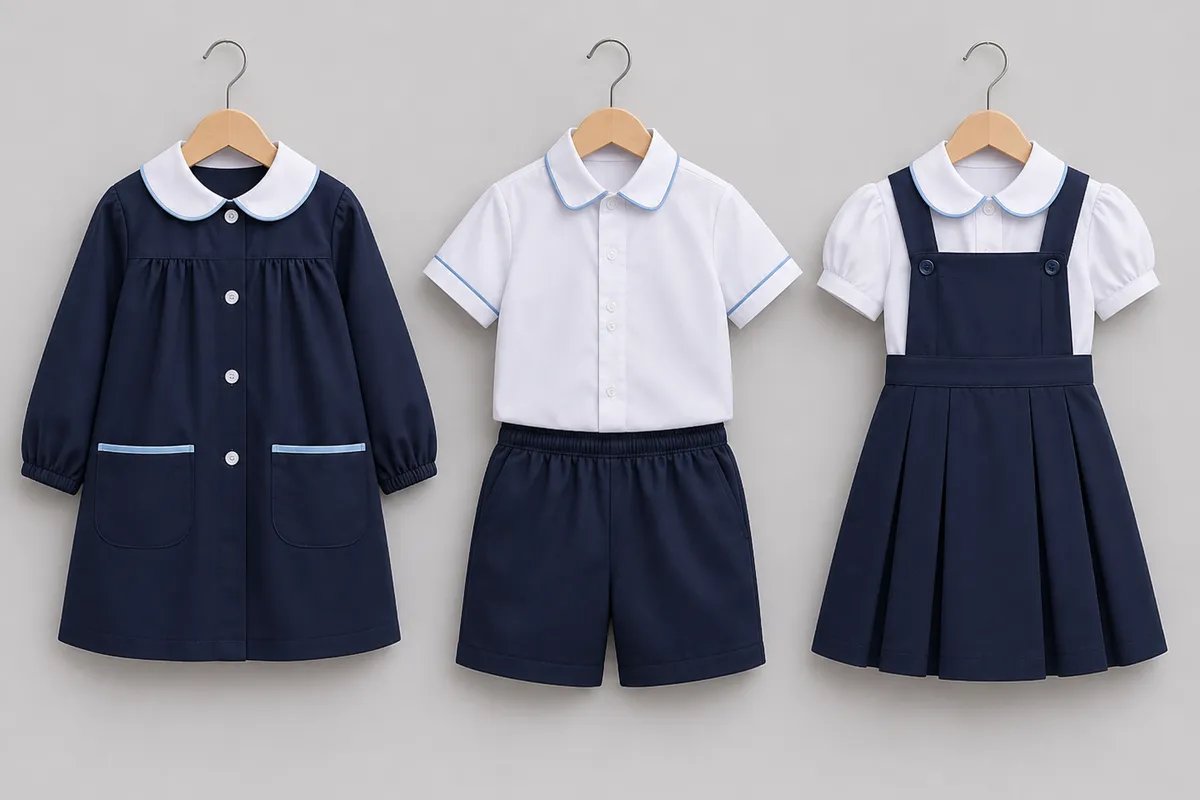
At the end of the year, a nursery or shop’s uniform stock changes shape: the oldest children leave for school, so demand for the largest sizes falls, while the next intake will need the smallest. Handling nursery uniform end of year stock well means counting what is left by size, deciding what carries forward, and using that count to set the next order. Leftover stock in the right sizes is not waste; it is the start of next year’s supply.
What happens to nursery demand at the end of the year?
Three things happen at once in most early years settings.
- Leavers stop buying. Children going to school need their school uniform instead, so the top sizes slow sharply.
- Remaining children move up. Children staying on need the next size, so the middle and upper-middle sizes stay in demand.
- New starters arrive. The next intake needs the smallest sizes, often before the new year begins.
A shop or nursery that orders for next year by repeating this year’s split will usually end up with too many large sizes and too few small ones.
Counting what is left
Start with a simple count by style and size. The table shows one way to lay it out, with a column for what you plan to do with each line.
| Style and size | Pieces left | Expected need before the next order arrives | Decision |
|---|---|---|---|
| Smock 2–3 | Low | High (new intake) | Reorder |
| Smock 4–5 | Medium | Medium (children moving up) | Carry forward |
| Set 5–6 | High | Low (most leavers wore this size) | Carry forward; reduce next order |
| Set 6–7 | Medium | Very low | Hold for tall children or a school KG section |
| Pinafore set 3–4 | Low | Medium | Reorder |
Fill in your own numbers. The aim is a clear decision for every line, not a perfect forecast.
Carrying stock forward without problems
Uniform made to the same approved sample does not go out of date, so most leftover sizes simply wait for next year. A few precautions keep carried-forward stock in good condition.
- Store it clean and dry, in sealed bags or cartons away from sunlight, which can fade exposed folds.
- Keep sizes together and label shelves clearly so new deliveries go behind older stock.
- Sell older stock first. Issue carried-forward pieces before opening new cartons of the same size.
- Check for changes. If you plan to change the logo, colour or label, decide what to do with old stock before ordering new.
Using leftovers to shape the next order
The end-of-year count is the most useful data you will have all year. Use it in three ways:
- Subtract carried stock from next year’s need size by size, so you order only what you are short of.
- Shift the size split down if large sizes were left over and small sizes ran out.
- Reconsider timing. If small sizes ran out before the year ended, place next year’s order or a top-up earlier.
Nursery styles start at 50 pieces per style with sizes mixed. If carried stock covers most sizes, the next order can concentrate on the few that are short, provided the style total reaches the minimum.
Options for slow sizes
If a size is clearly overstocked, consider passing it to a school with a kindergarten section, offering it to a local charity, or holding it for a second-hand or swap scheme at the nursery. Each keeps good uniform in use.
Our page for uniform shops and retailers explains how we handle reorders for shops supplying several settings. The garments are on our nursery and kindergarten uniforms page. Send us your end-of-year count with your expected intake, and we will quote the next order style by style.
Questions buyers ask
When should a nursery do its end-of-year stock count?
Count once the last leavers have bought what they need and before the next intake’s uniform is issued. For many settings that is the final weeks of the year, which leaves time to place an order before the new year starts.
Will next year’s reorder match the stock we carried forward?
If it is made to the same approved sample and size chart, it will match in colour, fabric, logo and fit. Quote the sample reference and the date of your last order when you send the enquiry.
Should a nursery discount leftover large sizes?
That is a commercial choice for the shop or setting. Before discounting, check whether a tall child in next year’s group, a school KG section or a reception class nearby could use those sizes at the normal price.