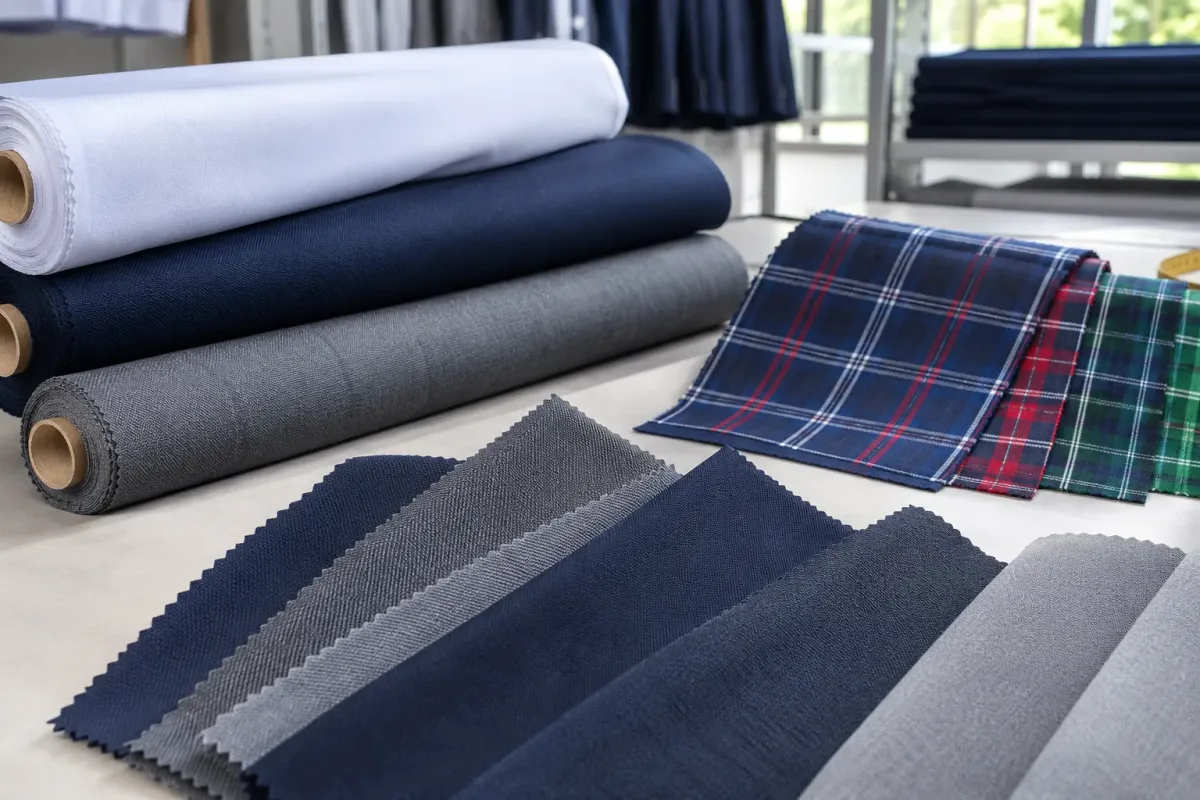
For a nursery uniform that is washed often, poly-cotton is the practical fabric: it washes well, dries quickly and keeps its colour and shape. Cotton is the softer, more breathable choice, suited to warm climates and to nurseries that want a natural fibre next to the skin. Fastenings matter just as much as fabric, because a three-year-old has to be dressed and undressed several times a day.
This guide compares the two fabrics we make nursery uniforms in, then looks at fastenings, waistbands and the small construction details that make a garment easy for young children and their carers.
Poly-cotton and cotton compared
Poly-cotton blends polyester with cotton. The polyester adds strength and helps the garment resist creasing and shrinking, while the cotton keeps it comfortable. For a smock that goes through the wash after every messy-play session, or a shirt worn every day, that durability is useful.
Cotton is made entirely from cotton fibre. It is soft, absorbent and breathable, which suits hot rooms and outdoor play in warm weather. It tends to crease more and may need ironing for a neat look, and colours can soften a little faster with repeated washing.
Every nursery style can be made in either fabric. The fabric is confirmed at quotation and on the sample, so you can feel both before you decide.
| Point to compare | Poly-cotton | Cotton |
|---|---|---|
| Feel | Smooth, light | Soft, natural |
| Creasing | Resists creases | Creases more readily |
| Drying | Quicker | Slower |
| Warm weather | Comfortable | More breathable |
| Colour | Holds colour well through washing | Colour may soften sooner |
| Ironing | Little needed | Often needed for a neat look |
| Suits | Daily wear, smocks, high-wash items | Warm climates, natural-fibre preference |
You can also mix fabrics within a uniform. A nursery might choose cotton for the shirt, worn next to the skin all day, and poly-cotton for the smock, washed most often. Each piece is matched to its own colour reference, so the shades can still be coordinated across fabrics. Our fabrics and colour matching page explains how we match a colour from a garment or swatch.
Fastenings for small children
The right fastening depends on who does the dressing. Staff changing a child after a spill need speed. A child learning to dress needs something they can manage alone.
Smock fastenings can be buttons or press studs, as specified. Think about each option:
- Press studs are quick for staff to open and close, and they have no loose parts on the outside. They suit smocks that come on and off many times a day.
- Buttons look neater and more traditional, and older nursery children can practise doing them up. Choose a size that small fingers can grip.
- Back or front opening. A back opening keeps the front clean for a logo and stops children undoing the smock themselves. A front opening lets children dress more independently.
On the shirt-and-shorts set, the shorts have a full elastic waist. That avoids zips and buttons entirely, so children can pull them up and down on their own, which matters for toilet training. A full elastic waist also stretches across a wider range of waist sizes, which helps when children grow between orders.
Construction details that help
Small details in construction make a nursery garment easier to wear and longer-lasting. When you review the sample, look at:
- Seams. Inside seams should be neat and flat, with no rough edges against the skin.
- Labels. A neck label can irritate. Consider a printed label, or a woven label placed in a side seam rather than at the neck.
- Collar and trim. A contrast collar or trim should be sewn flat so it does not curl after washing.
- Pockets. A pocket on a smock is handy, but a deep one collects paint and sand. Decide whether you want one.
- Logo. An embroidered logo should have a soft backing on the inside; a printed logo should sit flat and flex with the fabric.
Logo embroidery or printing is available. The sample shows the method, size and position for approval.
Checking the sample
Use this checklist when the sample arrives:
- Fabric feels right for the age group and climate
- Colour matches your reference in daylight
- Fastenings open and close easily, and are secure
- Elastic waist recovers after stretching
- Labels are comfortable, in the agreed position
- Contrast collar or trim lies flat
- Logo is clear at the smallest size
Once you approve the sample, repeat orders are made to it, so this year’s smocks match next year’s. You can see the nursery styles we make on our nursery and kindergarten uniforms page.
Tell us which pieces you need, your fabric preference and your fastening choice, and we will prepare a quotation quoted per style, by fabric, quantity and branding.
Questions buyers ask
How do I check fastenings are secure on the sample?
Open and close every press stud and button many times, then pull firmly on each one. Wash the sample and repeat, checking that studs stay fixed in the fabric and buttons stay tight. Note anything that loosens before you approve.
Can a smock be made water-resistant?
Our smocks are made in poly-cotton or cotton, which are not water-resistant. For water play, nurseries usually source a separate waterproof apron and keep the fabric smock for painting, meals and everyday wear.
Do name labels work on both fabrics?
Iron-on name labels can be used on poly-cotton and cotton at the temperature the label maker advises. Sew-in name labels last longer through frequent washing. Either way, families can mark garments without affecting your own label.