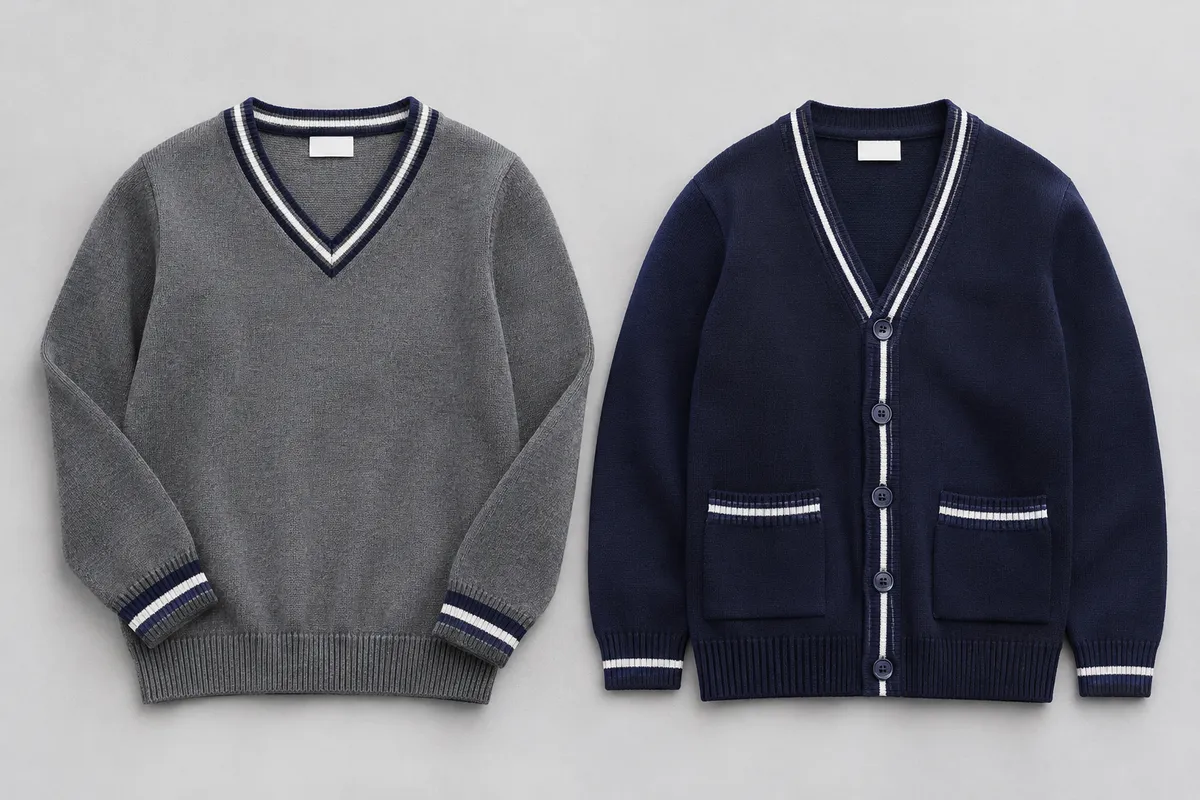
A knitwear dye lot is a batch of yarn dyed together in one run. Yarn from the same lot is the same shade; yarn from a different lot, dyed to the same reference, can differ very slightly. For school jumpers that sit side by side on a shop shelf or in a classroom, keeping those small differences inside an agreed limit is what makes the uniform look like one.
This post explains why lots vary, how the approved sample controls it, and what buyers can do to keep shades consistent from one order to the next.
Why dye lots differ at all
Yarn is dyed in batches. Each batch is matched to the colour standard, but small variations in the fibre, water, temperature and timing mean no two batches come out absolutely identical. The difference is often invisible on its own. It becomes visible when two jumpers from different lots are placed next to each other in daylight.
Knitwear makes this more noticeable than woven garments in one way: the stripe yarns and the body yarn are dyed separately, so each colour in a striped jumper has its own lot.
How shade is controlled
| Stage | What happens | Who is involved |
|---|---|---|
| Reference | You send a garment or yarn swatch | Buyer |
| Shade approval | Yarn or sample is matched and shown to you | Us, then you |
| Sample approval | Sample jumper approved for body and stripe colours | You |
| Production | Bulk yarn checked against the approved shade | Us |
| Quality check | Finished jumpers compared with the approved sample | Us |
| Reorder | New yarn lot matched to the same approved sample | Us, with your approval if needed |
The approved sample, not the colour name, is the reference for every later order. That is the main safeguard against drift. Our fabrics and colour matching page explains the shade approval step in more detail.
What buyers can do
Keep the approved sample safe
Store it folded, away from sunlight, in a bag. A sample that has hung in a shop window for a year will have faded and is no longer a fair reference.
Order a style’s colour in one go where possible
Within a single production run, a style’s body colour normally comes from yarn matched together, so the jumpers match each other. Splitting a colour across several small runs increases the chance of slight differences between them.
Mix stock thoughtfully on the shelf
If new and older stock sit together, it is usually fine. Where a difference is visible, shelve each delivery together rather than mixing sizes from both on one rail.
Look at the right things
Compare shades in daylight, not under shop lighting alone. Compare the body colour and each stripe colour separately.
A shade checklist for new deliveries
- Compare a jumper from the new delivery with the approved sample in daylight
- Check the body colour and each stripe colour separately
- Compare with a jumper from the previous delivery if you have one
- Check the cardigan and jumper together if both were in the order
- Note any concern with photos taken side by side in the same light
We manufacture in India and match every repeat order to the sample you approved, checking it before dispatch. If a shade concern comes up, photos in daylight with the approved sample in the frame are the quickest way to discuss it.
If shade consistency has been a problem with your current knitwear, send us an example, and we will quote your knitted jumpers and cardigans per style, by fabric, quantity and branding.
Questions buyers ask
Why does the new jumper look darker than last year’s?
Last year’s jumper has been worn and washed, so it may have faded slightly. Compare the new delivery with the approved sample, not with a used jumper. If it matches the sample, the difference is wear.
Do stripe colours vary between lots as well?
Yes. Each stripe colour is a separate yarn with its own dye lot. Bright colours like gold or sky blue show small differences more readily, so check them carefully on each delivery.
Can a jumper and cardigan ordered together come from different lots?
They are separate styles and may be knitted at different times, but both are matched to the same approved shade. Approve them side by side on the sample so they look like a set.