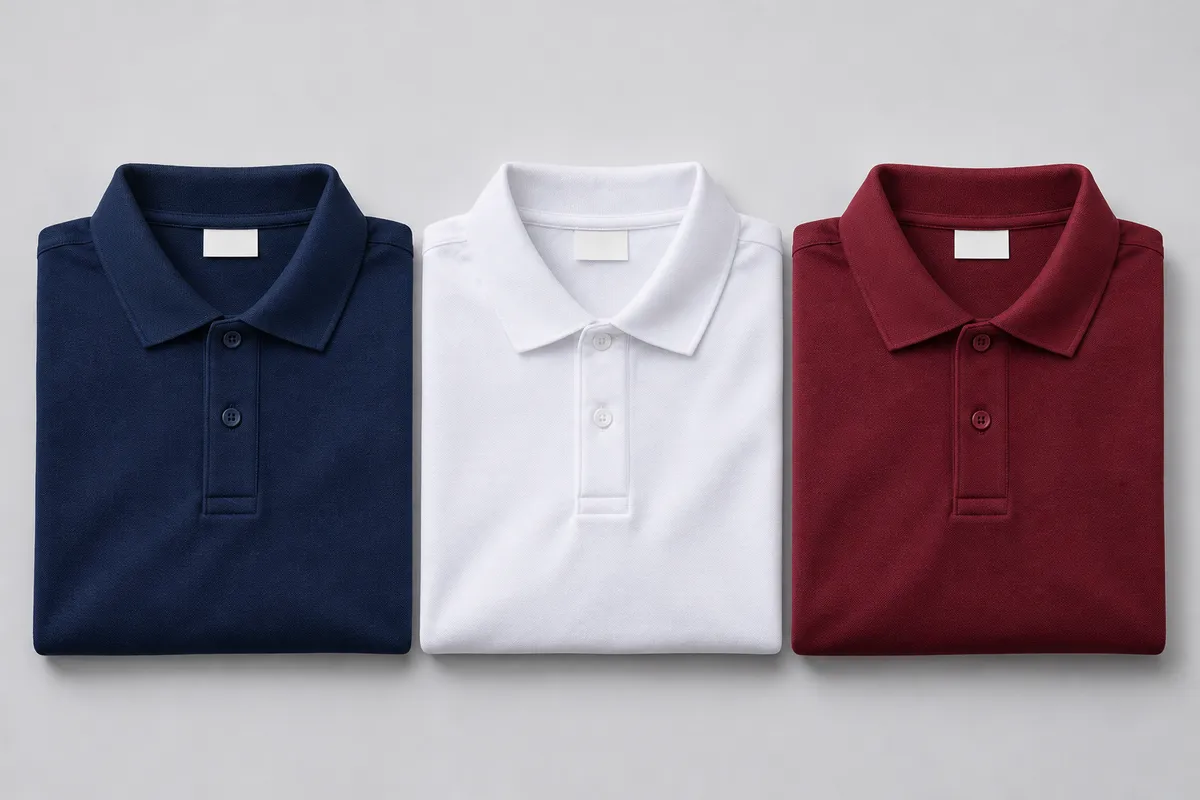
Most schools plan for between two and four polo shirts per student per year, but the right figure for your order depends on how many days a week the polo is worn, how often families wash, whether the polo doubles as PE kit, and how fast the age group grows. A daily-wear polo for young children sits at the top of that range; a polo worn under a jumper by senior students sits at the bottom.
The figure matters because it turns a school roll into an order quantity. Get it wrong by one polo per child, and a school of 400 is 400 polos over or under.
The four things that set the number
Wear days. A polo worn five days a week needs more spares than one worn on PE days or in the summer term only.
Washing. Families who wash every night can manage with two. Those who wash once or twice a week need four or five for a full week.
Other uses. Some schools let students wear the uniform polo for PE or clubs, which adds wear and washes.
Growth. Young children may outgrow a polo before it wears out, so families buy again mid-year. Older students tend to wear polos out rather than grow out of them.
A per-student calculator
Use the table to reach a planning figure for each group of students. The numbers are an example to adjust against your own sales, not a measured average.
| Question | If yes, add | If no, add |
|---|---|---|
| Is the polo worn every school day? | 2 | 1 |
| Do most families wash only at the weekend? | 1 | 0 |
| Is the polo also worn for PE or clubs? | 1 | 0 |
| Are the students in the fastest-growing years? | 1 | 0 |
| Is a second polo colour on the list as well? | Split the total across colours | — |
A reception class wearing the polo daily, with weekly washing and fast growth, comes to four. A senior year wearing it daily under a jumper, washed often, comes to two.
From polos per student to an order
Once you have a figure per group, the order follows:
- List each group, such as each year group or each school you supply.
- Multiply the number of students by the polos per student.
- Subtract stock you already hold in the right sizes.
- Allow for second-hand and hand-me-downs. If many families pass polos on, reduce the figure.
- Split the total by size using your size ratio, and by colour if there is more than one.
The result is the year’s need. Whether it all arrives in one delivery or in two depends on your storage and cash, and on the lead time confirmed in your quotation.
Schools, shops and programmes see it differently
A school buying direct usually supplies every student, so the roll is the whole story.
A uniform shop sells to families who also buy elsewhere, so its share is smaller than the full roll. Past sales are a better guide than the per-student figure alone.
A charity programme often gives a fixed pack, such as two polos per child. Here the number is set by the budget rather than by washing habits, and the job is to get the sizes right.
Our schools and school groups page explains how schools buying for their own students usually order.
Request a quotation
Send us the number of students in each group and the polos per student you have settled on, along with your colours, logo and size range. We quote per style, by fabric, quantity and branding. Our polo styles are listed on the school polo shirts page.
Questions buyers ask
Do students need more polos in hot weather?
In warm months students sweat more, and families wash more often, which can mean another polo or two. If your summer term is hot, or the polo replaces a shirt only in summer, plan the extra for that season.
Should we count long-sleeve polos in the same total?
Count them separately. A long-sleeve polo usually replaces a short-sleeve one for part of the year rather than adding to it, so a student might own three short-sleeve and one long-sleeve, not four of each.
How do we check our per-student figure is right?
At the end of the year, divide the polos you sold or issued by the number of students. If that figure is well below your plan, check whether families bought elsewhere before cutting it, since the gap may be lost sales rather than low need.