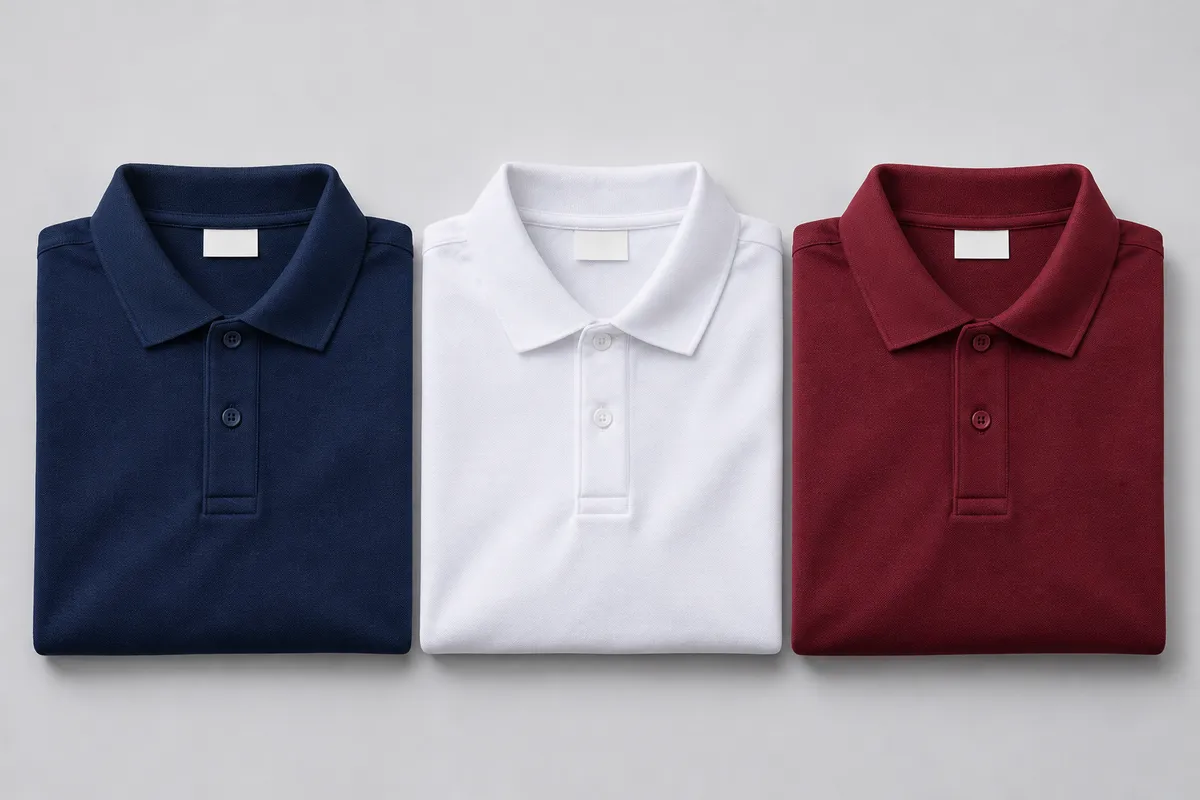
A single polo shirt weighs only a few hundred grams at most, with children’s sizes lighter than adult sizes. The exact figure depends on the fabric weight, the size, the sleeve length and the trims. For a bulk order, the reliable way to know is to weigh the approved sample in each size band rather than rely on a general figure.
Garment weight matters to trade buyers mainly for estimating cartons, freight and storage, and as a rough check that a polo has been made in the fabric agreed.
What makes one polo heavier than another?
Several things add up to the finished weight of a polo:
| Factor | Effect on weight |
|---|---|
| Fabric weight (GSM) | Heavier piqué means a heavier polo |
| Size | Larger sizes use more fabric |
| Sleeve length | A long-sleeve polo weighs more than a short-sleeve one |
| Collar and cuffs | Rib trims add a little weight |
| Fibre | Poly-cotton and polyester differ slightly at similar fabric weights |
| Logo | Dense embroidery adds a small amount |
| Labels and buttons | Small, but they count across thousands of pieces |
| Packing | Polybags, tags and inserts add to the packed weight |
The difference between a small child’s short-sleeve polo and a senior student’s long-sleeve polo can be large, so one average figure is rarely accurate across a whole order.
Why garment weight matters to a bulk buyer
For a shop or supplier, weight affects planning in a few ways:
- Freight. Shipping is often charged on weight or volume, whichever is greater. Knowing roughly how heavy a carton of polos is helps when comparing shipping methods.
- Carton handling. Cartons need to be safe to lift in a stockroom.
- Storage. Shelving and racking have load limits.
- A check on fabric. If a delivered polo is noticeably lighter than the approved sample in the same size, it is worth checking the fabric.
Shipping method, terms and documents are confirmed in the quotation. We take enquiries from buyers in any country.
How to estimate the weight of a polo order
Rather than using a single figure from the internet, build the estimate from your own order:
- Weigh the sample. When the approved sample arrives, weigh one polo in a small, middle and large size.
- Group your sizes. Split your size mix into small, middle and large bands.
- Multiply. Multiply the count in each band by the weight of its sample size.
- Add packing. Add polybags, size stickers and the cartons themselves.
- Leave a margin. Fabric weight varies slightly in production, so allow some room.
This gives a working figure for freight planning that reflects your own sizes and fabric, not a general average.
Garment weight and fabric weight are different
Buyers sometimes confuse the weight of a polo with the GSM of its fabric. GSM is the weight of a square metre of fabric. Garment weight is how much the finished polo weighs. A heavier fabric gives a heavier polo, but a small polo in heavy fabric can still weigh less than a large polo in lighter fabric.
Our page on fabrics and colour matching explains how the fabric for each order is confirmed. The polo styles and fabrics we make are listed on our school polo shirts page.
If you are planning a polo order and need a weight estimate for freight, ask when you request a quotation. We can give an indication once the fabric and size mix are set, and the approved sample gives the firm figure.
Questions buyers ask
Is a heavier polo a better polo?
Not necessarily. A heavier polo uses more or denser fabric, which can feel substantial but may be warm in hot classrooms. Quality depends on yarn, knitting and making as much as weight, so judge the sample as a whole.
Does a logo make much difference to weight?
A logo adds very little to one polo. Dense embroidery weighs slightly more than a print, but across a carton the difference is small compared with size and sleeve length. It only matters if you are calculating weight very closely.
Can carton weights be shared before dispatch?
Carton details for packing and shipping documents are confirmed as part of the order. Ask for them in your quotation if you need them for freight booking, and they are provided when the order is packed.