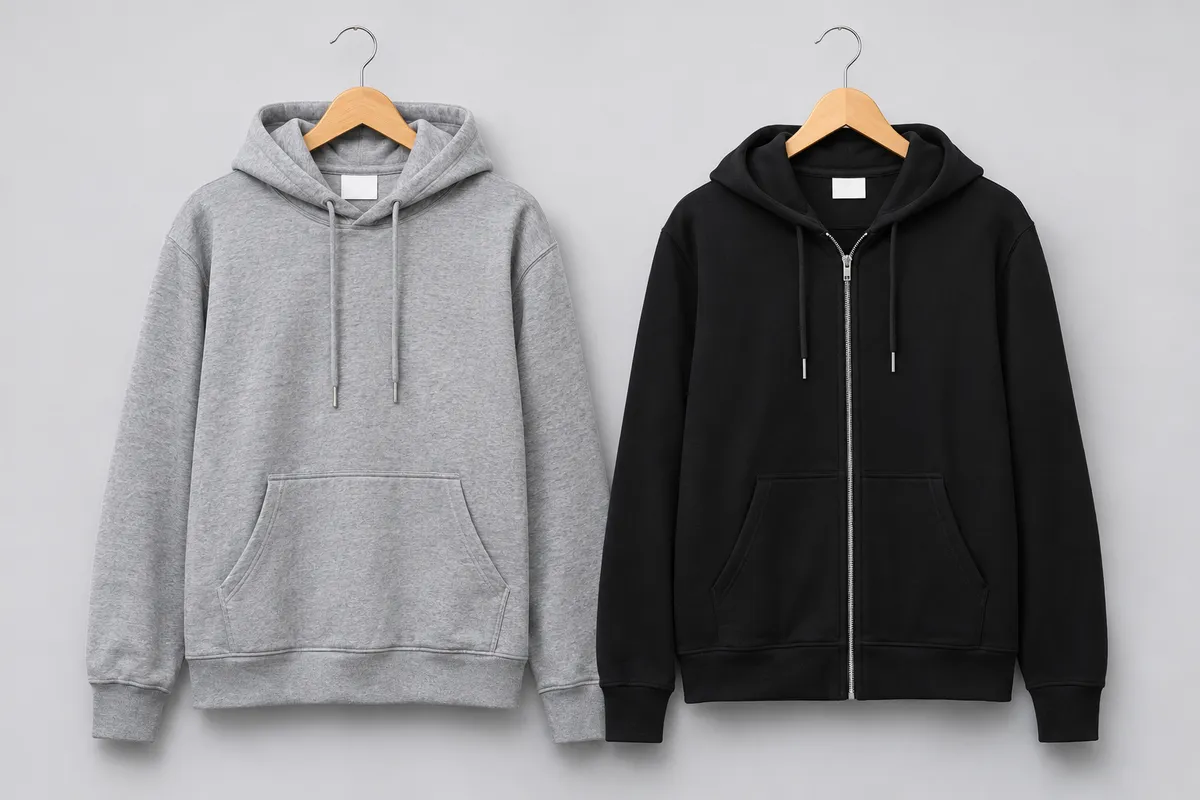
Sweatshirt pilling is the formation of small balls of tangled fibre, often called bobbles, on the surface of fleece. It happens when friction loosens short fibres from the yarn, they twist together into tiny knots, and stronger fibres hold those knots on the surface. Almost any fleece can pill to some degree with wear; how much depends on the fabric, where it is rubbed and how it is washed.
Uniform shops hear about pilling more than almost any other sweatshirt complaint. Knowing why it happens helps you choose fabric, set expectations and give families advice that actually helps.
Where does pilling start on a school sweatshirt?
Pilling follows friction. On a school sweatshirt, the usual places are predictable:
| Area | What rubs it | Why it shows |
|---|---|---|
| Underarms and inner sleeves | Arms moving against the body | Constant contact all day |
| Sides at the waist | School bag straps, desks | Repeated rubbing in one spot |
| Cuffs | Desks, pushing sleeves up | Heavy handling |
| Front at the stomach | Leaning on tables | Pressure and movement together |
| Back | Chair backs, bags | Contact through the school day |
Pilling in these places is a sign of wear, not usually of a fault. A sweatshirt that pills all over after very little wear is a different matter and worth raising with your supplier.
Why do some sweatshirts pill more than others?
Several factors combine:
- Fibre length. Short fibres work loose more easily than long ones.
- Yarn twist. A loosely twisted yarn releases fibres more readily.
- Fibre strength. Polyester fibres are strong, so once a pill forms they tend to hold it on the surface. Cotton pills tend to break off more readily.
- Fabric surface. A smooth, tightly knitted outer face resists pilling better than a loose one.
- Washing habits. Long, hot, crowded wash cycles and tumble drying increase friction.
No fleece is completely free of pilling, and we do not offer pilling ratings or promises. What you can do is judge a sample and pass on care advice that slows it down.
What can shops tell families?
A short care note at the till or on your website saves a lot of conversations. The points that make a difference are:
- Turn sweatshirts inside out before washing, so the outer face rubs less.
- Wash with similar garments, not with towels, jeans or items with zips and hooks.
- Use a gentle cycle and avoid overfilling the machine.
- Air dry where possible, or tumble dry on low heat.
- Remove bobbles gently with a fabric comb or a battery fabric shaver, not by pulling them off, which loosens more fibres.
- Do not worry about a few pills in high-wear spots; they are normal on fleece.
Some shops print this on a small card that goes in the bag with each sweatshirt. It reassures parents that the shop knows the garment, and it gives staff a ready answer when a parent returns with a bobbled sleeve.
How to judge pilling on a sample
You can carry out a simple, informal check:
- Rub a small area of the outer face firmly against a rough fabric, such as a woollen coat, for half a minute.
- Compare it with the same test on the sweatshirt you sell now.
- Wash the sample several times, inside out, and look again.
- Note which one shows bobbles sooner.
This is not a laboratory test, but it shows whether the new fabric behaves at least as well as what your customers already accept. More on fabric choices is on our fabrics and colour matching page.
We manufacture in India in poly-cotton fleece, and every reorder uses the fabric of your approved sample. Send your current sweatshirt and tell us about any pilling complaints, and we will quote your school sweatshirts and make a sample for you to compare.
Questions buyers ask
Is pilling a sign of poor quality?
Not always. Light pilling in high-friction areas is normal on most fleece. Heavy pilling all over the garment after little wear suggests a fabric or yarn that does not suit daily school use, and is worth comparing against a sample.
Does fabric conditioner help with pilling?
Fabric conditioner can make fleece feel softer, but it does little to stop pills forming. Turning the garment inside out, washing gently and avoiding rough items in the same load make more difference.
Can pills be removed without damaging the sweatshirt?
Yes, with a fabric comb or a fabric shaver used lightly over a flat surface. Pulling pills off by hand or cutting them with scissors tends to loosen more fibres or cut the fabric.