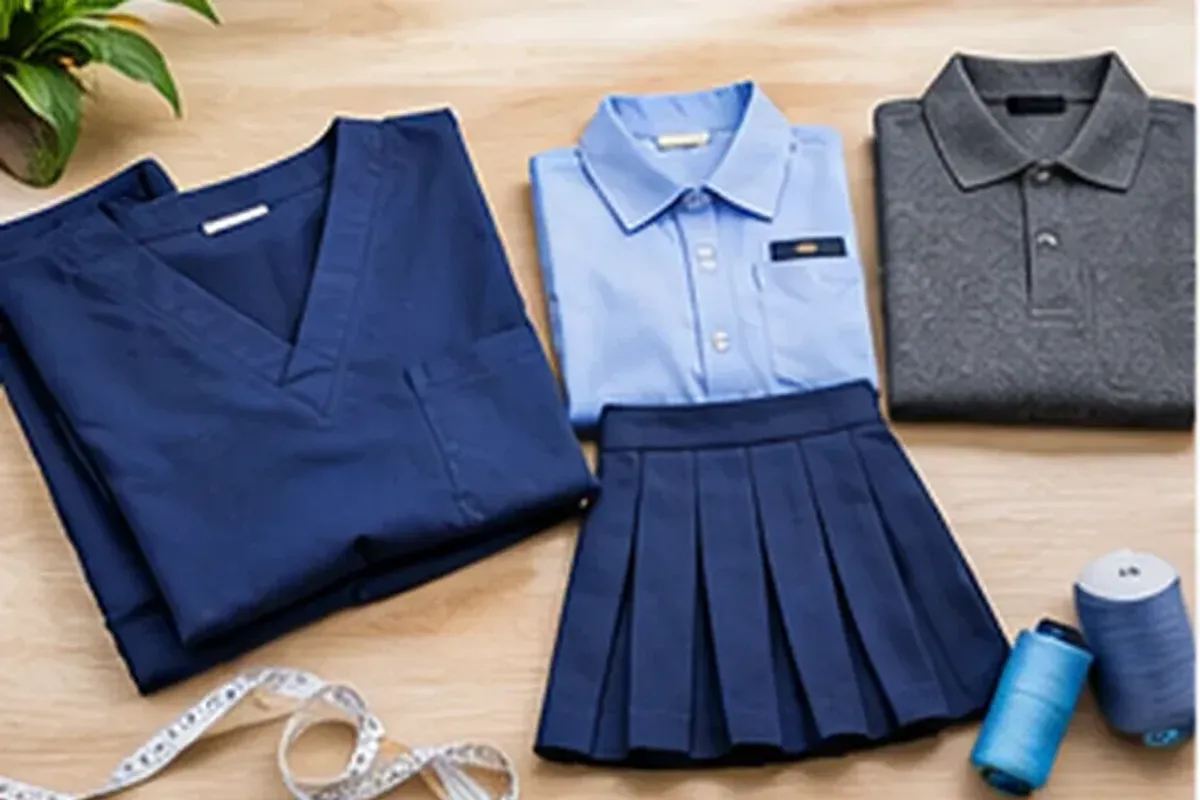
Uniform acceptance criteria are the written terms, agreed before production, that say what a correct garment looks like and what counts as a fault: the approved sample as the reference, how far measurements may vary, which defects are serious and which are minor, and how the delivery will be checked. Agreeing them in advance turns a delivery dispute into a simple comparison.
Without criteria, a buyer and manufacturer can look at the same polo shirt and disagree on whether a slightly uneven hem is a fault. With criteria, both know the answer before the garment is made.
What should uniform acceptance criteria cover?
Keep the criteria short. One page for the whole order, with notes for particular garments, is enough for most school orders.
- The reference. The approved sample of each style is the standard every piece is judged against.
- Measurements. Which points are measured, and the allowance either side of the size chart figure.
- Colour. Bulk should match the approved sample under daylight; small differences between fabric batches are discussed in advance.
- Logo and labels. Correct artwork, position, colours and wording.
- Defects. What counts as a serious, major or minor fault.
- Quantities and packing. Count per style and size, and packing as instructed.
- How faults are reported. By when, with what evidence, to whom.
Grading defects by how much they matter
Not every fault is equal. Grading them helps both sides agree what needs action.
| Grade | Meaning | Examples on school uniform |
|---|---|---|
| Serious | Garment cannot be sold or issued | Hole in fabric, broken zip on trousers, wrong logo, wrong colour, size label not matching the garment |
| Major | Garment is noticeably wrong and likely to be returned | Seam opening, logo clearly off position, button missing, measurement well outside the allowance |
| Minor | Small flaw that most families would not notice | Loose thread end, slight unevenness in topstitching, crease from packing |
Write down examples for your own garments. For trousers, a broken zip is serious. For a polo, a twisted placket may be major. For a knitted jumper, a small snag may be minor or major depending on where it is.
Then agree what happens to each grade. Serious faults are usually replaced or credited. Major faults are discussed. Minor faults are noted but often accepted.
Measurements and the allowance
Every garment varies slightly from the size chart, because fabric moves when it is cut and sewn. The criteria should say which points are checked and how much variation is acceptable.
Choose a few points that matter for fit:
Polo shirts, sweatshirts and jumpers: chest and body length.
Shirts and blouses: chest, body length and sleeve length.
Trousers and shorts: waist and inside leg or length.
Skirts and pinafores: waist and length.
Agree an allowance for each point, larger for knitwear, which stretches, than for woven garments. Write the allowance on the size chart itself, so the person checking the delivery uses the same figure as the manufacturer did.
How the delivery will be checked
The criteria should also say how you will check what arrives. Checking every piece is rarely practical for a large order. A common approach is to open a set number of cartons per style, check a sample of pieces in each against the criteria, and count every carton against the packing list.
- Count cartons against the packing list
- For each style, open cartons from different parts of the shipment
- Check colour against the approved sample, in daylight
- Measure the agreed points on a few pieces in several sizes
- Check logo position and labels
- Record any faults by grade, with photos and carton numbers
- Report faults to the manufacturer within the agreed time
We manufacture in India and run our own quality check against the approved sample before dispatch. Agreeing acceptance criteria at the quotation or sample stage means both your check and ours use the same standard.
Our page for uniform shops and retailers explains how we work on repeat stock for shops. Criteria matter most on high-volume garments such as school polo shirts and school trousers. Send us your criteria with your enquiry and we will confirm them alongside the quotation.
Questions buyers ask
When should acceptance criteria be agreed with a uniform manufacturer?
At the quotation or sample stage, before the advance is paid and production starts. That way the manufacturer can plan its own checks to the same standard, and the approved sample can be signed off as the reference named in the criteria.
Is the approved sample enough without written criteria?
The approved sample is the most important reference, but it cannot show how much variation is acceptable or how faults will be graded. A short written page alongside the sample answers those questions and avoids disagreements when the delivery is checked.
What should we do if part of a delivery fails the criteria?
Record the faults by grade with photos, style, size and carton number, and report them to the manufacturer within the agreed time. Keep the faulty pieces separate and unsold until the issue is settled, so they can be checked or returned as agreed.