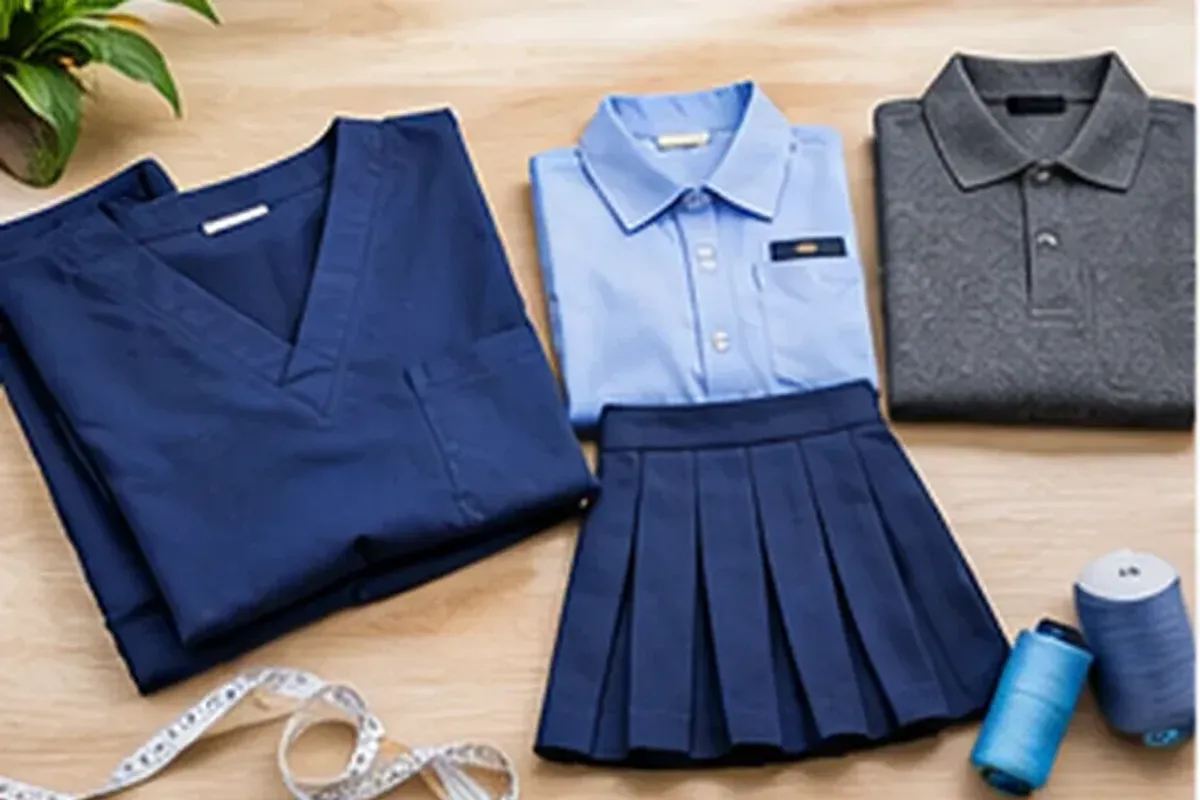
School uniform trims approval means checking every small component on a garment, such as buttons, zips, press studs, braid, elastic and rib, before bulk production, and recording what was agreed. Trims are where wear shows first: a button that loosens, a zip that sticks or braid that puckers in the wash. They are cheap to change at the sample stage and costly to change afterwards.
Trims are easy to overlook because buyers focus on fabric and colour. Yet families judge a uniform as much by a blazer button coming off as by its shade of navy.
Which trims does each garment use?
Every garment on a uniform list has its own set. Use this table to make sure none is forgotten when you specify or approve.
| Garment | Typical trims | What to decide |
|---|---|---|
| Blazer | Buttons, braid, lining, badge pocket | Button style and colour; braid width, colour and where it runs; lined or half-lined, as specified |
| Shirt or blouse | Buttons, collar interlining | Button colour (usually white); a firm or soft collar |
| Trousers and shorts | Zip, waistband button or hook, elastic in the back waist | Zip length; button or hook; elastic-back or plain waist |
| Skirt or pinafore | Zip, button or hook, elastic | Side or back zip; adjustable waist or plain |
| Summer dress | Buttons or zip at front or back | Button-front or zip-front; button colour |
| Sweatshirt cardigan | Buttons or press studs, as specified | Which fastening; colour |
| Knitted jumper | Rib trim, stripes | Stripe colours and widths at neck and cuffs |
| Tracksuit top and fleece jacket | Full zip; contrast panels or piping if specified | Zip colour; whether the zip has a chin guard |
| Polo shirt and PE kit | Placket buttons, rib collar | Button count and colour; collar colour or tipping |
| Nursery smock | Buttons or press studs, as specified | Fastenings young children can manage |
What to check on each trim
When the sample arrives, go through the trims one by one. A few minutes per garment is enough.
Buttons. Do they match the agreed colour and size? Are they sewn firmly, with no loose threads? On blazers, are the cuff buttons the same style as the front? On a shirt, does every buttonhole open cleanly?
Zips. Does the zip run smoothly the full length, more than once? Does the zip colour match or contrast as agreed? On trousers and skirts, is the zip covered by the fabric flap? On a tracksuit top, does the top of the zip sit comfortably at the neck?
Press studs. Do they close firmly and open without too much force? On nursery garments, try them with the strength a small child has.
Braid. Is it the agreed width and colour? Does it lie flat along curves such as lapels and pocket edges? Is the join neat and placed where it will not be seen?
Elastic. Does an elastic-back waist recover after stretching? Is it covered and stitched so it cannot twist inside the channel?
Rib and stripes. On knitwear and polos, are stripe colours and widths as specified? Is the rib firm enough to hold its shape at the cuff and hem?
Recording what was agreed
Trims are often described loosely: “navy buttons”, “gold braid”. Over several orders, those words drift. Record each trim with enough detail to repeat it:
- Trim type and where it is used
- Colour, matched to the sample
- Size: button diameter, braid width, zip length
- Quantity per garment: five front buttons, two cuff buttons each side
- A photo of the trim on the approved sample, with a ruler beside it
- Any spare trims supplied with the order, such as extra buttons
Keep the record with the specification sheet. When a repeat order is placed, the manufacturer can match the trims as well as the fabric.
We manufacture in India and show every trim on the sample for your approval: buttons, zips, braid and fastenings in the colours and positions you specify. Bulk production uses the trims on the approved sample.
Our page for uniform shops and retailers explains how we handle a shop’s repeat styles. Trims matter most on garments such as school blazers and tracksuits and jackets. Send us your specification, or a garment showing the trims you use now, and we will quote and sample each style.
Questions buyers ask
Should spare buttons be sewn into school blazers?
Many shops and schools ask for a spare button on the inside of each blazer, or a small bag of spares with the order. Either way, state it in the specification so it is shown on the sample and costed in the quotation. Families appreciate it more than most buyers expect.
Are press studs or buttons more practical for young children?
Press studs are often easier for small fingers and quicker for staff helping a child dress. Buttons last well and look neater on some garments. For nursery smocks and sweatshirt cardigans, we make either, as specified, so try both on samples before deciding.
Can we change a trim on a repeat order?
Yes, but treat it as a change to the specification. Send the new trim reference, ask for it to be shown on a sample, and update your records. Otherwise the old and new garments may sit side by side in a shop looking slightly different.