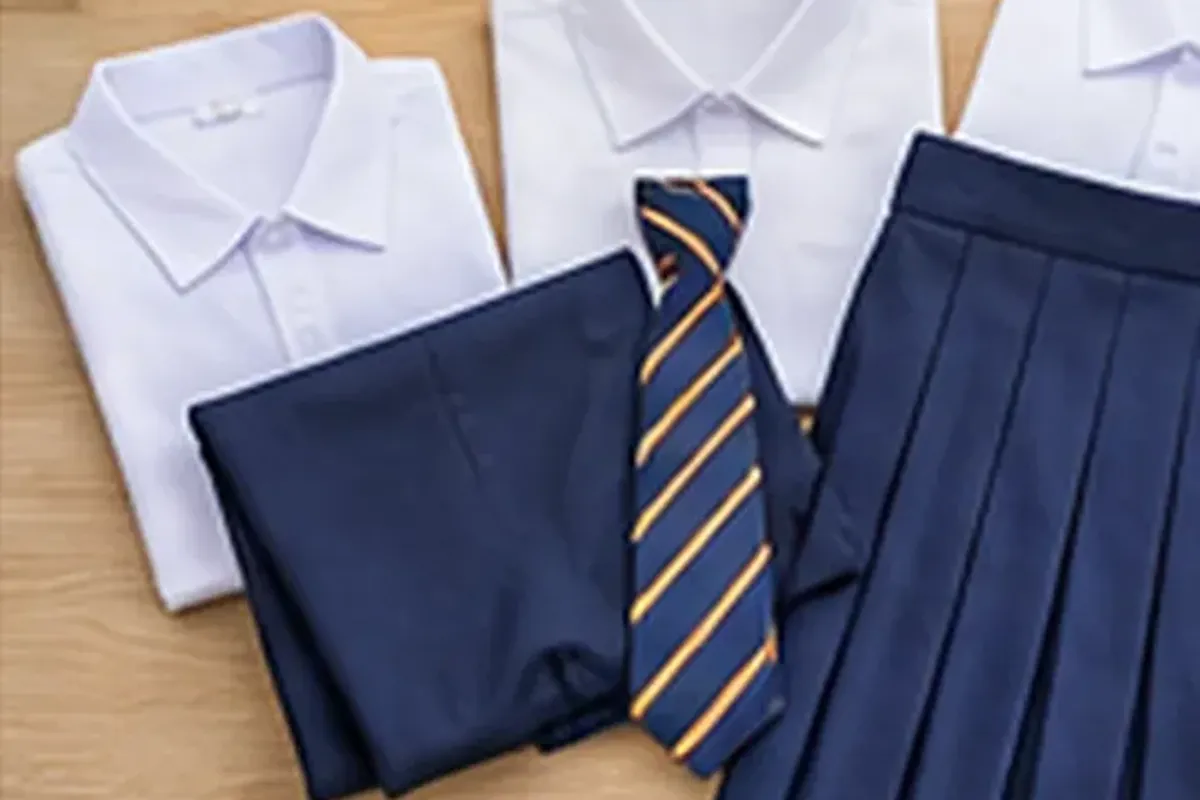
The types of skirts schools put on a uniform list come down to four: the pleated skirt, the A-line skirt, the check skirt (pleated or A-line, in a woven check) and the skort, which adds shorts underneath. Pleated skirts look the most traditional, A-line skirts are the simplest to wear and care for, check skirts carry a school’s identity in the fabric itself, and skorts suit active younger girls. Most schools pick one main type and sometimes allow a second.
Each section below describes one type, then a table brings them together for comparison.
What are the four types of school skirt?
The pleated skirt
A pleated skirt has folds pressed and stitched round the waist, falling to the hem. Knife pleats (all facing one way) are the commonest; box pleats give a fuller look. The pleats may run all the way round or sit only in front and back panels with flat sides.
It suits schools that want a formal, recognisable look, and is worn from the first primary years to the end of secondary school. The pleats need to be heat-set so they survive home washing, which is why polyester-rich fabrics are usual.
The A-line skirt
An A-line skirt has no pleats, or just one inverted pleat at the front or back. It fits closely at the waist and widens gently to the hem, like the letter A. With fewer seams and no pleats to press, it is quicker to make and easier for families to iron.
It suits schools that want a neat but simple look, and older students who prefer a cleaner line. It uses less fabric than a fully pleated skirt.
The check skirt
A check skirt is a pleated or A-line skirt made in a yarn-dyed check, where the coloured yarns are woven into the pattern. In the USA it is often called a plaid skirt. The check itself becomes part of the school’s identity, so its colours and scale are chosen carefully.
Cutting a check skirt takes more care, because the pattern must line up across seams and pleats. That uses more fabric and adds time. A school changing its check should plan for it, since the new fabric must be woven to order.
The skort
A skort looks like a skirt from the front but has shorts sewn inside. The outer panel is usually pleated or A-line, in the same fabric as the school skirt. It suits younger girls who play actively, and is popular with schools that want a skirt look without the worry of climbing or sitting on the floor.
How do the four types compare?
| Type | Look | Fabric use | Care at home | Typical ages | Specifying points |
|---|---|---|---|---|---|
| Pleated | Formal, traditional | High | Pleats need to stay set | All ages | Pleat type, count, stitch-down |
| A-line | Neat, simple | Low | Easiest | All ages, often older | Length per size, any single pleat |
| Check | Distinctive | High, for pattern matching | As pleated or A-line | All ages | Check colours and scale, matching |
| Skort | Skirt from front | Highest, two layers | Easy | Primary into early secondary | Panel coverage, short length |
Choosing the type for your list
For a school, the choice is mostly about appearance and the rest of the uniform. A school with a blazer and tie often chooses pleated or check. A polo-and-sweatshirt school may choose A-line or skort.
For a uniform shop, plain pleated skirts in grey, navy and black are the most widely shared across schools, so they can be stocked under the shop’s own label. Check skirts are school-specific and need their own stock.
Before ordering, decide:
- Which type, or types, the list allows
- Fabric: poly-viscose, polyester twill, or yarn-dyed check
- Waist: fixed, adjustable or elastic-back
- Finished length per size
- For check skirts: a swatch or current garment to match
We manufacture all four types in India, in bulk, from 50 pieces per style with sizes mixed. See the full set of styles on our school skirts and skorts page. Shops building a skirt range across several schools can read our page for uniform shops and retailers.
Send us the skirt types on your list, with colours or a check swatch, and we will quote each one.
Questions buyers ask
What is the most common school skirt?
The pleated skirt in a plain colour, usually grey, navy or black, is the skirt most often found on uniform lists across many countries. It works with almost any top and warm layer, and suits every age group from primary to senior school.
How long should a school skirt be?
Length is usually set by the school’s uniform policy, often around the knee. For ordering, finished length is agreed per size on the size chart, with longer lengths for older age bands. Send your current garment and we follow its length.
Can one skirt style suit both primary and secondary students?
Yes. A pleated or A-line skirt can run from young age bands up to waist sizes for senior students in the same style. Some schools change the type at secondary level for a more grown-up look, but it is not required.