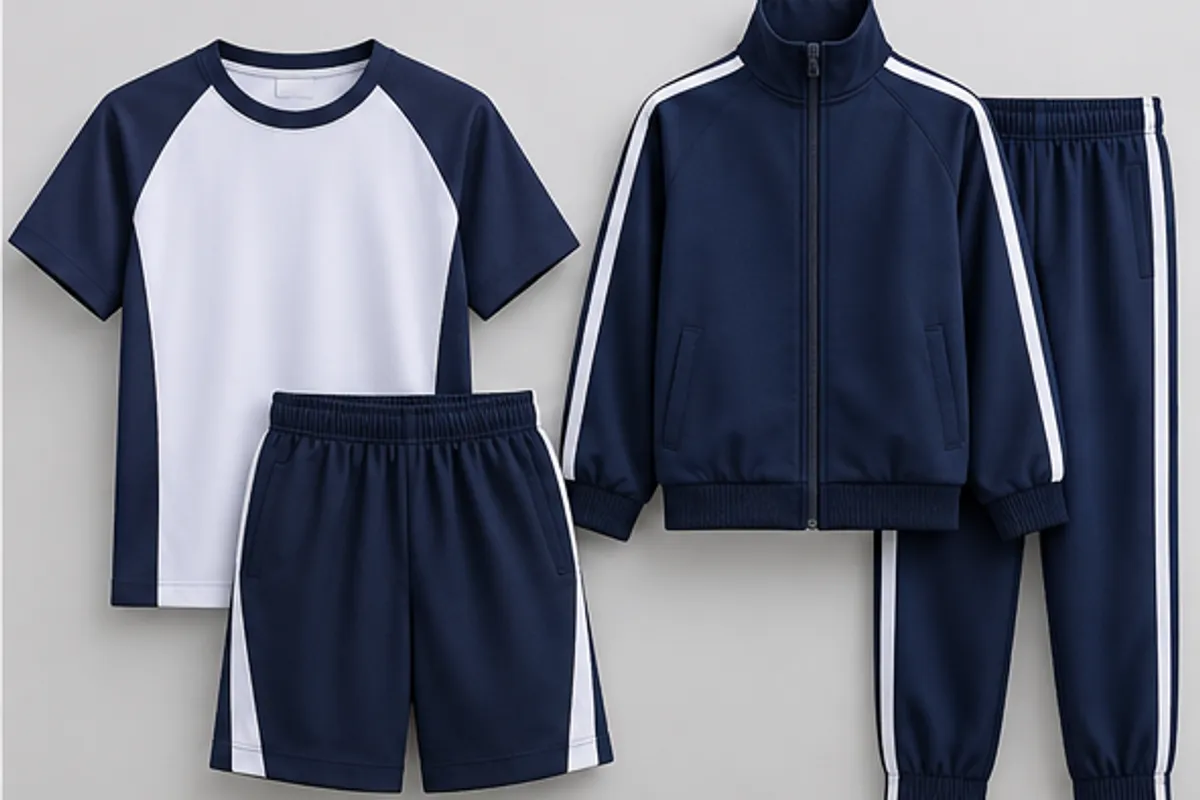
A tracksuit fitting set is one top and one pair of bottoms in every size of your range, kept so students can try them on before a bulk order or a squad order is placed. It turns a guess into a recorded size for each student, and it shows up gaps in the size range before production rather than after delivery. Fitting sizes help most for new tracksuits, sports squads and older students moving into adult sizes.
This guide explains what to put in a fitting set, how to run a fitting session, and how to turn the results into an order.
What goes in a fitting set?
The set should mirror the size range you intend to order. If the range runs from age 11–12 to adult XXL, the set holds one of each size, for each piece being ordered.
| Piece | Sizes in the set | Why |
|---|---|---|
| Tracksuit top | Every size in the planned range | Students judge chest and sleeve by trying on |
| Tracksuit bottoms | Every size, plus a long-leg pair if you offer one | Leg length can only be judged standing in shoes |
| Fleece jacket | Every size, if the fleece is part of the order | Needs trying over the usual layers |
Where do the garments come from? For a reorder, from existing stock. For a new tracksuit, ask at sample stage whether size samples can be made in a full run of sizes before bulk; this is agreed in the quotation. A set made from the approved sample fabric and pattern shows the true fit of the bulk order.
Label every piece clearly with its size on a tag the student can read without hunting for the inside label.
Running a fitting session
A fitting runs well as a short, organised session, often in a PE lesson or at a squad training slot:
- Lay the set out in size order on a table, tops and bottoms in separate rows.
- Ask each student to start with the size they wear in their sweatshirt or polo.
- Have them try the top zipped, raise their arms and check the cuffs reach the wrist.
- Have them try the bottoms with trainers on and check the hem at the ankle.
- Record the chosen size for each piece, which may differ between top and bottoms.
- Fold and return each piece to its place before the next student.
Keep the session moving with one adult recording and another helping with sizes. Students are good judges of comfort but tend to pick sizes on the small side for looks; a quick arm raise settles most disagreements.
Turning fittings into an order
After the session you have a list of names with a size for each piece. Add them up per size, per piece. Then:
- Add a few spares in the busiest middle sizes for late joiners
- Check each piece reaches 100 pieces, or plan how it will
- Note any student who fitted no size well and why
- Keep the list for packing by name if you want it
- Return the set to storage for the next intake
Students who fitted no size are the most useful finding. If several tall students wanted a longer leg, or several fell between age 15–16 and adult S, the chart may need adjusting before production. Our size charts page explains how a chart is agreed, and the pieces in a typical set are shown on our school tracksuits and jackets page.
Once your fitting list is ready, send us the totals by size and piece with your colours and logo, and we will quote each style.
Questions buyers ask
Is a fitting set worth it for a small order?
For a squad of twenty or thirty, borrowing sizes from existing stock is usually enough. A full set is most valuable for a new tracksuit design, a whole year group, or a school changing maker, where fit cannot be assumed from old sales.
Can students try on the actual sample before bulk?
Yes, the approved sample is meant to be tried on. One sample in one size shows colour and construction; a run of sizes shows fit across the range. Ask about size samples when you request the quotation.
Should the fitting set be kept after the order arrives?
Keeping it helps with the next intake and with reorders, since students can try sizes at any time. Mark the pieces as fitting stock so they are not sold, and wash them between sessions.