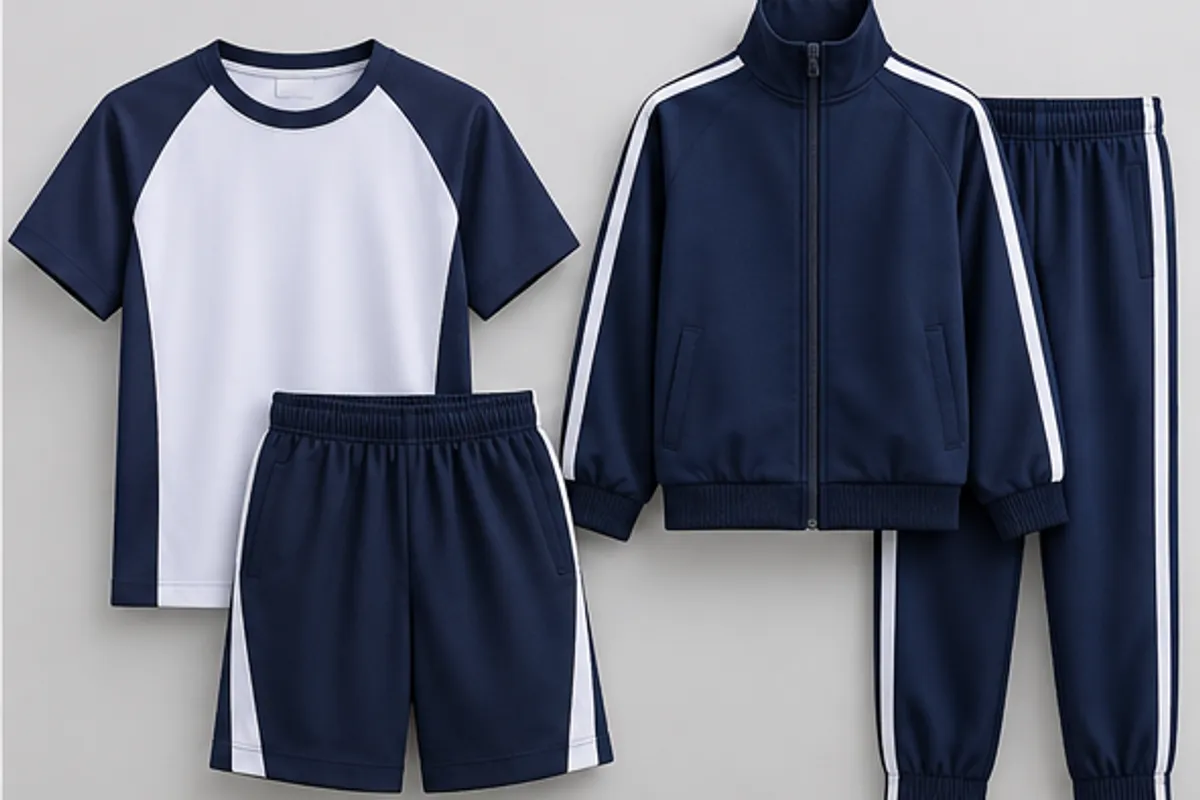
Tracksuit stock for a uniform shop means three separate lines for each school: tracksuit tops, tracksuit bottoms and, where listed, fleece jackets. Each line sells at its own pace and peaks at its own time, so a shop that treats the tracksuit as a single item usually ends up with spare bottoms and missing tops. Plan each piece on its own sales, hold depth where demand is steady, and set a reorder point for each.
This guide is written for retail uniform shops carrying tracksuits for one or more schools.
How tracksuit lines behave on the shelf
Tracksuits are bulky, seasonal and multi-piece, which sets them apart from shirts and polos. The table summarises how each line tends to behave in a shop. Your own sales history will show the real pattern for your schools.
| Line | Selling pattern | Storage | Reorder trigger |
|---|---|---|---|
| Tracksuit top | Steady all year; extra demand with cold weather and sports seasons | Folds flat; moderate space | Middle sizes falling to a few weeks of cover |
| Tracksuit bottoms | Slower than tops; peaks at the start of the year | Folds flat; less space than tops | Leg-length sizes running short in upper years |
| Fleece jacket | Sharp seasonal peak; quiet in warm months | Bulky; most space per piece | Before the cold weather, not during it |
The fleece takes the most shelf and stockroom space for the fewest sales outside winter, so it is the line most worth timing carefully.
How deep should each size be?
Depth means how many pieces you hold per size. For tracksuits, a useful approach is to sort sizes into three groups:
- Core sizes. The middle of each school’s range, where most sales fall. Hold the deepest stock here.
- Edge sizes. The smallest and largest sizes. Hold enough to never be empty, but no more.
- Seasonal sizes. Sizes that move only when a new intake arrives or a squad orders. Build up before those dates.
Never let a size reach zero if you can help it. A family that cannot buy a tracksuit top in their size often buys elsewhere or does without, and the sale does not come back.
Several schools, one stockroom
Shops that stock tracksuits for several schools face a multiplying effect. Three pieces for five schools is fifteen lines, each with its own size range. Ways to keep it manageable:
- Use one tracksuit pattern for all schools, changing only the colourway and logo.
- Keep a stock sheet per school, per piece, with sizes across the top.
- Store each school’s tracksuits together, separated by piece.
- Order pieces for different schools in the same production run where each style reaches the minimum.
- Review slow lines each year; a fleece that sells little might be offered by pre-order only.
Each colourway with its own logo is its own style, so the 100-piece minimum applies to each school’s top, bottoms and fleece separately. Read our uniform shops and retailers page for how we work with shops, and see the pieces on our school tracksuits and jackets page.
A stock review for each term
- Sales by size for each piece, each school
- Sizes below their reorder point flagged
- Fleece stock checked against the coming season
- Squad, trip or intake dates noted from schools
- Slow or dead sizes recorded for the next main order
If you would like a quotation for tracksuit lines for your shop, send us the schools, pieces and approximate quantities, and we will quote each style by fabric, quantity and branding.
Questions buyers ask
Can a shop sell tracksuits under its own label?
Yes. Shops can order with their own woven or printed neck label sewn in, so the tracksuit carries the shop’s name alongside the school’s badge. The label is shown on the sample.
Should a shop stock fleeces all year?
Holding a thin range year-round covers new joiners and losses. Most of the fleece order is better timed to land before the cold months, since stock held through the summer takes up a lot of space.
How can a shop avoid leftover tracksuit bottoms?
Order bottoms on their own sales history, not as pairs with tops. Bottoms usually sell more slowly, so their quantity and size mix should be smaller and adjusted after each season.