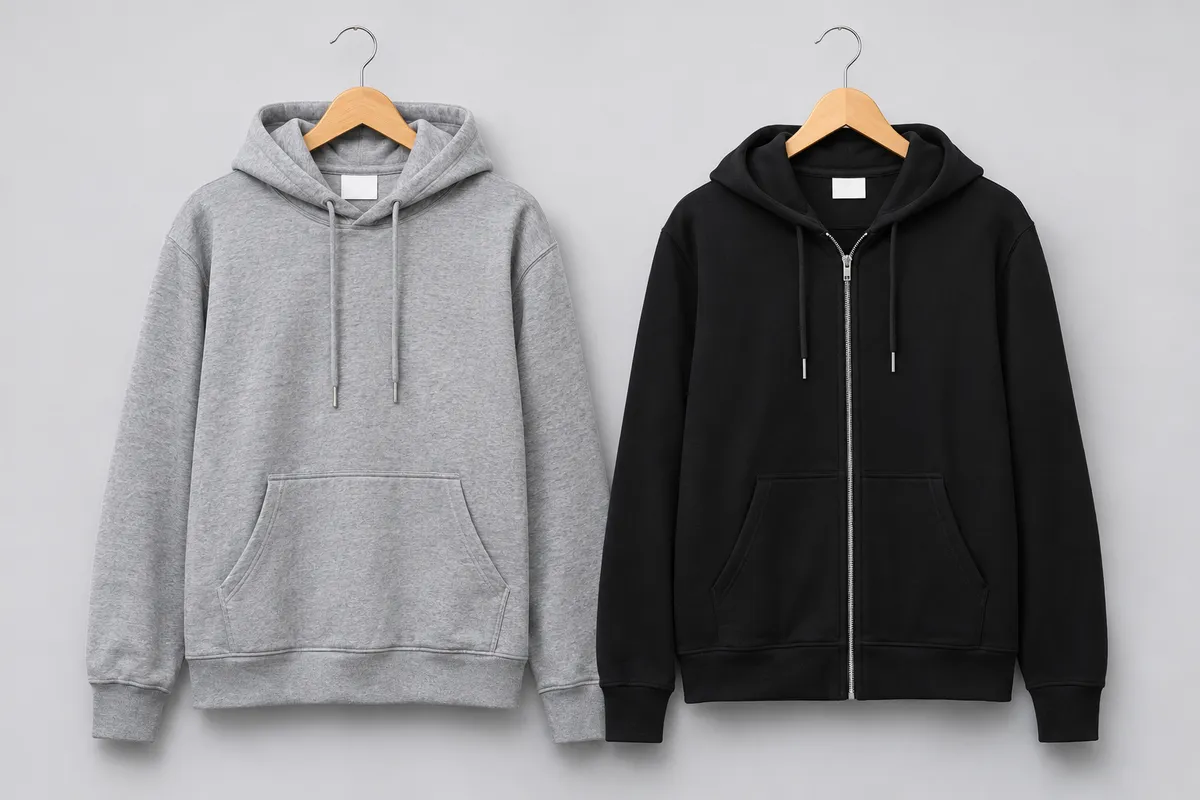
A good sweatshirt size ratio for a uniform shop is weighted to the middle primary sizes, with thinner stock at both ends of the range. Sweatshirts are bought loose and often a size up, so the peak usually sits one band above the age of the largest year groups.
The tables below are a starting example to adjust against your own sales or roll data. They are not a rule, and every shop’s mix differs with the schools it serves.
Why sweatshirts need their own ratio
It is tempting to copy the ratio you use for polo shirts or PE kit. Sweatshirts behave a little differently.
- Bought to last. Families often buy a sweatshirt with room to grow, expecting it to last more than one school year. That pushes demand up one size.
- Worn over other layers. A sweatshirt goes over a shirt or polo, so a tight fit is a reason to size up again.
- Fewer per child. A family may buy three polos but one or two sweatshirts. Small sizing errors leave you with slow stock for longer.
- Seasonal peaks. Sales rise at the start of the school year and again when the weather turns cold, so a size gap shows quickly.
A starting ratio for a primary school sweatshirt
This example is for a crew-neck logo sweatshirt for one primary school, using age bands. Our size ranges are set per order; the bands here are examples for planning.
| Size | Starting share of the order | Note |
|---|---|---|
| 3–4 | Low | Nursery and reception, if they wear the sweatshirt |
| 5–6 | Medium | New intake each year |
| 7–8 | High | Core size |
| 9–10 | High | Core size, often the peak |
| 11–12 | Medium | Top juniors sizing up |
| 13–14 | Low | Tall top juniors and size-up buyers |
If you sell secondary sweatshirts, extend the range to 15–16 and then chest sizes for senior students. Senior sizes tend to sell more slowly but are hard to replace in a hurry, so stock them shallow but never empty.
Crew necks, V-necks and cardigans
Each style has its own ratio. Do not split one ratio across all of them.
Sweatshirt cardigans are often bought for younger children, and many schools list them only up to the junior years. Our cardigan range runs to age 13–14, and you may find demand falls away well before that. Weight cardigans lower than crew necks.
V-neck sweatshirts are often chosen for older years, so their ratio may peak later than the crew neck.
Leavers’ hoodies are not stocked by ratio at all. Each student gives a size, and the order is built from that list in age bands from 9–10 to 15–16, then adult S to XXL.
| Style | Where demand peaks | How to plan |
|---|---|---|
| Crew-neck sweatshirt | Middle primary sizes | Starting ratio above, adjusted to sales |
| V-neck sweatshirt | Upper junior and secondary sizes | Shift the peak one or two bands up |
| Sweatshirt cardigan | Infant and lower junior sizes | Lower overall, top sizes thin |
| Leavers’ hoodie | Set by the student size list | Order to the list, plus a few spares |
Adjusting with your own sales
After the first season, replace the example with your own figures. A simple method works well:
- Record opening stock and sales by size for each style and school
- Mark the date each size sold out, if it did
- Note sizes still on the shelf at the end of the season
- Shift quantity from sizes left over to sizes that sold out early
- Check the incoming intake numbers with the school before ordering the smallest sizes
- Keep each school’s ratio separate, because schools differ in age range and size-up habits
Our minimum is 100 pieces per style, with sizes mixed freely within it. A top-up order can therefore be weighted almost entirely to the sizes you are short of. Lead time is confirmed in the quotation, so plan your reorder before the cold-weather peak rather than during it. The minimum order and samples page covers how mixed sizes are counted.
Size marking and the chart
A ratio only works if customers can find the right size quickly. Agree a size chart for each order, and keep the marking on the neck label in the same form your shop uses, whether that is an age band, a chest size or both. If you already sell sweatshirts, send one in each size and we match the measurements on the sample. Our size charts page explains how a chart is agreed.
When you have a first ratio, even a rough one, send it to us with the styles and colours. Your school sweatshirts and hoodies are then quoted per style, by fabric, quantity and branding.
Questions buyers ask
Can age bands and chest sizes be mixed in one style?
Yes. A single style can run from age bands into senior chest sizes, and every size counts towards the 100-piece minimum for that style. That lets a secondary order cover juniors and seniors without splitting into two styles.
How do I set a ratio for a school new to my shop?
Ask the school for its roll by year group and, if it can share them, sales figures from its previous supplier. Start lean in the edge sizes, then top up once the first weeks of selling show the real pattern.
Does a colder climate change the ratio?
The shape usually stays similar, but the total rises where sweatshirts are worn for most of the year, and families may buy a second one. Plan a larger reorder before winter rather than changing the size split itself.