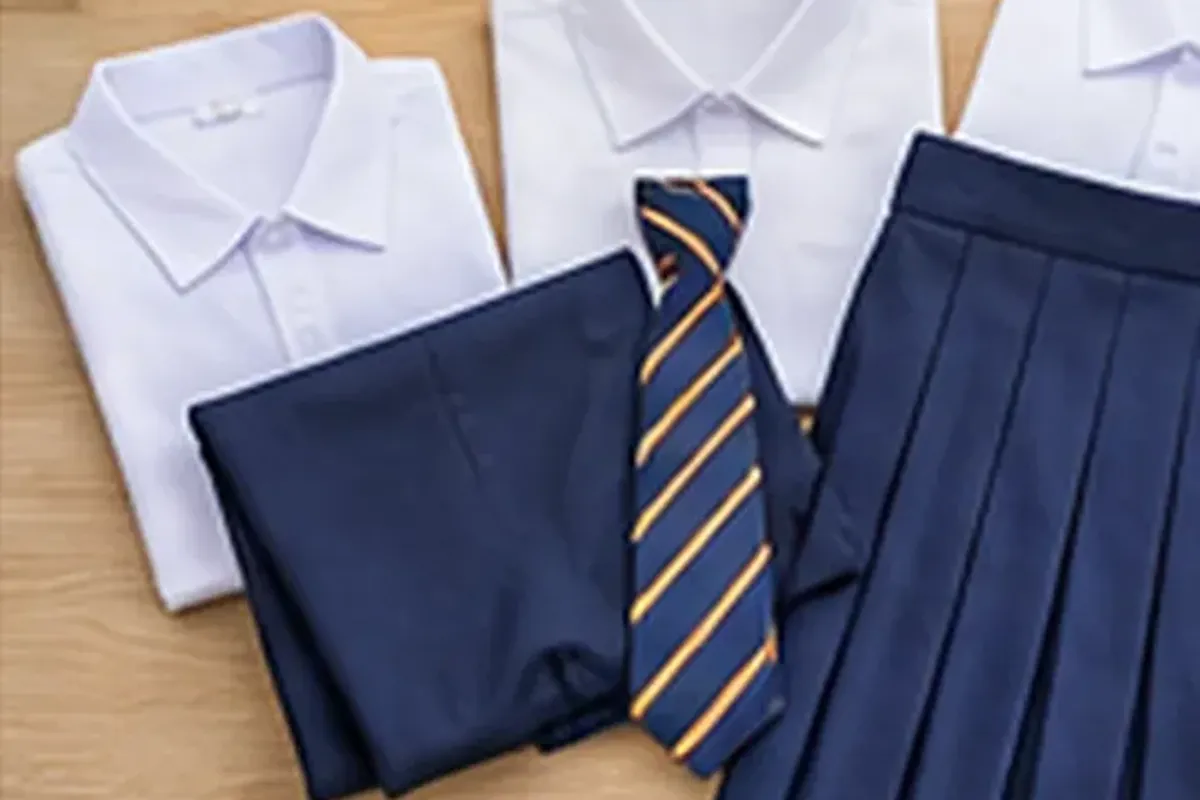
A clear pleated school skirt specification sets out the pleat type and number, the waistband and fastening, the finished length for each size, the fabric and colour, and your label. For skorts, add how the shorts sit beneath the skirt panel. With those fixed, the sample shows exactly what bulk production will make.
Skirts look simple, but small differences in pleats, waistband and length change how they hang and how they sell. A school that has worn the same skirt for years will notice if a new batch has fewer pleats or sits higher on the knee.
Choose the style first
We make pleated skirts, A-line skirts, check skirts and skorts. Each is a separate style with a minimum of 50 pieces, and sizes can be mixed within it.
| Style | What defines it | Points to specify |
|---|---|---|
| Pleated skirt | Pleats all round or in panels | Pleat type, number, depth, stitched-down length |
| A-line skirt | No pleats; flares gently from the waist | Flare, seam placement, any front pleat |
| Check skirt | Pleated or A-line in yarn-dyed check | Check reference, repeat, how the check runs on the pleats |
| Skort | Shorts sewn beneath a skirt panel | Panel style, shorts leg length, waistband |
This post focuses on pleated skirts and skorts, as they need the most detail. A check skirt has its own fabric questions, covered in a separate post.
Pleats, waistband and length
Pleats
Pleats are the heart of the specification. Decide or measure:
- Pleat type. Knife pleats all facing one way, box pleats, or inverted pleats.
- Number of pleats. All round, or front and back panels only.
- Pleat depth. Deeper pleats use more fabric and give more swing.
- Stitched-down length. Pleats are often stitched flat from the waist to the hip, then left open. The stitched length changes how the skirt sits.
If you have a skirt you sell now, send it. We follow your current skirt or your specification, and the pleat layout is fixed on the approved sample.
Waistband and fastening
We make two main waistband types: a flat front with elastic at the back, or a fixed waistband with a button and zip. Elastic-back waists suit younger children and allow room to grow. A fixed waistband gives a more tailored look for seniors. Decide which one each age band gets, and whether the zip sits at the side or back.
Length
Agree the finished length for every size. Schools often have a view on where the skirt should sit, and the length must rise in step with the age bands. If a school wants a shorter and a longer option, we add the second length to the size chart for that style, and both lengths can be mixed within the minimum.
Skort details
A skort has shorts sewn in beneath the skirt panel, in the same fabric and colour. It suits younger and active students, and schools that want a skirt look with more freedom of movement. Our skorts typically run from age 3–4 to 13–14 as a planning example.
For a skort, specify:
- Whether the front panel is pleated, plain or wrap-style
- How long the shorts leg sits below the panel
- Waistband type, usually elastic-back for younger sizes
- Whether the panel covers the front only or front and back
Fabric, colour and label
Plain skirts and skorts are made in poly-viscose or polyester twill, confirmed at quotation. Pleats hold differently in each, so judge pleat sharpness on the sample. Navy, grey, black and bottle green are the usual colours, and we match any plain shade from a fabric sample or reference, with a swatch sent for approval before cutting.
Skirts rarely carry a logo. Most buyers order them plain with their own woven or printed label in the waistband, so one skirt can be sold to several schools that share a colour. If skirts must match trousers, pinafores or blazers, send all references together.
Checklist for your enquiry
- Styles: pleated, A-line, skort, with a quantity per style
- Pleat type, number, depth and stitched-down length, or a sample skirt
- Waistband: elastic-back or fixed with button and zip, by age band
- Finished length per size, and any second length
- Skort panel style and shorts leg length
- Fabric: poly-viscose, polyester twill, or “match our current skirt”
- Colour reference, and any garments it must match
- Label artwork and care details
- Size range and quantity per size
- Delivery country and the date stock is needed
Lead time is confirmed in the quotation, so plan backwards from the start of term and leave room for the sample and your approval. If you are ordering directly for one school or a group of schools, our page for schools and school groups explains how we work. The full range is on our school skirts and skorts page.
Send us your checklist and a current skirt if you have one, and we will quote each style by fabric, quantity and branding.
Questions buyers ask
How do I give a skirt length without sending a sample?
State the finished length from the top of the waistband to the hem for each size, in centimetres or inches. If you only know where the skirt should sit, such as just above the knee, say so and we propose lengths for you to check on the sample.
Can a pleated skirt have a pocket?
Yes. A pocket set into the side seam can be specified on pleated or A-line skirts, so the pleats on the front stay unbroken. Its depth and position are shown on the sample, and it adds a small sewing step to the quotation.
Can one skirt pattern be made in several colours?
It can. The same pattern can run in navy, grey, black, bottle green or a matched shade, which suits shops supplying several schools. The colour split within each style is confirmed at quotation, and every colour gets its own swatch approval.