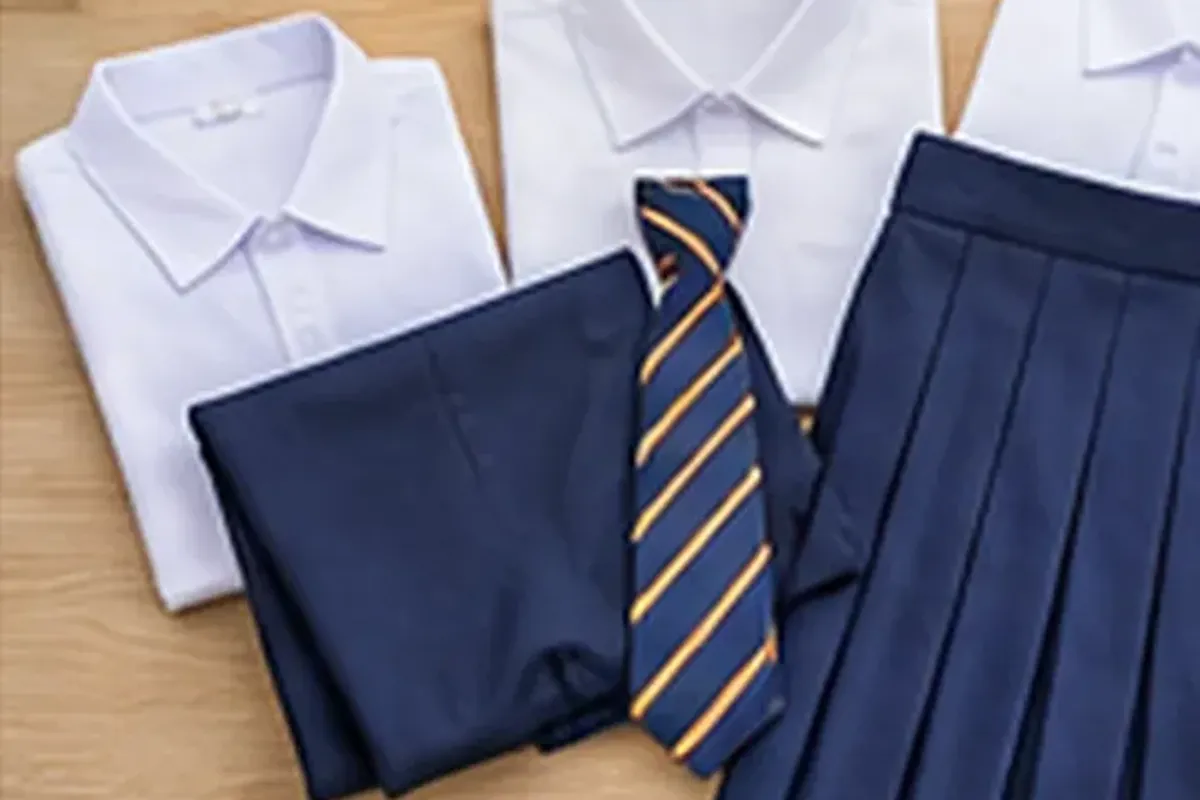
On a stitched down pleats skirt, each pleat is sewn flat for a set distance below the waistband and then released, so the skirt is smooth over the tummy and hip and swings freely below. The stitched length decides the skirt’s silhouette more than almost any other detail: a short stitched section gives a fuller, bouncier skirt, and a long one gives a slimmer, more tailored line. The method of stitching, on the face or hidden inside, changes the look too.
For school skirts, stitched-down pleats also help the skirt keep its shape through daily wear and washing, because the upper part of each fold cannot drift out of place.
Why stitch pleats down at all?
A pleat that hangs loose from the waistband has a lot of fabric folded at the top, where the body is curved. Without stitching, those folds can spread over the hip and make the skirt look bulky. Stitching them down:
- holds the folds flat where the body is widest,
- keeps the pleats evenly spaced from day to day,
- reduces the amount of home pressing needed at the top of the skirt,
- and gives a defined point where the swing starts.
Almost every pleated school skirt has some stitched section. The questions are how long, and how it is sewn.
How long should the stitched section be?
The stitched length is usually measured from the waistband seam down. The right length depends on the look the school wants and the age of the wearer.
| Stitched length | Effect on the skirt | When it suits |
|---|---|---|
| Short, near the waistband only | Pleats open high; full, lively skirt | Younger students, a playful look |
| Middle, to around the high hip | Balanced: smooth top, steady swing | Most school skirts |
| Long, to the full hip | Slim, tailored line; swing from the low hip | Senior students, a smart look |
The length is usually graded by size. A senior skirt has a longer hip depth than a junior one, so the stitched section lengthens as the sizes go up. Write the length at your reference size and say whether it should scale with the size chart.
Edge-stitched or stitched inside?
There are two main ways to hold a pleat down.
Edge-stitching on the face
A line of stitching runs close to the fold edge on the outside of the skirt. It is visible, gives a crisp, sharp edge, and holds the fold firmly. It is the most common method on knife and box pleat school skirts, and the stitch line itself becomes part of the look.
Stitching from the inside
The pleat is sewn along its inner fold from the wrong side, so nothing shows on the face. The skirt looks softer and plainer at the top. This method suits inverted pleats and skirts where the school wants no visible stitching. The fold edge is pressed rather than held by a stitch, so it may need more pressing at home.
Whichever method you choose, the stitching should end with a secure backstitch or a small bar tack. That end point takes strain each time the student sits or bends, and a firm finish there stops the stitching from unpicking over time.
Fabric and thread
The stitched section is where fabric and thread choice show most. In poly-viscose or polyester twill, the thread is matched to the fabric colour so the edge-stitching blends in. In yarn-dyed check, the thread is usually matched to the main ground colour of the check. Our fabrics and colour matching page explains how shades are matched and approved.
A fabric that holds a crease firmly keeps the open part of the pleat sharp below the stitching. A softer fabric drapes more and shows a gentler transition from stitched to open.
Points to specify
- Stitched-down length at your reference size
- Whether it grades with size or stays fixed
- Edge-stitched on the face, or stitched from the inside
- How the end of the stitching is secured
- Thread colour for plain and check fabrics
See every style we make on our school skirts and skorts page. We manufacture in India and set the stitched length on the approved sample for each size. Send a current skirt with the measurement marked, and we will quote it and plan the sample around it.
Questions buyers ask
Can the stitched section be different on the front and back?
Yes. Some skirts stitch the back pleats a little longer so they lie flat over the seat when the student sits, while the front opens higher for movement. The difference is set on the sample and graded across your sizes.
Why has the stitching on some of our old skirts come undone?
Usually the end of the stitched line was not secured firmly enough, so the stress of sitting and bending pulled the stitches loose. Asking for a backstitch or bar tack at each end point addresses this directly.
Does edge-stitching change how the skirt should be ironed?
It makes ironing a little easier, because the stitched part of each pleat stays in place and only the open section below needs pressing. Families can press the folds in line with the stitching to keep them straight.