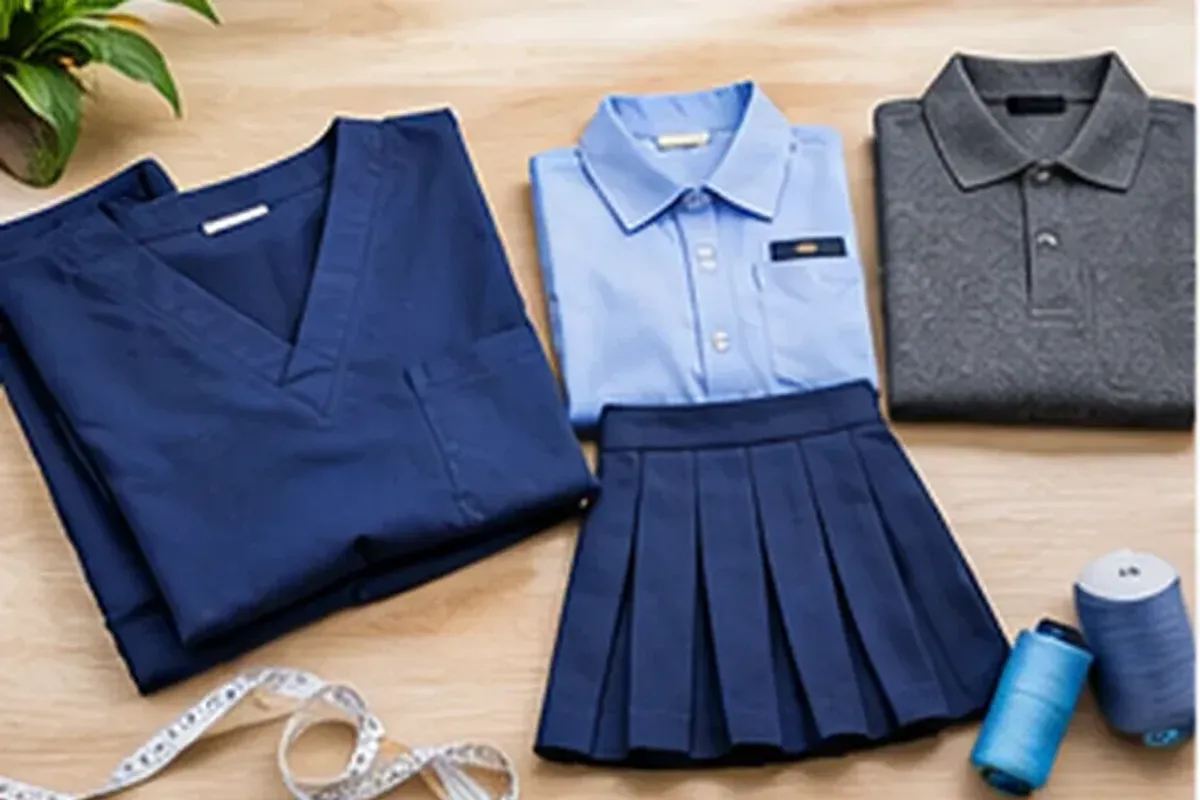
Sealed uniform reference samples are approved garments, one per style, that are tagged, signed, stored unworn and kept as the fixed standard for every future order. The buyer keeps one and the manufacturer keeps a matching one. When a reorder is placed, both sides compare new production with the same physical garment, so colour, fit and logo stay consistent from year to year.
“Sealed” simply means the sample is marked so it cannot be confused with ordinary stock: bagged, tagged and signed by both sides.
Why keep sealed samples at all?
Paper specifications describe a garment, but they cannot hold a shade of bottle green or the exact feel of a pinafore’s pleats. Photographs shift colour on every screen. Over several orders, without a physical reference, small differences creep in. Each order is matched to the last one rather than to the original, and the drift adds up.
A sealed sample breaks that chain. Every order is matched to the same garment, not to whatever came before.
What to seal for each garment
Seal one garment per style, in a middle size. For garments where size changes the look, such as pleat spacing or logo scale, consider sealing a small and a large size too.
| Garment | What the sealed sample fixes | Extra to seal |
|---|---|---|
| Pinafore or tunic | Cloth colour, pleat depth and spacing, length proportion | A small size, as pleats scale |
| Skirt or skort | Cloth colour, pleats, waistband | None usually |
| Shirt or blouse | Fabric, white or colour shade, collar shape | None usually |
| Polo shirt | Piqué texture, colour, collar and logo | A cut of collar rib if contrast tipped |
| Knitted jumper or cardigan | Yarn shade, rib, trim stripes, logo | None usually |
| Sweatshirt | Fleece colour, logo method and size | None usually |
| Blazer | Cloth, braid, buttons, badge, lining | Spare buttons and a length of braid |
| PE kit | Each house colour, print or embroidery | One per house colour |
| Tracksuit or fleece jacket | Colour, zip, panels or piping if specified | None usually |
For trims, such as blazer braid or buttons, sealing a short length or a few pieces alongside the garment helps match them separately later.
How to seal and tag a reference sample
- Choose the garment. Use the approved pre-production sample, or a garment from the first bulk delivery that matches it.
- Tag it. Attach a tag showing the style number and name, the specification version, the size, the date approved, and the order it was approved for.
- Sign it. Both buyer and manufacturer sign or initial the tag. If you are in different countries, each side signs its own matching sample and records the other’s approval.
- Bag it. Fold the garment and place it in a clear bag, sealed with the tag visible.
- Store it. Keep it flat, dry and away from light, which fades colour over time.
- Record it. Note in the order file where each sealed sample is stored.
Using sealed samples when reordering
When placing a reorder, refer to the sealed sample by its tag details: “Style 07, v2.0, sealed 2026-05-12.” When the new pre-production sample or first bulk pieces arrive, open the sealed sample and compare them side by side in daylight.
- Colour: the same shade in daylight
- Fabric: the same weave, knit or texture
- Measurements: key points match the sealed size
- Logo: same size, position and thread colours
- Trims: same buttons, braid, zips and stripes
- Labels: same wording and format
Then reseal the reference sample. Do not wear, wash or lend it.
When to replace a sealed sample
Replace it when the specification changes in a way that alters the look, such as a new logo or a new fabric, and seal the newly approved garment in its place. Mark the old one “superseded” with the date, and keep it for a while in case questions arise about older stock.
Also replace it if it has faded or been damaged. A sealed sample stored in a sunny office for three years is no longer a reliable colour reference.
We manufacture in India and keep a record of the approved sample for each style we make, so repeat orders can be matched to it. When a buyer seals a reference, we keep our matching garment with the same tag details.
Our minimum order and samples page explains how samples are made and approved with us. Sealed samples are especially useful for pinafores and tunics and polo shirts, which many schools reorder every year. Send us your sealed sample details with your next order, and we will match the new production to them.
Questions buyers ask
Who should hold the sealed reference sample?
Both sides. The buyer keeps one and the manufacturer keeps a matching one, each with the same tag details. Having two identical references means either side can check new production without sending the only reference halfway round the world and risking its loss.
How long does a sealed uniform sample stay reliable?
Several years if stored flat, dry and in the dark. Light is the main enemy, because it fades dyes. Check it each time you reorder against a garment from recent stock; if it looks noticeably different from the original approval, replace it with a newly approved garment.
Can a garment from stock be used as a sealed sample?
Yes, if it matches the approved sample and has never been worn or washed. Choose it from the first bulk delivery, compare it with the pre-production sample, and tag and seal it before it goes anywhere near the shelves or the issue desk.