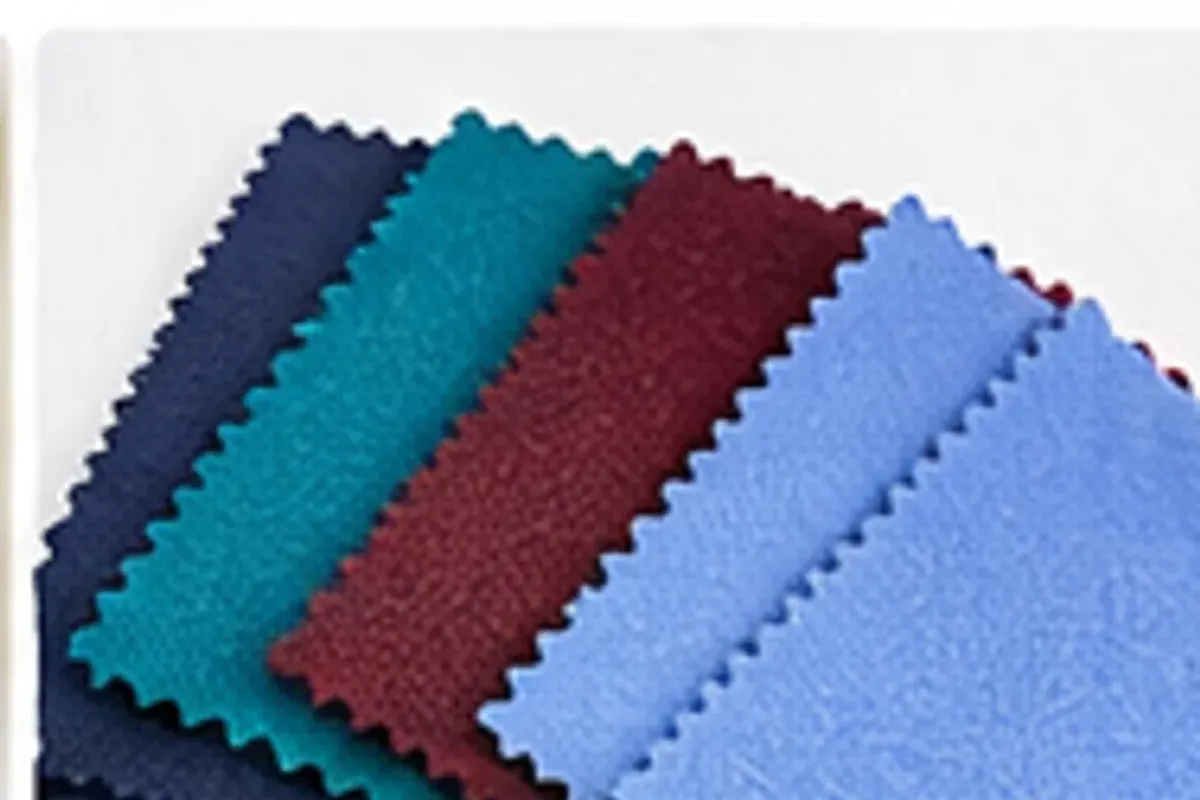
Uniform colour consistency on reorders depends on three habits: keeping a cutting of every approved shade, quoting that reference on every new order, and checking new stock against old stock before it reaches the shelf. Each dye batch differs slightly, so the reference has to stay fixed even when the batches do not.
A family buying a new jumper in year three expects it to match the skirt bought in year one. When it does not, the shop takes the complaint. This guide is about stopping that problem at the planning stage.
Why reordered colours drift
Fabric and yarn are dyed in batches. Even with the same recipe, each batch can come out slightly lighter, darker or warmer. Colour drift between orders is usually caused by one of the following.
- No fixed reference. The new order is matched to the last order rather than to the original approved shade, so small differences build up year on year.
- A faded reference. The buyer sends a worn garment as the sample, and the new stock is matched to the faded colour.
- A change of fabric. A switch from one fabric to another, even of the same colour name, changes how the colour appears.
- Split orders. Small top-ups placed far apart in time come from different batches.
Building a reorder routine
The table below sets out a simple routine for shops and schools that reorder the same uniform each year.
| Stage | Action | Who does it |
|---|---|---|
| First approval | Keep a cutting or spare garment of each approved shade, labelled by style and date | Buyer and manufacturer |
| Each reorder | Refer to the original approved reference, not the most recent delivery | Buyer |
| Before production | Ask for a shade check against the reference if the fabric or fibre has changed | Buyer |
| On delivery | Compare a few new garments with the stored reference in daylight | Buyer |
| On the shelf | Avoid mixing old and new batches on the same rail where the difference is visible | Shop |
We keep the approved shade as our reference for repeat orders and check later batches against it before dispatch. Keeping your own copy means you can check deliveries yourself and settle any question quickly.
Timing reorders to reduce drift
Fewer, larger orders tend to give more even colour than many small ones, because more of the stock comes from the same batch. That has to be balanced against cash flow and storage space.
- Plan the main order for the start of the school year. Work backwards from the term date. Lead time is confirmed in the quotation, so ask early.
- Place a single mid-year top-up rather than several small ones, if sales allow.
- Order matching garments together. If skirts and trousers share a colour, reorder them in the same production so they share a dye batch.
- Hold a buffer. A small reserve of the old batch helps families who need to match an existing garment exactly.
A reorder follows the usual per-style minimums, 50 pieces for a woven style and 100 for a knitted one, with any size mix allowed. Our page on minimum order and samples explains how samples and reorders follow the approved standard.
When to accept a small difference
No two batches are exactly the same, and a tiny shift that only shows when garments are laid side by side in a shop is usually acceptable. A shift that families notice when the garments are worn together, such as a jumper clearly lighter than the matching cardigan, is not. Agree this standard with your supplier at the start, using the approved sample as the benchmark.
Garments with knitted-in stripes or braided trims need extra attention, because the trim colour can drift separately from the body. Check both. Our school sweatshirts and hoodies and knitted jumpers are matched body and trim on every repeat order.
When your next reorder is due, send us the original approved reference and the quantities by size. We will quote it per style by fabric, quantity and branding, and confirm the lead time.
Questions buyers ask
Should we send a worn garment as the reorder reference?
Avoid it if possible. A worn garment has faded through washing, so matching to it produces stock that looks faded when new. Send an unworn piece from the original order or a stored cutting of the approved fabric instead.
Can a small top-up order match last term’s stock exactly?
It should match the approved shade closely, but it may not be identical to every garment from an earlier batch. Comparing both against the stored reference, rather than against each other, is the fairest way to judge whether the top-up is acceptable.
How long should we keep colour references?
Keep them for as long as the uniform is in use. Store them away from light in a labelled bag or box. A reference kept in a sunny window will fade and become unreliable within a few terms.