A school uniform for a hot and humid climate works when every piece is light, loose enough for air to move, quick to wash and dry, and free of layers students do not need. In practice that means short-sleeve shirts or polos, cotton or poly-cotton fabrics, shorts or light skirts, and PE kit that can be washed every day. The biggest gains usually come from removing garments, such as blazers and ties, rather than adding new ones.
Humidity adds a second problem to heat. Clothes stay damp longer, both on the body and on the washing line, so drying time matters as much as weight.
Which fabrics suit humid weather?
Each fabric family behaves differently in damp heat. The table compares the fabrics we use across the uniform, in general terms.
| Fabric | Where it appears | In hot, humid weather |
|---|---|---|
| Cotton | Nursery uniforms, cotton jersey PE T-shirts | Soft and comfortable on skin; holds moisture and can take longer to dry |
| Poly-cotton poplin | School shirts and blouses | Light, smooth, irons easily; dries faster than all-cotton |
| Poly-cotton gingham or stripe | Summer dresses | A light woven fabric suited to warm terms |
| Poly-cotton piqué | Polo shirts | The textured knit sits slightly off the skin |
| Polyester knit | PE T-shirts, shorts, sports polos | Light and quick to dry after washing |
| Poly-viscose or polyester twill | Trousers, skirts, pinafores | A firmer weave; choose the lighter option for year-round heat |
There is no single right answer. A school where families wash by hand and dry indoors during the wet months may value drying speed above softness. A school with air-conditioned classrooms may care more about how the shirt looks after a long day. We confirm the fabric for each style at quotation and can send swatches so you can compare weight and handle.
Garment choices that matter more than fabric
Fabric is only part of it. Cut and style make a large difference in heat.
- Short sleeves on shirts and polos, with long sleeves kept as an option for cooler months, if there are any.
- Open necks. A polo or a revere-collar blouse avoids the need for a tie and a fastened top button.
- Shorts or skorts as an alternative to full-length trousers for younger students.
- Summer dresses in a light gingham or stripe instead of a pinafore over a blouse.
- Relaxed fit. A shirt that hangs slightly away from the body is cooler than a close fit. Confirm the ease in the size chart.
- Lighter colours for the main tops, which many schools prefer in strong sun.
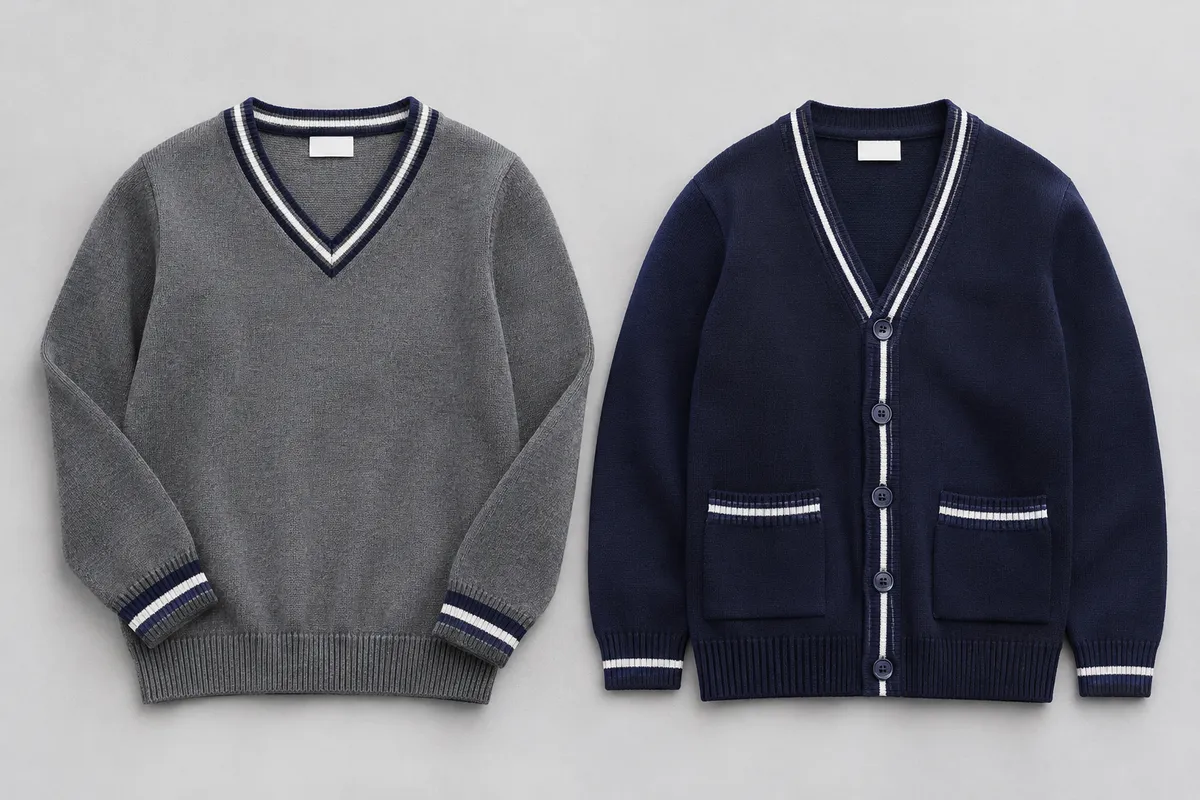
Heavy pieces such as blazers, knitted jumpers and fleece can often be dropped from the list or kept only for formal occasions.
How many sets students need
In humid heat students may need a fresh shirt or PE T-shirt every day, and damp weather slows drying. Schools and shops should plan on families buying more sets of the daily tops than in a temperate climate. For a shop, that means deeper stock in short-sleeve shirts, polos and PE T-shirts, and lighter stock in outer layers.
A hot-climate uniform checklist
Use this as a quick review of an existing list:
- Are any garments on the list only there out of habit, such as a blazer worn every day?
- Do shirts and polos have a short-sleeve version?
- Is there a light alternative to trousers for younger students?
- Are PE T-shirts in a fabric that dries overnight?
- Does the size chart allow a relaxed fit?
- Are colours chosen with daily washing in mind?
Our fabrics and colour matching page explains how we match colours across different fabrics. The school polo shirts and summer dresses pages show two of the lighter styles we make. We manufacture in India, where hot and humid school terms are familiar.
If you are reviewing a uniform for a hot or humid region, send us the current list and we will suggest fabric options for each piece with the quotation.
Questions buyers ask
Is pure cotton always cooler than poly-cotton for school shirts?
Not always. Cotton feels soft but holds moisture and dries more slowly in humid air. Poly-cotton is lighter to care for and dries faster. Many schools in humid regions choose poly-cotton shirts and keep cotton for younger children’s nursery uniforms.
Should a hot-climate school keep a blazer at all?
Some keep a blazer for formal events, assemblies or senior students only, and leave it off the daily list. That reduces what families buy and keeps students cooler, while the school still has a formal option.
Do humid climates need different PE kit from dry hot climates?
The garments are the same, but drying matters more in humid weather. A polyester knit PE T-shirt and shorts that dry overnight suit schools where students have PE several times a week.