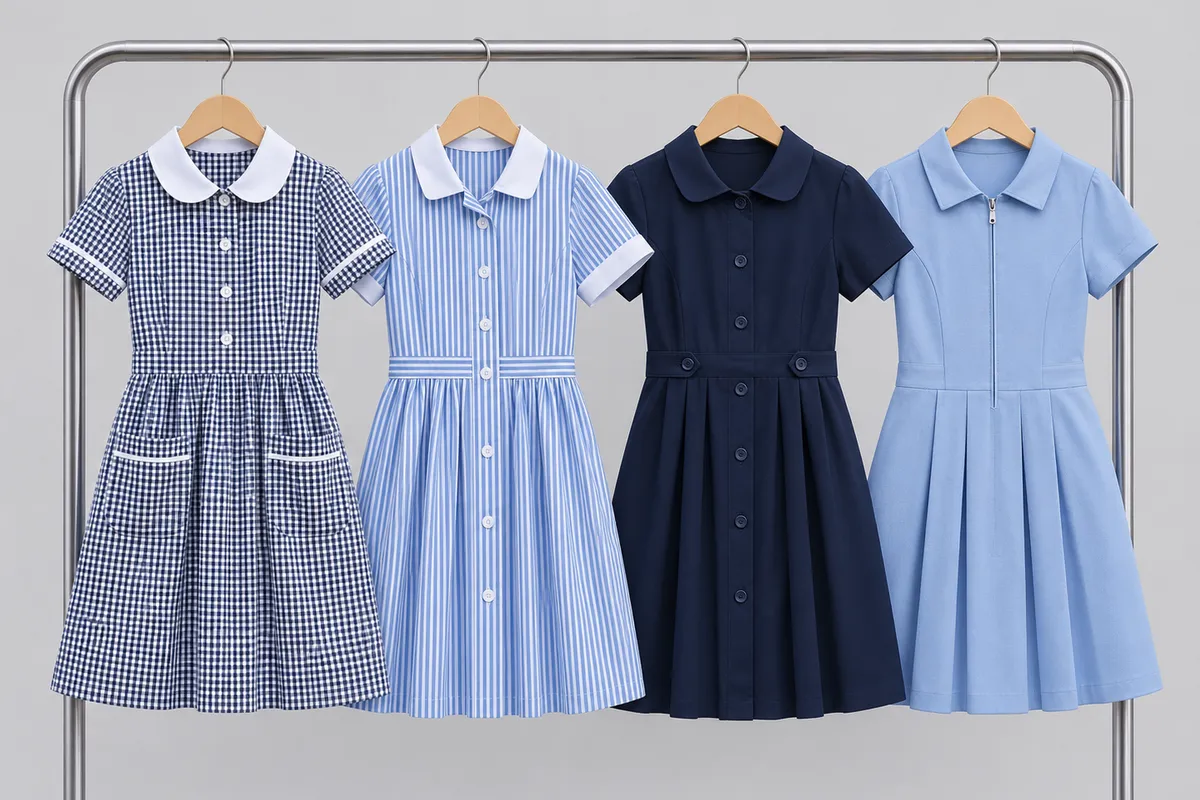
School summer dress styles fall into a handful of overall shapes: the shirt-dress with a collar and button front, the simple A-line, the fit-and-flare with a fitted bodice and fuller skirt, the drop-waist, and the loose tunic or shift. The shape sets the dress’s character before any detail is chosen, and it decides how well one pattern fits children of different builds. Choosing the shape first makes every later decision, from collar to waist, easier.
What are the main dress shapes?
Shirt-dress. A collar, a button placket at least to the waist and often a defined waist with a belt. It looks like a long shirt, neat and traditional, and suits all ages, especially older students.
A-line. No waist seam; the dress widens gently from shoulder to hem. Simple, comfortable, quick to iron and forgiving of different body shapes. Popular for younger pupils and hot climates.
Fit-and-flare. A fitted bodice joined at the natural waist to a gathered or pleated skirt. The classic gingham school dress look, with a clear waist and a full skirt.
Drop-waist. A longer bodice with the seam at the hip and a short skirt section below, often pleated. Relaxed and comfortable for children without a defined waist.
Tunic or shift. A straight, loose shape, often with a round neck, sometimes worn with a belt. Very simple and easy to make in a wide size range.
How do the shapes compare?
| Shape | Fit range per size | Formality | Ironing | Fabric use | Typical wearers |
|---|---|---|---|---|---|
| Shirt-dress | Moderate | Higher | More (collar, placket) | Moderate | All ages; older students |
| A-line | Wide | Moderate | Least | Lower | Younger pupils; hot climates |
| Fit-and-flare | Moderate | Moderate to high | More (gathers or pleats) | Higher | Primary and lower secondary |
| Drop-waist | Wide | Moderate | Moderate | Moderate | Infants and primary |
| Tunic or shift | Widest | Lower | Least | Lowest | Programmes; youngest pupils |
“Fit range per size” describes how many different builds one size of the dress can fit comfortably. A wide fit range keeps returns and exchanges down, which matters to shops.
How do you choose a shape for a school?
Start with the youngest and oldest wearers. A shape that suits both, such as an A-line or fit-and-flare in a moderate fullness, keeps the uniform consistent across the school. Where the age range is wide, some schools use two shapes: an A-line or drop-waist for infants and a shirt-dress for older students, in the same gingham.
Then consider the climate. In hot weather, looser shapes with less fabric against the body, such as A-line and shift, are cooler. A shirt-dress with a full placket and belt is warmer and more formal.
Finally, think about who buys and cares for the dress. Families who dislike ironing will appreciate an A-line. Schools that want a sharp look for photographs may prefer a fit-and-flare with pleats or a crisp shirt-dress.
Shapes for charities and programmes
Programmes that supply dresses to many children across several schools often favour the shapes with the widest fit range and the fewest parts, such as an A-line or shift with a round neck. These cope with a broad mix of builds in each size, are quick to make, and survive hard use. Our page for charities and uniform programmes explains how programmes plan size mixes and packing by size.
From shape to specification
Once you have chosen a shape, fill in the details:
- Shape: shirt-dress, A-line, fit-and-flare, drop-waist or tunic
- Opening: button-front or zip-front
- Collar or neckline
- Sleeve style
- Waist detail and belt, if any
- Pockets
- Length rule
- Gingham or stripe, with colour reference
- Logo or plain, and your label
If you are matching a dress you already sell, send it and we copy its shape and details. Each shape is its own style, with a minimum of 50 pieces and sizes mixed within it. See the styles on our school summer dresses page, then send your chosen shape and details for a quotation, priced per style by fabric, quantity and branding.
Questions buyers ask
Which summer dress shape is most forgiving on fit?
An A-line or tunic shape has no waist seam to sit in the wrong place, so it fits a wide range of builds within each size. A drop-waist is also forgiving. Fit-and-flare and shirt-dress shapes depend more on the waist sitting correctly.
Can a school change shape without changing colour?
Yes. Keeping the same gingham while changing the shape means old and new dresses still look like one uniform. The new shape needs its own sample, and the old one can sell through while families move across.
Is a shirt-dress the same as a button-front dress?
A shirt-dress always has a button front, but not every button-front dress is a shirt-dress. The term usually means a dress with a shirt-style collar and placket, cut to look like a long shirt.