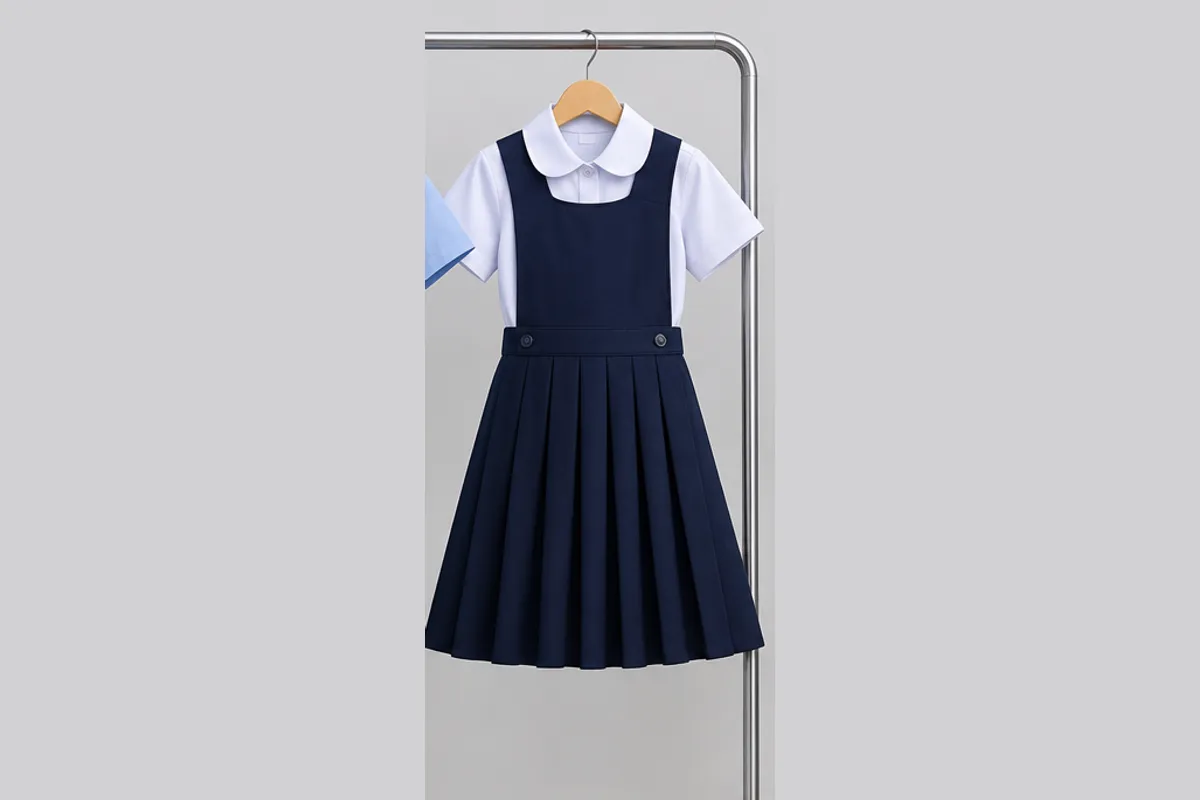
A pinafore with pockets is more practical for children, who want somewhere for a tissue or a hair band, and the usual choices are side-seam pockets hidden in the skirt seams, patch pockets sewn on the front, or a small pocket on the bib. Side-seam pockets are the most common on school pinafores because they keep the front plain and the pleats undisturbed. Decide whether you want pockets at all, which type, and where they sit around the pleats.
Many families ask shops whether a pinafore has pockets, so it is worth settling before the first order rather than after.
The three pocket types
Side-seam pocket. A pocket bag sewn into the side seam of the skirt, opening along the seam. It is invisible from the front, keeps pleats clean and is easy to reach. It is the default where pockets are wanted.
Patch pocket. A shaped piece sewn onto the outside of the skirt front. It is visible, easy to use and can carry a little decoration. It interrupts any pleats it sits over, so it suits A-line or front-panel skirts better.
Bib or chest pocket. A small pocket on the bib of a bib pinafore or the chest of a bodice. It is mostly decorative on young children and competes for space with a logo.
| Pocket type | Visible | Works with pleats all round | Holds | Wear point |
|---|---|---|---|---|
| Side-seam | No | Yes, if a seam falls at the side | Small items | Pocket bag corners |
| Patch | Yes | Not well | Small items | Top corners where hands pull |
| Bib or chest | Yes | Not affected | Very little | Logo space is reduced |
Placing side-seam pockets around pleats
On a fully pleated skirt the side seam is usually hidden in the fold of a pleat. The pocket opening goes into that seam, so the pleat covers it. The pleat must be deep enough that the pocket does not pull it open when something is inside.
Points to agree:
- Pocket opening length, enough for a child’s hand
- Pocket bag depth, not so deep that the bag hangs below a short skirt hem
- Pocket bag fabric: the body fabric, or a lighter lining fabric to reduce bulk
- One pocket or two
Making pockets last
The top of a pocket opening takes most of the strain. A small bar tack at each end of the opening, or a short row of reinforcing stitches, stops it tearing. On patch pockets, triangle or bar stitching at the top corners does the same. Check these on the sample by pulling gently at the opening.
Pockets and the order
Pockets add a few sewing steps and a little fabric, so they show slightly in the quotation, which is per style, by fabric, quantity and branding. Adding pockets to some sizes and not others changes the pattern, so most buyers choose pockets for the whole style.
We manufacture in India and show the pockets on your sample, so you can check the size and placement before bulk. Shops weighing up what families ask for may find our page for uniform shops and retailers useful. The styles that can carry pockets are on our school pinafores and tunics page, from 50 pieces per style.
Quick checklist
- Pockets or none
- Type: side-seam, patch or bib
- One or two
- Opening length and bag depth
- Reinforcement at the opening
- Pocket bag fabric
Add the checklist to your enquiry with your colour and size details.
Questions buyers ask
Do pockets make a pleated pinafore look bulky?
Side-seam pockets in a lighter pocket-bag fabric add very little bulk and sit hidden in the pleat. Heavy items in the pocket will pull the pleat open, which is a matter of use rather than construction.
Can tunics have pockets?
Yes. Side-seam pockets work on tunics in the same way, set into the side seams below the belt line. On a tunic with box pleats, the seam usually falls inside a pleat, which hides the opening.
Are bib pockets useful for young children?
They are mostly decorative. Small children rarely use them, and a bib pocket takes the space where a logo would go. Most schools that want a logo on the bib leave the pocket off.