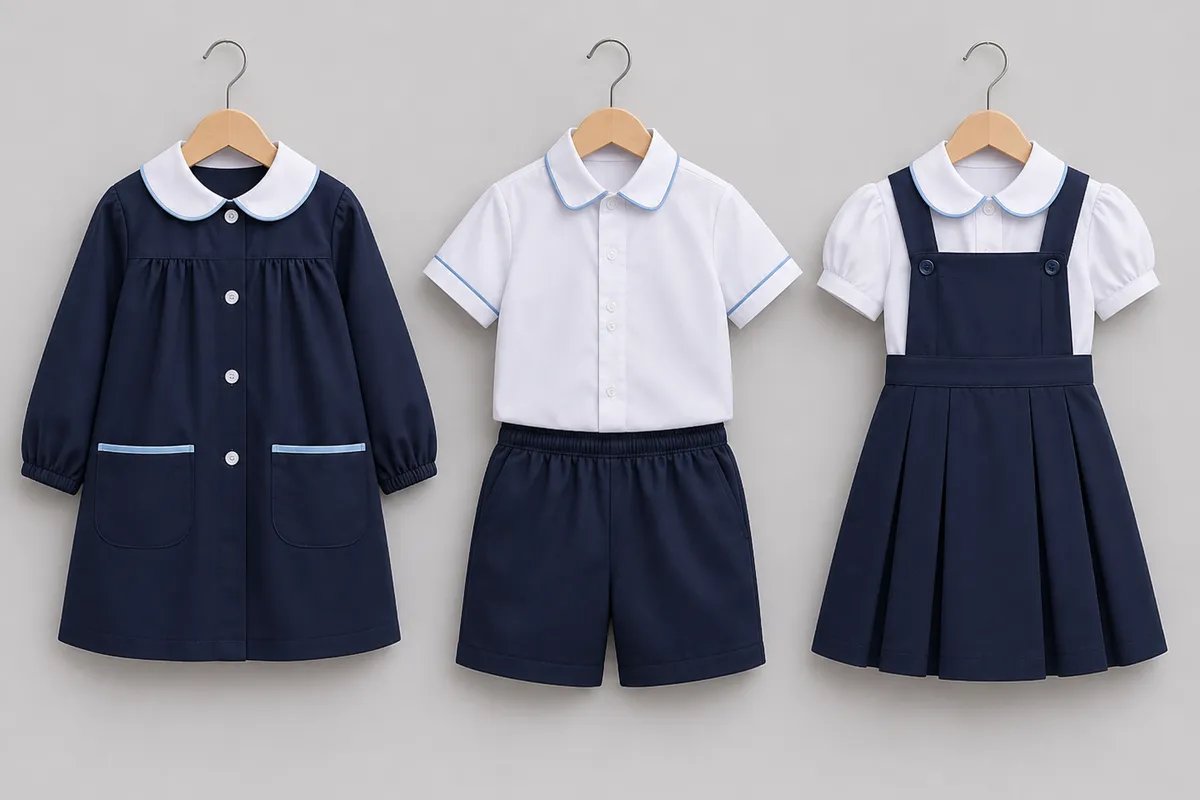
A nursery uniform reorder has to reach 50 pieces per style, but those 50 can be spread across every size you need. Most small settings reach it by grouping their needs: putting growth replacements, new-starter sizes and spares into one reorder, or ordering once for a longer period. A few minutes of planning avoids the common problem of needing ten sets now and not enough to place an order.
How does the minimum work for a nursery reorder?
Our woven garments, which include nursery uniforms, start at 50 pieces per style. A style is one garment design in one fabric, for example a smock, or the shirt of a shirt-and-shorts set. Within that style:
- Sizes can be mixed. Fifty pieces can be ten each of five sizes, or any other split.
- The colour split is confirmed at quotation. If you use more than one colour, tell us at enquiry.
- Sets or pieces. If you buy full sets, tell us whether you count the set or each piece; we confirm how the minimum applies in the quotation.
Our minimum order and samples page sets out the minimums for every garment group.
Ways to reach 50 on a small reorder
A nursery that only needs a handful of each size has several options. The table compares them.
| Approach | How it works | Suits | Watch out for |
|---|---|---|---|
| Wait and group | Collect needs for a term, then reorder once | Settings with a stock reserve | Running out before the order lands |
| Order ahead | Order for the coming year in one go | Stable rolls; storage space available | Tying up space and money in stock |
| Combine rooms | Add every room’s needs to one style | Nurseries with one uniform across rooms | Size split must be accurate |
| Combine settings | Several nurseries sharing a design reorder together | Groups and chains | One delivery address or agreed split |
| Combine with a shop | Reorder through a local uniform shop that supplies other settings | Single nurseries | The shop’s own lead times and stock |
Many nurseries settle on a pattern: one main order before the year starts, and one reorder midway that covers growth, new starters and spares together.
Planning the size split on a reorder
A reorder is not a smaller copy of the first order. Its size split leans differently.
- Upper sizes for growth. Children who were issued at the start of the year move up, so the larger sizes are in demand.
- Lower sizes for new starters. New children join the youngest rooms, so the smallest sizes are also needed.
- Few middle sizes. Unless the middle sizes sold out, they may need only a light top-up.
Look at what is left on the shelf before deciding. A reorder that repeats the original split usually leaves the middle sizes overstocked by the end of the year.
Keeping the reorder consistent with the first order
Children wearing garments from two orders side by side will show any difference in shade, logo or fit. To keep them matched:
- Quote the approved sample reference and the original order date
- Use the same size chart, with no changes to measurements
- Confirm the colour against the first order, not a new reference
- Keep logo position, size and method the same
- Ask for the same packing and size stickers
Repeat orders follow the approved sample, which is why keeping that reference matters. Lead time is confirmed in each quotation, so count back from the date you will run short rather than the date you notice it.
The garments are shown on our nursery and kindergarten uniforms page. Send us the sizes you need and your original order reference, and we will price the reorder style by style.
Questions buyers ask
Can we reorder only one size of a nursery style?
Yes, as long as the reorder reaches the minimum for that style. Fifty pieces of one size is possible, though most nurseries spread a reorder across the sizes they are short of.
Can two nurseries share one reorder?
Yes, if both wear the same design and fabric. Each nursery’s logo or colour counts as its own variation, and how that affects the minimum is confirmed at quotation. Agree the delivery address and the split before ordering.
How far ahead should a nursery reorder?
Place it while you still have a few weeks of stock left, counted from the lead time given in your last quotation. Waiting until a size is empty means new starters arrive with nothing to wear.