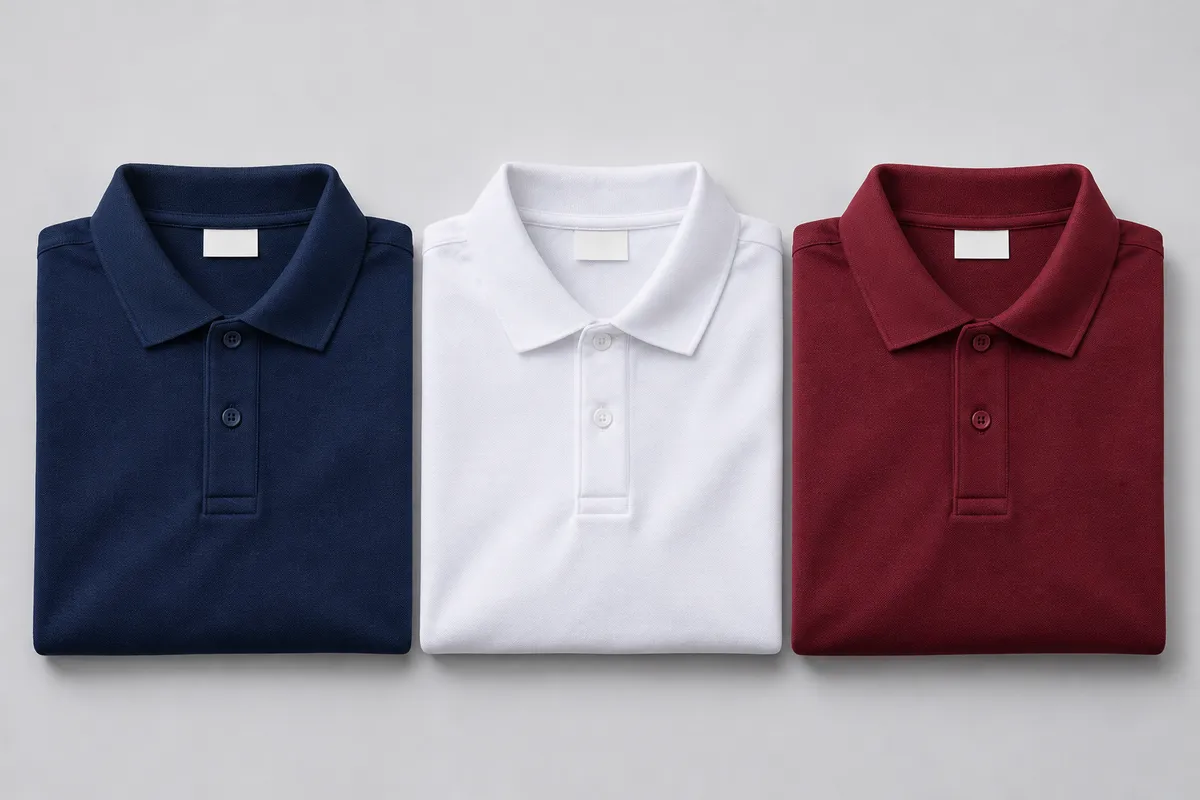
When a polo shirt is the everyday school uniform top, with no shirt and tie on the list, the polo has to do every job a shirt once did: look smart in assembly, stay comfortable through a warm afternoon, sit neatly under a sweatshirt in winter, and survive daily washing. That means specifying it more carefully than a polo that only appears in summer or PE.
This post looks only at specifying that single garment. It assumes the school has already decided on a polo-only uniform.
What does an all-year polo need to do?
A polo worn every day faces more demands than a seasonal one:
| Demand | What it means for the specification |
|---|---|
| Worn daily | Fabric and collar that hold shape through many washes |
| Seen in formal settings | A collar with enough height to look smart |
| Worn under knitwear in winter | A collar that lies cleanly over a crew neck |
| Worn alone in warm months | A fabric weight that stays comfortable |
| Families buy several | Consistent colour across every reorder |
| Carries the school identity | A clear, well-placed logo |
A polo that works only in one of these settings will draw complaints in the others.
Which fabric suits a polo worn all year?
Both piqué fabrics we use can work as an everyday polo. Poly-cotton piqué is a common choice for class wear because of its softer, cotton-like feel. Polyester piqué suits schools where the polo also serves for PE or where quick drying matters.
A mid-weight piqué is usually the safest choice for all-year wear: substantial enough for winter layering and opacity, light enough for summer. If the school is in a hot climate all year, a lighter piqué may suit better, judged on the sample.
Short sleeves, long sleeves or both?
A polo-only uniform often benefits from both sleeve lengths:
- Short-sleeve polo as the main top for most of the year
- Long-sleeve polo for colder months or families who prefer covered arms
If only one is offered, short sleeves under a sweatshirt is the usual approach. Each sleeve length is a separate style for the 100-piece minimum, so a school may start with short sleeves and add long sleeves later.
Making a polo look smart enough
Without a tie, the collar and placket carry the smartness of the uniform. Details that help:
- A slightly taller flat-knit rib collar that keeps its shape
- Neck tape inside the back neck so the collar does not sag
- Three buttons on older students’ sizes for a more shirt-like front
- A neat, well-placed embroidered logo on the left chest
- A white or pale colour if the school wants a formal look, or a school colour for identity
- A contrast or tipped collar if the school wants its colours visible above a sweatshirt
None of these add a second garment; they simply make the one polo work harder.
Keeping it consistent year after year
A polo-only uniform depends on every polo looking the same, whenever it was bought. Keep the approved sample, refer reorders to it, and avoid small changes to colour, collar or logo between orders. If a change is needed, introduce it at the start of a school year.
Schools moving to a polo-only top can find more on ordering in our notes for schools and school groups. Our school polo shirts page shows the styles and fabrics available.
Tell us the fabric, sleeve lengths, colours and logo for your everyday polo, and we will prepare a quotation for each style by fabric, quantity and branding.
Questions buyers ask
Does a polo-only uniform need more polos per child?
Families usually buy more polos when the polo is worn every day, often enough to rotate through a week of washing. A shop planning stock for a polo-only school should expect higher polo demand than for a shirt-and-polo uniform.
Can a polo look formal enough for school photographs?
Yes, with a well-shaped collar, a neatly placed logo and a clean, pressed finish. Many schools choose a white or pale polo with an embroidered badge for this reason. Approving the collar on the sample helps.
Should a polo-only school use a contrast collar?
It is optional. A contrast or tipped collar shows the school colours above a sweatshirt, which helps identity without a tie. A self-colour collar is plainer and more flexible if the school wants a simple look.