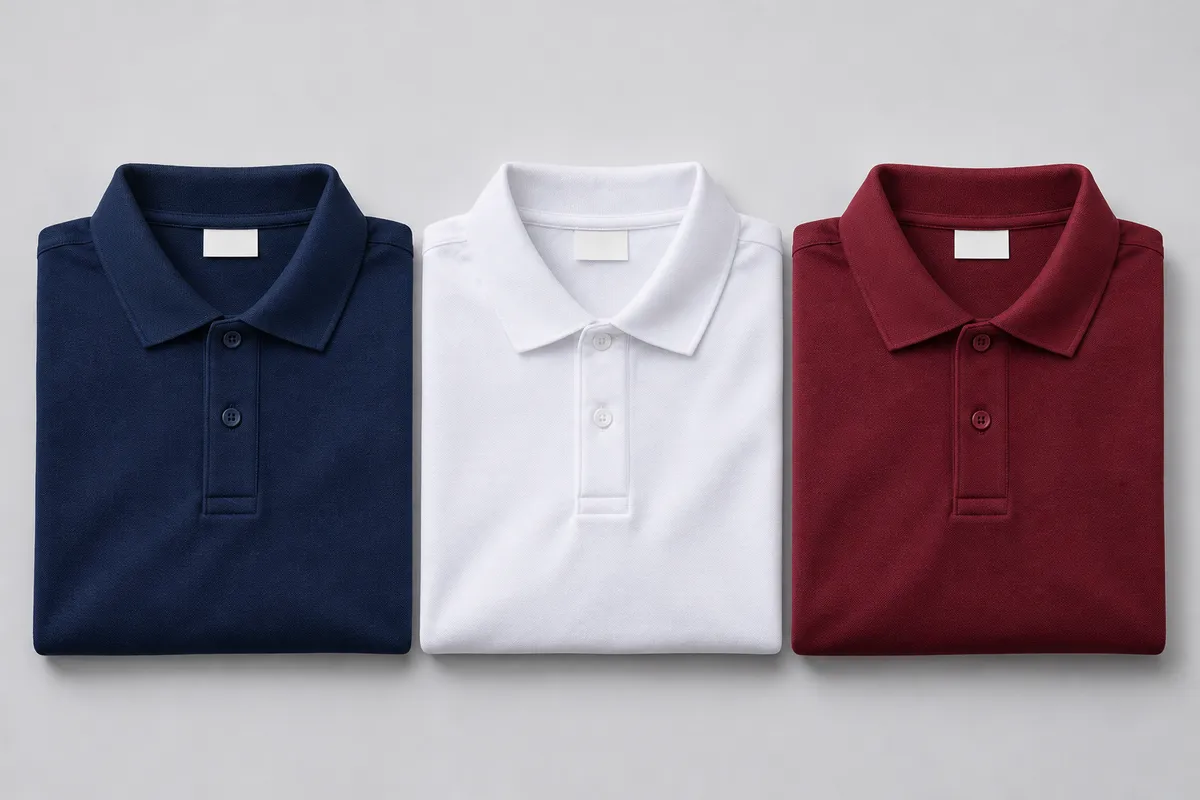
In the piqué vs jersey polo question, piqué is the usual choice for school polos because its textured knit is firmer, holds the collar area in shape and hides creases. Jersey is the smooth, flat knit used for T-shirts; it is softer and drapes more, but it can look less structured and show marks more readily.
We make school polos in piqué. This post explains the difference so buyers can compare polos from different sources and answer questions from schools and families.
What is the difference between piqué and jersey?
Both are knitted fabrics, made from loops of yarn rather than woven threads. The difference is in the loop pattern.
Jersey is a plain single knit. The face shows neat rows of small Vs, and the back shows loops. It is smooth, soft and stretchy, which is why it is used for T-shirts and PE tops.
Piqué tucks some stitches to make small raised cells on the face. That gives a textured surface and a firmer, more stable fabric.
| Point | Piqué | Jersey |
|---|---|---|
| Surface | Textured, small raised cells | Smooth and flat |
| Body | Firmer, holds shape | Softer, drapes |
| Creases and marks | Texture hides them | Show more easily |
| Edges | Stable | Tends to curl at cut edges |
| Air flow | Good, texture sits off the skin | Lies close to the skin |
| Look | Classic polo, smarter | Casual, T-shirt look |
| Logo | Takes embroidery well with care; print sits on texture | Smooth surface prints cleanly |
Why do school polos use piqué?
A school polo is often the main uniform top, so it has to look tidy through a full day. Piqué keeps a neat line at the chest and around the placket, and its texture makes small creases less noticeable after a morning in class.
Piqué also gives a clear visual difference between the uniform polo and the PE T-shirt. Many schools like that distinction: the polo for class, the jersey T-shirt for sport. Where the polo is also used for PE, polyester piqué is often chosen for its lighter, quick-drying feel rather than switching to jersey.
When might jersey make sense?
A jersey polo is less common in school uniform, but some buyers consider it for:
- A very soft polo for the youngest children
- A summer polo where a lighter, smoother feel is wanted
- Matching an existing jersey polo the school already uses
In each case, the trade-off is shape. Jersey polos can lose their line at the placket and collar more quickly. If a school currently uses a jersey polo and families are happy, it may be simplest to keep it; if families complain about polos looking tired, a piqué polo is worth comparing.
How to compare polos side by side
When you are deciding between two polos, look at them together rather than from photographs:
- Hold both up to the light and compare how much shows through
- Crush a corner of each in your hand and see how quickly the creases drop out
- Look at the placket and collar: which lies flatter?
- Stretch the body gently and see how it recovers
- Check how the logo sits on each surface
- Wash both once and compare again
These simple checks tell you more than a fabric name. Once you have decided on a knit, the fabrics and colour matching page lists the fabric options for every garment we make.
Our polos are made in poly-cotton piqué or polyester piqué, as shown on our school polo shirts page. If you are moving from a jersey polo to piqué, send your current polo with your enquiry and we will match its colour and key measurements in the quotation.
Questions buyers ask
Is a jersey polo cheaper than a piqué polo?
Cost depends on fibre, fabric weight, quantity and branding more than on the knit alone. We quote each polo per style, by fabric, quantity and branding, so the way to compare is to ask for quotations on the specifications you are considering.
Can a piqué polo and a jersey PE shirt be the same colour?
They can be matched closely, but piqué and jersey take light differently because of their surfaces, so the same shade can look slightly different. Approving both from the same colour reference keeps them as close as possible.
Is piqué more comfortable for children?
Comfort depends on the fibre and weight as much as the knit. Many children find piqué comfortable because it sits slightly away from the skin. Jersey feels smoother. Asking a few students to try samples is a practical way to decide.