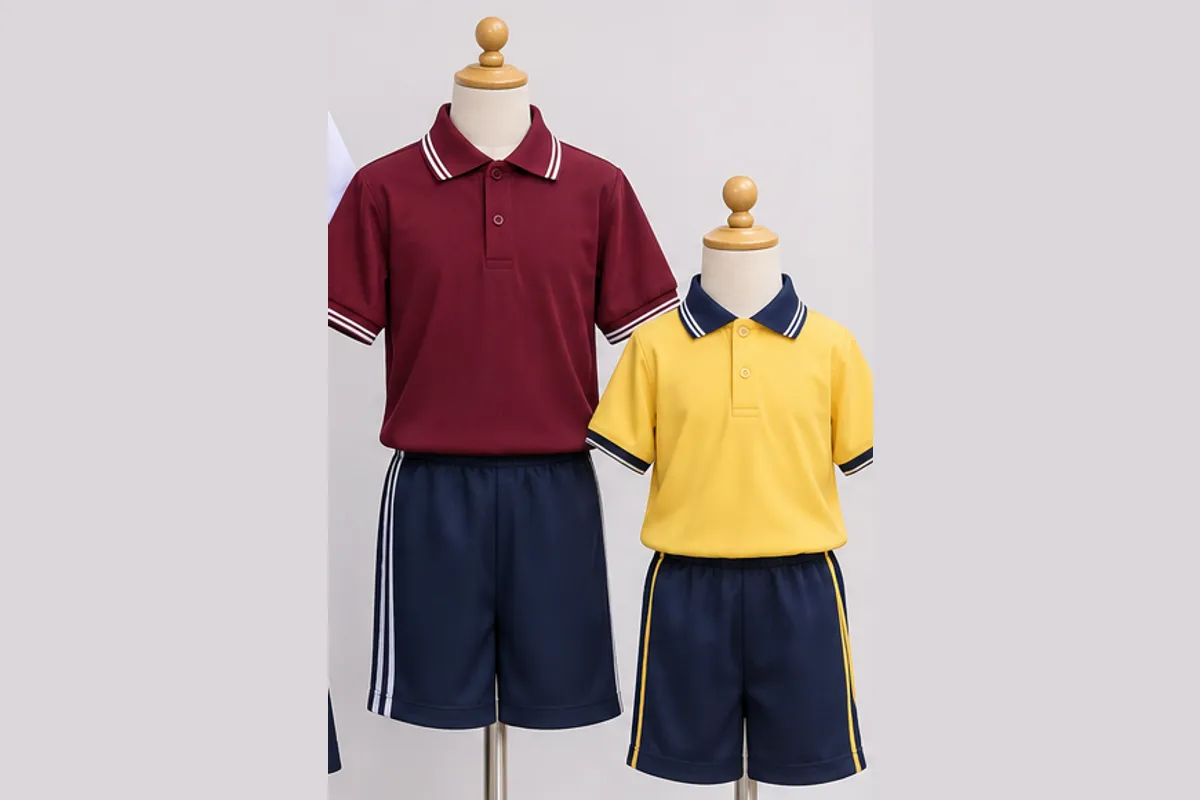
Pilling on PE kit is the small balls of tangled fibre, often called bobbles, that form on the surface of a T-shirt or shorts where the fabric rubs. On polyester knit they can be noticeable because the strong synthetic fibres hold the balls on the surface instead of letting them fall away. Pilling depends on the yarn, the knit and how the garment is worn and washed, so it is judged on a washed and worn sample rather than promised by a figure.
Bobbly kit is a common reason families feel a garment looks old before it is outgrown, so it is worth understanding.
How pills form
Pilling happens in three stages:
- Fuzzing. Friction pulls loose fibre ends up from the yarn surface.
- Tangling. The loose ends twist together into small balls.
- Anchoring or falling. Weak fibres break and the ball drops away; strong fibres keep it attached.
Polyester fibres are strong, so pills tend to stay put. Cotton fibres are weaker, so cotton jersey may fuzz but often sheds the pills in washing, though it can look worn in other ways.
Where pilling appears on PE kit
| Garment | Common pilling areas | Cause |
|---|---|---|
| PE T-shirt | Under the arms, sides of the body | Arm movement against the body |
| PE T-shirt | Lower back | Rucksack straps and chair backs |
| PE shorts | Seat and inner thighs | Sitting, benches, legs rubbing |
| Sports polo | Sides and front | Bags, seat belts, team benches |
| Any garment | Wherever it rubs other kit in the wash | Mixed loads, rough fabrics |
Knowing where to look makes it easier to judge a sample and to explain wear to customers.
What makes one fabric pill more than another?
Several factors in the fabric influence pilling. None of them can be read from the swatch alone:
- Yarn type. Yarns spun from short fibres have more loose ends than smooth continuous filament yarns.
- Yarn twist. Tightly twisted yarns hold fibres in better.
- Knit density. A tighter knit leaves less loose surface to fuzz.
- Surface finish. Some finishing processes reduce loose surface fibres.
Because so many factors combine, two polyester knits that look alike can wear quite differently. That is why we agree the fabric on the sample, and every repeat order follows it.
Judging pilling on a sample
You can learn a lot with a simple home test:
- Wash the sample five or six times with a mixed load, as families would
- Rub the underarm and seat areas firmly with a rough cloth between washes
- Wear the sample for some PE lessons if possible
- Compare it in daylight with an unworn piece
- Note which areas pill first, and how much
If pilling appears quickly, raise it before approving. A different knit or yarn may be worth sampling for that garment.
Care tips families can follow
Pilling can be slowed by how the kit is washed. General advice a shop or school can pass on:
- Turn PE kit inside out before washing.
- Wash with similar, smooth fabrics, away from towels and denim.
- Avoid overloading the machine, so garments rub less.
- Use a gentle cycle where possible.
- Remove pills with a fabric shaver or a lint comb rather than pulling them off.
Our fabrics and colour matching page outlines the fabric options for each garment, and the PE T-shirts, shorts and sports polos we manufacture in India are on our PE kit and sports uniforms page. Send your current kit or fabric preference, and we will make a sample and quote by fabric, quantity and branding.
Questions buyers ask
Does cotton jersey pill less than polyester knit?
Cotton jersey can fuzz but often sheds pills in the wash, so it may look less bobbly. It can fade or lose shape in other ways, though. Compare both fabrics on worn and washed samples before deciding.
Can pilling be removed?
Yes. A fabric shaver or lint comb removes pills without damaging the knit. Pulling them by hand can stretch the fibres and create more. Pills will return if the friction continues.
Will you give a pilling rating for our fabric?
We do not give ratings. We agree the fabric on the sample you test and approve, and bulk production and reorders follow that approved sample as the reference.