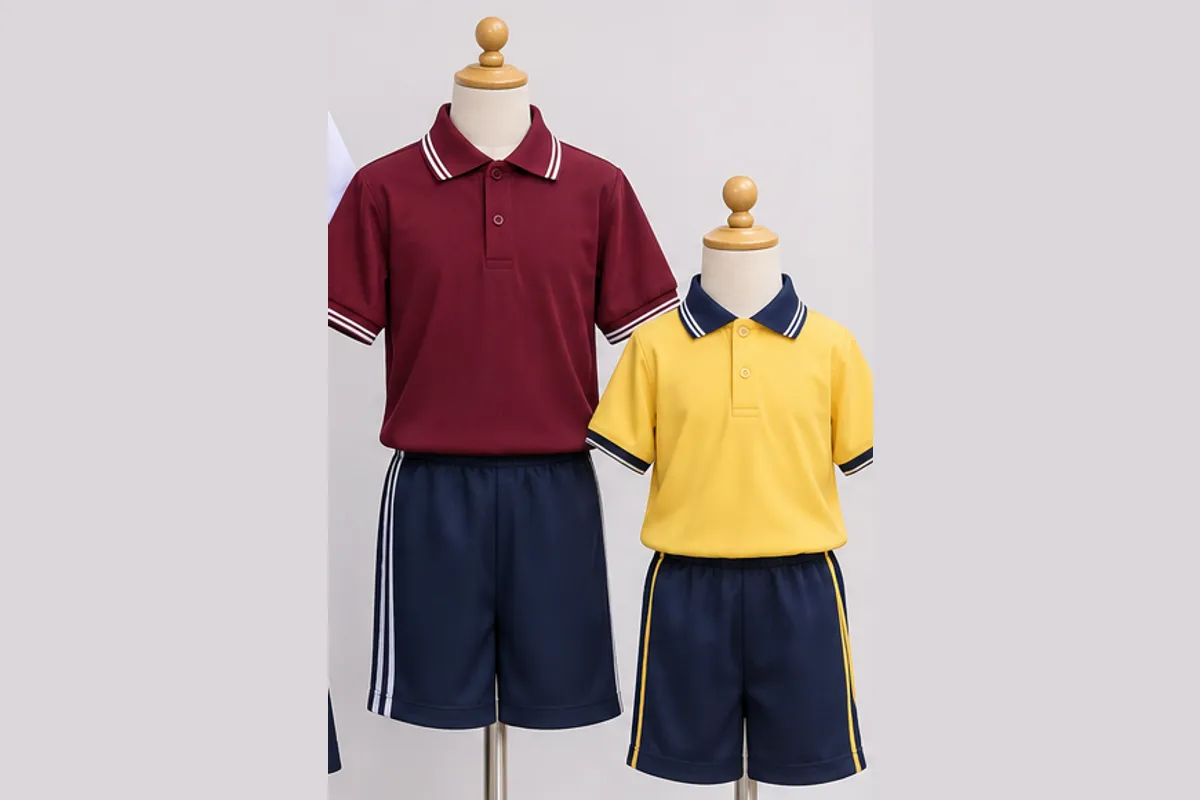
A PE kit top-up order refills the sizes that sell faster than expected during the school year, usually the upper sizes as students grow and the smallest size as late joiners arrive. Place it from a size-by-size stock count, weight it heavily to the sizes you are short of, and reorder to the sample you approved first time.
Unlike a start-of-year order, a top-up is narrow. It may cover three or four sizes rather than a whole range. That is perfectly workable, because sizes can be mixed freely within a style.
Which PE kit sizes run short mid-year?
PE kit sells in a pattern most shops and schools recognise after a year or two. The start of the year clears the bulk of the range. After that, demand moves.
| Period | What sells | Why |
|---|---|---|
| First weeks of the year | Every size, heaviest in the middle | New and returning students buy their kit |
| First half term | Smallest sizes and late joiners | New families who missed the rush |
| Mid-year | Upper junior and senior sizes | Growth spurts, kit outgrown |
| Before sports events | House colour T-shirts in every size | Lost or forgotten house tops replaced |
| Final term | Mixed, light | Families wait for the next year |
The mid-year growth wave is the one that catches buyers out. A size that looked over-ordered in September can be empty by spring.
How to plan a top-up order
A top-up is most reliable when it is built from a stock count, not a guess. Follow these steps:
- Count stock by size and colour. Include house colours separately. A white T-shirt count tells you nothing about the green house.
- Compare with expected sales to the end of the year. Use last year’s figures for the same months if you have them.
- List the shortfall by size. Only include sizes where stock will not last until the next main order.
- Add a small reserve to the two or three sizes that ran out fastest.
- Check the total against the minimum. Our minimum is 100 pieces per style, with sizes mixed within it.
If the shortfall is below 100 pieces, you have three choices: add sizes you will need at the next main order anyway, bring the top-up and the next main order together into one, or talk to us at quotation about the quantity.
A worked example
A junior school shop finds it is short of white PE T-shirts in three sizes in the second term. Its count looks like this:
| Size | In stock | Expected sales to year end | Shortfall |
|---|---|---|---|
| 7–8 | 30 | 25 | None |
| 9–10 | 8 | 40 | 32 |
| 11–12 | 2 | 35 | 33 |
| 13–14 | 0 | 15 | 15 |
The shortfall comes to 80 pieces. To reach 100, the shop adds 20 pieces of 5–6 for the next intake, a size it knows will be needed in a few months. The top-up is narrow but complete, and nothing in it will sit unsold for long.
This is an illustrative example. Your own count and sales history should drive every figure.
Making sure the top-up matches
A top-up has one more job than a first order: it must sit beside existing stock without looking different. To keep that match:
- Quote your previous order reference in the enquiry
- Keep one garment from the first batch as your reference sample
- Confirm the same fabric, colour and logo method as before
- Ask for house colours to be checked against the approved swatch set
- Use the same size chart and neck label, so sizes read the same on the shelf
Our size charts page explains how the chart agreed for your first order is kept for repeats. Lead time for a top-up is confirmed in the quotation, so place it early enough to arrive before the shortage bites.
When your count is done, send us the sizes, colours and quantities for a top-up quotation on PE kit and sports uniforms. It is quoted per style, by fabric, quantity and branding, and made to your approved sample.
Questions buyers ask
How early should a PE kit top-up be ordered?
Order as soon as your stock count shows a size will run out before the next main order. Lead time is confirmed in each quotation, so work back from the date you expect the shelf to empty, not from the date it does.
Can a top-up include only one house colour?
Yes, if that colour reaches the 100-piece minimum, because each house colour is normally counted as its own style. If one house needs only a handful of pieces, consider adding them to the next full order instead.
Should we top up shorts at the same time as T-shirts?
Only if shorts are running short too. Shorts often last longer and sell in a slightly smaller size pattern, so count them separately and top up each style only where the numbers show a real gap.