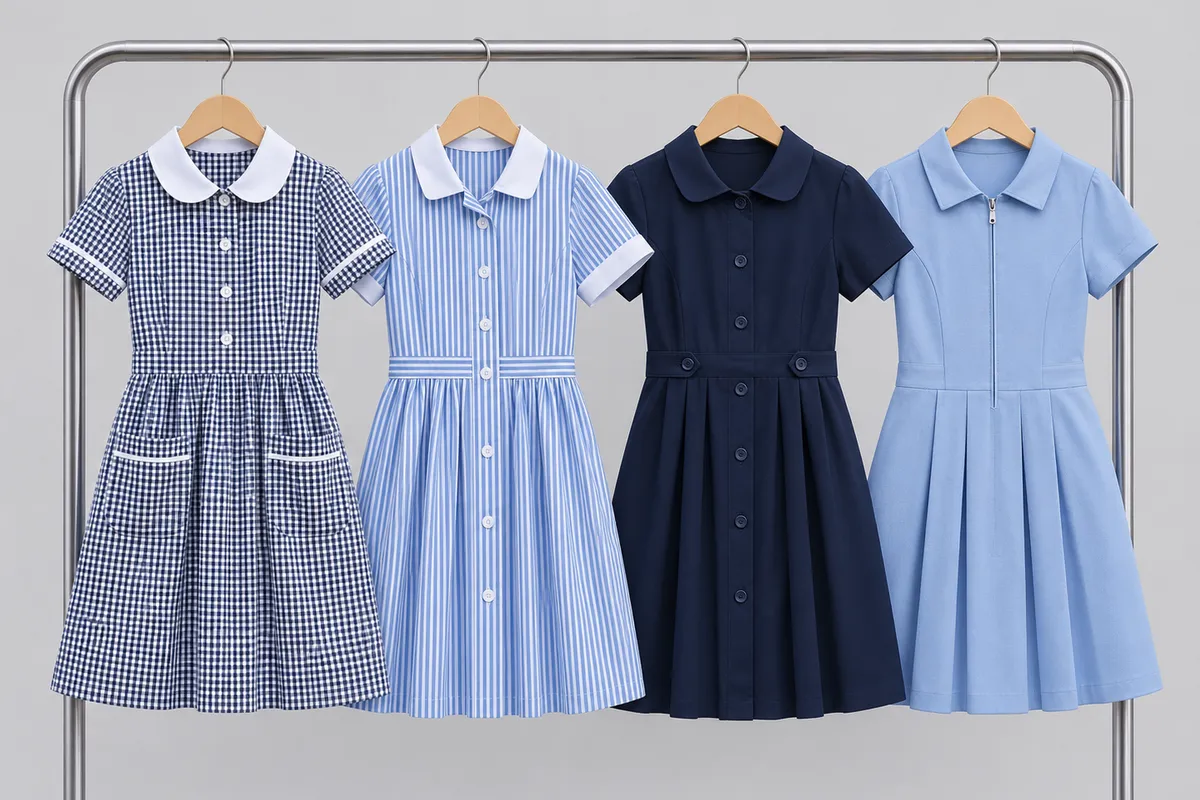
Most school summer dresses are unlined, because a single layer of light gingham is the coolest option for warm weather. A lined school summer dress, usually with a lining in the bodice only, is chosen where a school wants more cover or a smoother inside finish. A fully lined dress is uncommon for summer, as it adds warmth. Lining is an option you specify; it is then fixed on the approved sample.
This post compares the three options so a school or shop can decide which suits its pupils and climate.
The three options at a glance
| Option | What it is | Warmth | Cover | Drying | Ironing |
|---|---|---|---|---|---|
| Unlined | One layer of dress fabric, seams finished inside | Coolest | Depends on fabric | Fastest | Easiest |
| Lined bodice | A second layer inside the bodice only | Slightly warmer at the chest | Better over the chest | A little slower | A little more |
| Fully lined | Lining in the bodice and skirt | Warmest | Fullest | Slowest | Most |
When does an unlined dress make sense?
An unlined dress is the default for good reasons. It is light, it dries quickly on a washing line, and it is the simplest to iron. In hot climates, or for schools that expect children to be active outdoors, a single layer is often the most comfortable choice.
The inside of an unlined dress shows its seams, so how those seams are finished matters. Overlocked or bound seams keep the inside neat and stop fraying. Facings at the neckline and armholes give the edges a clean finish without a full lining.
Why choose a lined bodice?
A lined bodice adds a second layer from shoulders to waist. Schools choose it for several reasons:
- Cover. Two layers over the chest reduce show-through on a light, white-ground fabric, which matters more as pupils get older.
- Comfort. The lining covers the inside seams, so nothing rubs against the skin.
- Shape. The bodice holds its form better, and collars and facings sit more neatly.
- Finish. The dress looks tidy inside, which some schools want for older students.
Because the skirt stays a single layer, the dress remains reasonably cool. This is the usual middle ground.
Is a fully lined summer dress worth it?
A full lining gives the most cover and the smoothest feel, and it helps a skirt hang well. But it doubles the fabric over the whole body, which makes the dress warmer and slower to dry. For summer, most schools find a lined bodice enough. A full lining may suit cooler climates where the summer dress is worn for a longer part of the year, or schools with specific cover requirements in their dress code.
What to specify if you want a lining
- Which parts are lined: bodice, skirt, or both
- Lining fabric colour: usually white or matched to the check colour
- Lining fabric type: light and breathable, confirmed at quotation
- How the lining attaches at the waist and armholes
- Whether the lining is free-hanging or stitched to the hem
- Whether the choice applies to all sizes or only older students
Some schools line the bodice only from a certain size upward, where cover matters more, and keep younger sizes unlined. Each version counts as a separate style. Our page for schools and school groups explains how schools agree these details before sampling.
Lining and the quotation
A lining adds fabric and making time, so a lined dress is quoted on its own specification. The lining fabric is confirmed in the quotation, and you see it on the sample dress before approving. If you are unsure, ask for two samples, one unlined and one with a lined bodice, and compare them in the warm weather your pupils will wear them in.
The minimum is 50 pieces per style, sizes mixed. Our school summer dresses page shows the gingham, stripe and opening options. Send us your lining choice with colour and size range, and we will quote per style, by fabric, quantity and branding.
Questions buyers ask
Does a lined bodice make the dress too hot?
A lined bodice adds a light layer over the chest only, so most children notice little difference. In very hot and humid climates, schools often prefer an unlined dress and let families add a vest underneath if they want more cover.
What colour should a lining be?
White linings are common because they do not show through the white ground of the gingham. A lining tinted to the check colour can soften the look from outside. The lining colour is approved on the sample dress.
Can lining hide the inside seams?
Yes. In the lined part of the dress, the lining covers the seams so they do not rub. In unlined parts, overlocked or bound seams keep the inside tidy and stop fraying through repeated washing.