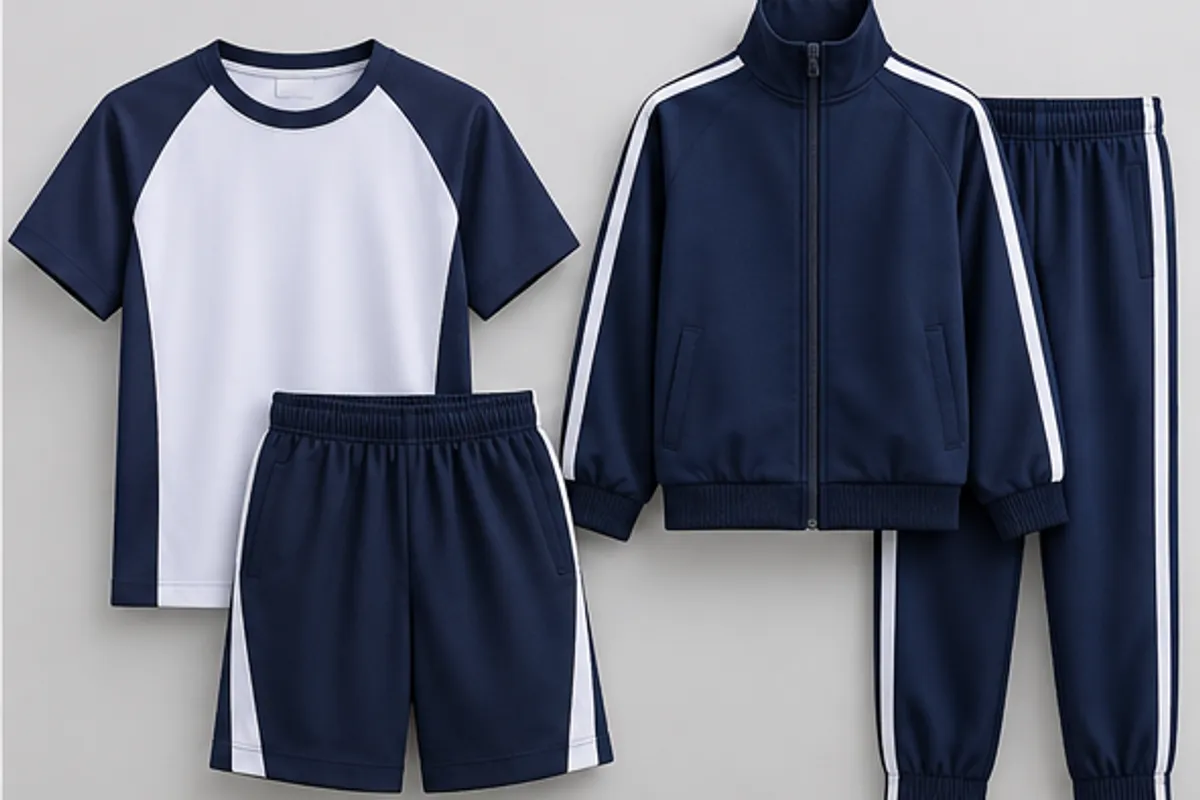
Can you iron a polyester tracksuit? Usually there is no need, and if it is ironed at all it should be on a low setting, from the inside, never over prints, piping tape or embroidery. Polyester tricot comes out of the wash with few creases when it is hung promptly, and too much heat can leave a shiny patch, a melted mark or a lifted print that cannot be undone.
Uniform shops hear about ironing damage after the event. Giving families the right advice at the start prevents most of it.
Why tricot rarely needs ironing
Polyester fibres recover their shape after bending, and tricot is a knitted fabric that relaxes as it dries. If a tracksuit is taken out of the machine soon after the cycle ends, given a shake and hung on a hanger or a line, most creases drop out within an hour or two. That is one reason polyester is used for school sportswear.
Families used to ironing cotton school shirts often reach for the iron out of habit, at the same hot setting. That habit is the main cause of damage, not any fault in the fabric.
Creases that stay are usually from:
- leaving the tracksuit crushed in the drum after washing
- tumble drying on high heat and leaving it in the warm drum
- folding it damp into a bag
What heat does to polyester
Polyester softens at temperatures a hot iron easily reaches. Too much heat causes:
| Effect | What it looks like | Can it be reversed? |
|---|---|---|
| Shine | Glossy patches in the shape of the iron plate | Rarely; sometimes softened by steam |
| Glazing on seams | Shiny lines along seams and piping | No |
| Melting | A hard or sticky patch, sometimes a hole | No |
| Print damage | Lettering lifts, cracks or smears | No |
| Embroidery pucker | Wavy fabric around a badge | Sometimes eased by washing |
If ironing is needed
Sometimes a crease from storage or a crushed bag stays. The safer method:
- Check the care label and follow its ironing symbol.
- Set the iron to its lowest or synthetic setting.
- Turn the tracksuit inside out.
- Lay a thin cotton cloth between the iron and the fabric.
- Press lightly; do not slide the iron back and forth.
- Keep well away from prints, piping, tape stripes and the badge.
- Let the fabric cool flat before wearing.
A garment steamer held a short distance from the fabric is gentler still, because nothing presses on the surface.
Guidance to pass on
Shops and schools can include a line such as “No need to iron. If you must, low heat, inside out, never over prints” on their care card or uniform list. It is short enough to be read at a glance, and it can sit beside the washing advice so families see both together.
The care label on your order shows the symbols and wording you specify, and you decide what it includes when ordering. Our page on fabrics and colour matching explains how the fabric for your order is agreed before production.
Linking care to the specification
Some specification choices make ironing damage more or less likely:
- Large back prints are the most at risk. If families tend to iron, a smaller print or an embroidered name may suit better.
- White piping and tape stripes can glaze under heat. A colour close to the body shows marks less.
- Brushed-back tricot should not be ironed on the soft side, which flattens.
Our tracksuit tops and bottoms, and the fleece jacket to go with them, are on the school tracksuits and jackets page. Send us your design and the care wording you want, and we will show both on the sample and quote per style.
Questions buyers ask
Can a fleece jacket be ironed?
Fleece should not be ironed. The pile flattens and can melt under heat, leaving a hard, shiny patch. Hanging it to dry is enough to keep its shape, and fleece rarely holds creases.
How can a shiny iron mark be reduced?
Light shine sometimes softens if the area is steamed from a distance and brushed gently while warm. A deep glaze or melt cannot be repaired, which is why prevention through clear care advice matters.
Does a care label stop families from ironing?
Not always; many people do not read labels. A care line on the shop receipt, the uniform list or a small card in the bag reaches more families at the moment they are paying attention.