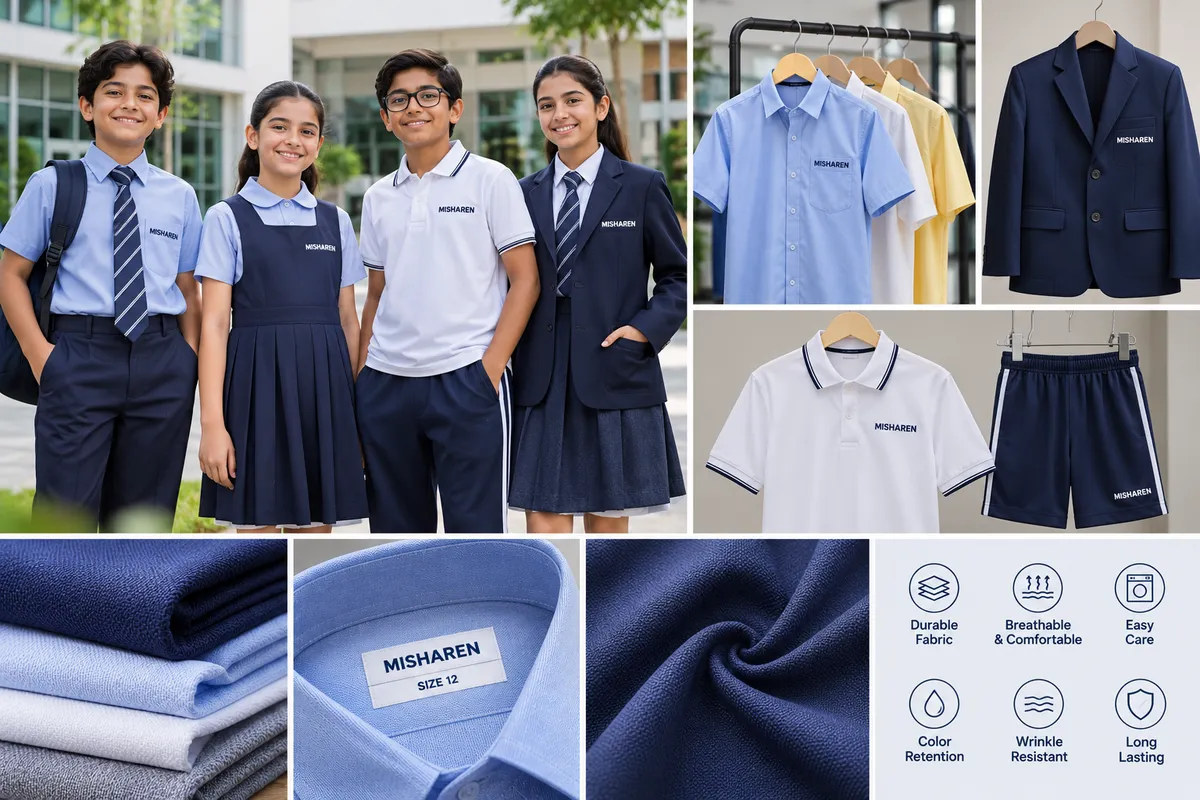
Buyers who import school uniforms have the smoothest first order when they plan four things before the first enquiry: which garments to bring in from abroad, when the money leaves the business, what happens to the goods once they land, and who handles the import paperwork at their end. The making itself is the manufacturer’s job; these four decisions sit with the importer.
This guide is for uniform shops, distributors, schools and charities that have so far bought locally and are weighing up a first order from overseas.
Which garments are worth importing?
Not every line on a uniform list needs to come from the same place. Some buyers import the core garments that sell in volume and keep small, fast-changing items with a local supplier. Others move a whole school’s list at once so that every piece matches.
A useful way to decide is to sort your list by how predictable each garment is.
| Garment type | Typical demand pattern | Import planning note |
|---|---|---|
| Shirts, blouses and polo shirts | High volume, steady every term | Suit a larger main order with planned top-ups |
| Trousers, skirts and pinafores | Steady, with a peak before the new year | Order the main quantity well ahead of term |
| Jumpers, cardigans and sweatshirts | Seasonal, needed as weather cools | Can arrive later than the summer items |
| Blazers | Lower volume, longer to make | Start early; sample fit carefully |
| PE kit and tracksuits | Linked to sports calendar and house colours | Confirm house colours before ordering |
Our minimums are per style: 50 pieces for woven garments and 100 for knitwear and sportswear, with sizes mixed freely. A garment you sell in very small numbers may be easier to keep local, while anything that clears the minimum comfortably is a natural candidate for import.
When does the money move?
Importing changes the shape of your cash flow. With a local supplier you may pay on delivery. With an overseas maker, you usually pay an advance to start production and the balance before dispatch, so the goods are paid for before they reach you.
Plan for that gap. A shop that imports its September stock in one shipment will have paid for it weeks before the first sale. Some buyers spread the risk by importing in two waves: summer-weight garments first, winter layers second.
What happens after the goods land?
An imported order arrives in cartons, often many at once. Before you place it, decide:
- Where the cartons will be stored, and whether there is space for the whole order
- Who will receive the delivery and sign for it
- How the goods should be packed so they can go straight to shelves or schools
- Who will count and check the cartons against the packing list
- How any shortage or fault will be reported back to the maker
Packing instructions are part of the quotation, so a buyer who knows how stock will be handled at their end can ask for cartons by school, by size or by style from the start.
Who handles the paperwork at your end?
Import requirements, duties and documents vary by country, and they are not something a manufacturer can advise on. Many first-time importers ask a customs broker or freight agent in their own country to explain what is needed for garments. Do this before you order, so the documents you ask for in the quotation match what your side requires.
On our side, we manufacture in India and ship to buyers in any country. The shipping method, terms and documents for each order are confirmed in the quotation. The shipping and documents page covers how that works.
Building the first order
A first import is a test as much as an order. Keep it to the garments you know sell, in the sizes you know move, and give yourself more time than you think you need. Once the first delivery has arrived and been checked, you will have a real picture of timing, packing and quality to plan the next one.
If you are starting with knitwear, our knitted jumpers and cardigans page shows the styles and fabrics we make, and the school trousers and shorts page covers a woven line most shops sell all year. Send your garment list and delivery country, and we will reply with a quotation per style.
Questions buyers ask
Can a school import uniforms directly, without a shop in between?
Yes. Schools and school groups order directly from us in bulk and hand garments out or sell them to families themselves. The school then takes on the receiving, storage and import paperwork that a shop or distributor would otherwise handle.
Should my first import include every garment on the list?
Not necessarily. Many buyers start with two or three high-volume garments to learn the process, then add the rest once they have seen the quality and timing. Each style still needs to reach its own minimum quantity.
Will imported garments match the ones I already stock?
They can, if you send a physical garment for us to match. We copy the fabric, colour and measurements as closely as possible and send a sample for your approval before any bulk production starts.