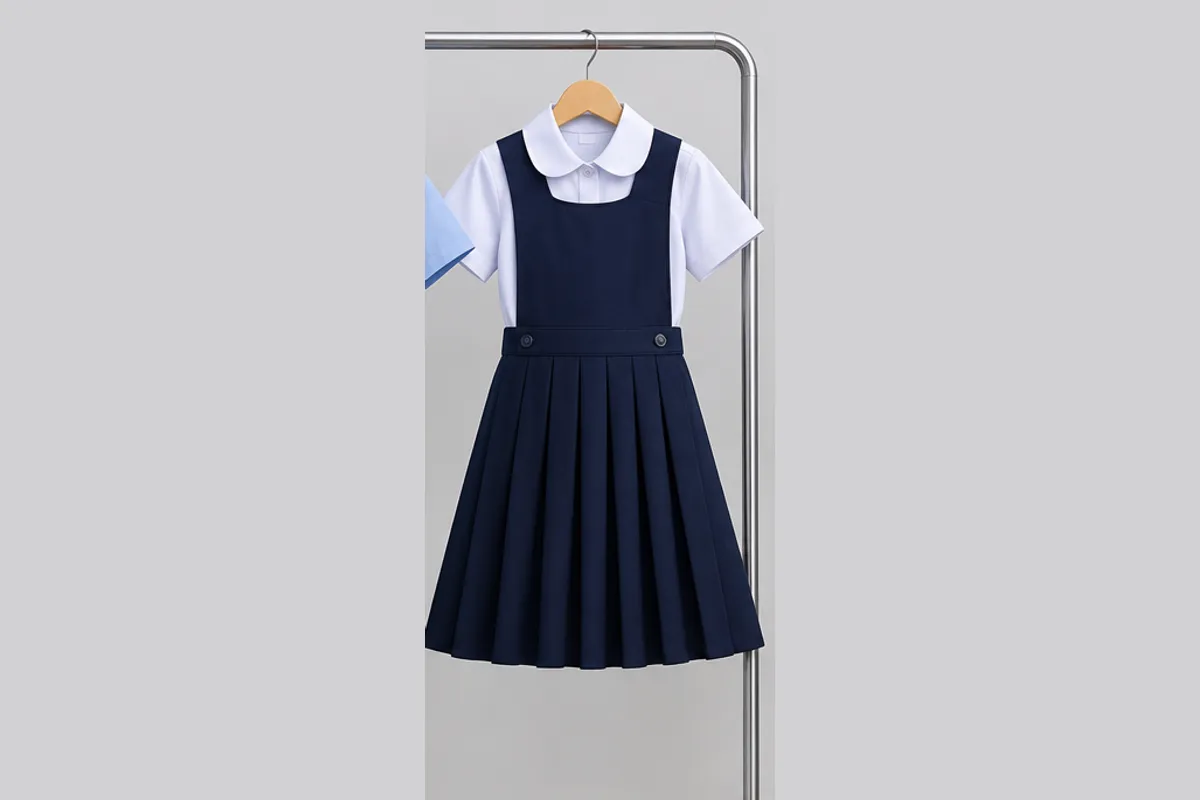
To iron pinafore pleats, lay the skirt flat on the ironing board, arrange each pleat along its original fold, hold the folds in place with pins or clips at the hem, and press down through a damp cloth rather than sliding the iron. Work from the waist to the hem, one section at a time, and let the fabric cool before moving it. That method keeps the folds sharp and avoids shine and double creases.
Families often find pleats the hardest part of uniform care. A short guide from the shop helps.
What you need
- An ironing board, with the narrow end free
- An iron on a low to moderate setting suitable for the fabric
- A pressing cloth: a clean cotton tea towel or handkerchief
- A spray bottle of water
- A few pins or hair clips
Step by step
- Start with the bodice or bib. Press it first so you do not crease the skirt again while handling it.
- Slide the skirt over the board so part of it lies flat, inside out or right side out as the care label allows.
- Find the original folds. Each pleat has a crease line from production. Line each fold up along it.
- Pin the hem. Pin or clip each pleat at the hem so it stays in line.
- Dampen the cloth and lay it over the pleats.
- Press, do not slide. Lower the iron, hold briefly, lift and move to the next spot. Sliding drags the pleats out of line.
- Let it cool. Fabric sets as it cools. Moving it while warm loosens the crease.
- Turn and repeat until you have gone all the way round.
- Hang straight away by the shoulders or straps.
Common problems and how to avoid them
| Problem | Cause | Fix |
|---|---|---|
| Shine on the fabric | Iron too hot, or direct contact | Lower heat; always use a pressing cloth |
| Double crease next to a pleat | Fold not lined up with the original crease | Steam the wrong crease out and re-press along the original line |
| Pleat marks showing through to the front | Heavy pressing over thick folds | Slip a strip of paper under each fold before pressing |
| Pleats opening out by lunchtime | Fabric moved while warm | Let each section cool before moving on |
| Wavy hem | Pleats not pinned at the hem | Pin each pleat at the hem before pressing |
Pleats on tunics and box-pleated styles
Box pleats are wide and easier to press, since there are fewer folds. Line up the two folds of each box pleat so they meet evenly behind. On tunics, start at the yoke and work down, keeping the pleats in line from the top. If the tunic has a belt, unfasten it so the pleats can lie flat.
How construction makes ironing easier
The way a pinafore is made affects how easy it is to press at home. Pleats stitched down a short way from the waist need pressing only below the stitching, which saves time. Edge-stitched pleats keep their fold almost on their own. Polyester twill holds a heat-set crease firmly; poly-viscose drapes more softly and benefits from regular pressing. Our fabrics and colour matching page covers both fabrics.
We manufacture in India and press the pleats during production, so each pinafore leaves us with sharp folds for families to follow. The styles are on our school pinafores and tunics page.
Sharing the guide
Shops can print the nine steps on a card, add them to a website, or show a family at the counter. If you want ironing guidance on the care label, tell us the wording when you order, and we include it. Quotations are per style, by fabric, quantity and branding.
Questions buyers ask
Can pleats be ironed from the right side?
Yes, if a pressing cloth is used. Without one, dark fabric can shine. Many families find pressing from the inside easier because shine on the inside does not show.
Does a steamer work for pinafore pleats?
A hand steamer refreshes a pinafore and removes light creases, but it does not set a sharp fold. For crisp pleats, pressing with an iron and cloth gives a better result.
How often should pleats be pressed?
After each wash is ideal, but a pinafore dried carefully on a hanger may only need a quick press every second or third wash. Stitched-down pleats need less frequent pressing.