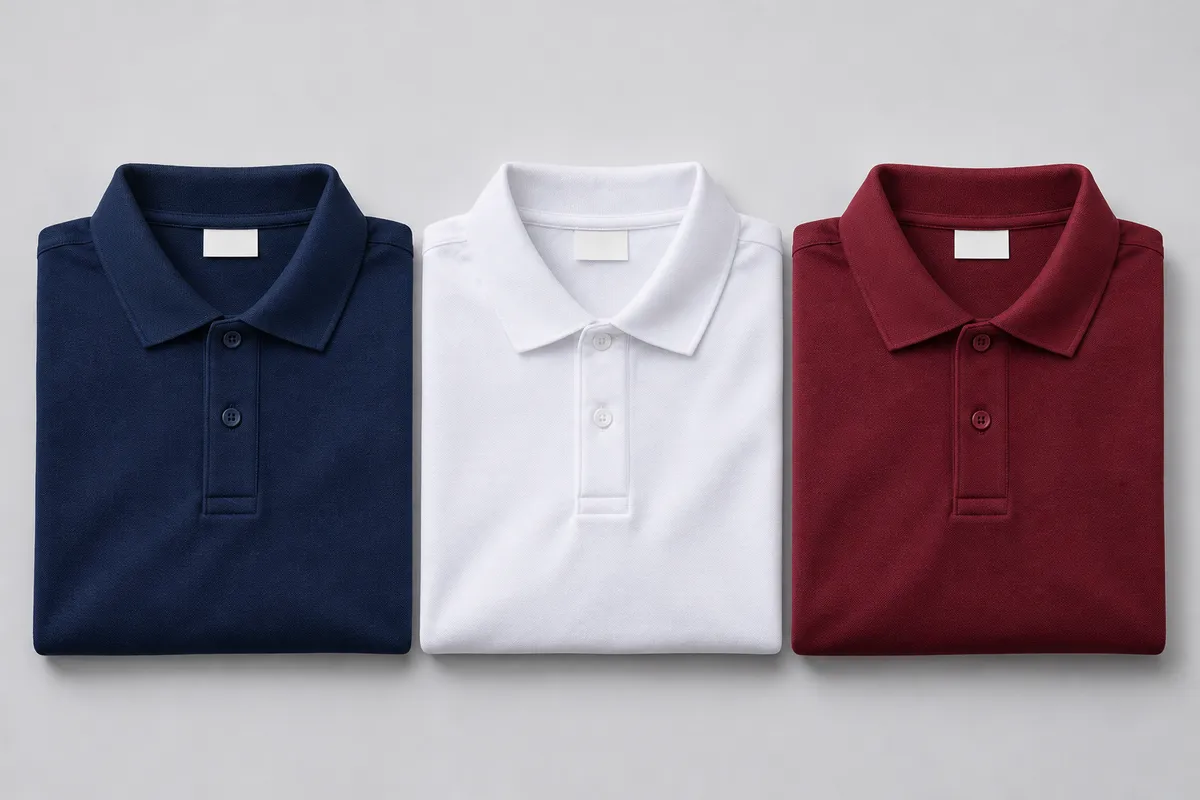
The polo top-up minimum is 100 pieces per style, with sizes mixed within it, so a top-up does not need 100 of one size. If you are short of only a few sizes, group them into one top-up of that style, add depth to the sizes that sold fastest, and include any sizes you expect to run out next. That way a top-up of 100 polos covers several gaps at once rather than overfilling one size.
This post is about building that top-up. It is aimed at shops and schools who already hold polo stock and need to refill parts of it.
Why top-ups are uneven
The first order of the year is usually spread across every size. Top-ups are different. By the time you need one, perhaps three sizes have sold out, two are low and the rest are fine. The shortage is lumpy, and the minimum is not. The task is to turn a lumpy shortage into a sensible 100 pieces.
Four ways to group a top-up
| Method | How it works | Suits |
|---|---|---|
| Gap plus cover | Refill the sold-out sizes, then add the low sizes up to several weeks’ cover | Most shops mid-year |
| Size block | Take a run of neighbouring sizes, such as 7–8 to 10–11, and top all of them up | Schools where one year group grew fast |
| Next-season ahead | Fill today’s gaps, then add sizes that will be needed next term | Shops before a busy term |
| Shared style | Combine top-ups of the same plain polo across several schools you supply | Shops and distributors with plain stock |
The shared-style method only works for polos that are truly the same style: a plain white polo under your label sold to several schools, for example. A logo polo for one school is a separate style from a logo polo for another.
A worked top-up
Say a shop’s navy logo polo has run short in these sizes, with six weeks of steady sales left before the next main order:
| Size | In stock | Expected sales in six weeks | Short by |
|---|---|---|---|
| 6–7 | 0 | 14 | 14 |
| 7–8 | 2 | 16 | 14 |
| 8–9 | 4 | 16 | 12 |
| 9–10 | 10 | 14 | 4 |
| 10–11 | 8 | 12 | 4 |
| 11–12 | 3 | 9 | 6 |
The shortfall adds up to 54. The shop has two choices: round the top-up up to 100 by adding cover in the fast sizes, which stretches the stock past the next main order, or wait and combine this top-up with the start of the next order. If the gaps are already losing sales, the first choice is usually better. These figures are an illustration; use your own sales records.
Timing the top-up
The lead time is confirmed in your quotation, and it sets the latest date a top-up can be placed. Count back from when you will run out, not from when you notice the gap. Plan the date of the first top-up when you place the main order.
- Record polo sales by size each week from the start of term
- Mark the date each size is likely to run out
- Count back by the lead time to find the order date
- Group the sizes running out within a few weeks of each other
- Reorder to the approved sample, colour and logo
How sizes are recorded on the chart for repeat orders is explained on our size charts page. The rules behind the minimum are on our minimum order and samples page.
Request a top-up quotation
Send your sizes and quantities, the style and colour, and the date you need stock. We quote per style, by fabric, quantity and branding, and make the top-up to your approved sample. Our polo range is on the school polo shirts page.
Questions buyers ask
Can one top-up mix short-sleeve and long-sleeve polos?
They are separate styles, so each needs 100 pieces on its own. If you need only a few long-sleeve polos, consider waiting until a second gap appears, or adding long-sleeve sizes you expect to need later in the colder months.
Can two colours of the same polo count towards one top-up?
Colours of one style are confirmed in the colour split at quotation. Tell us the quantity for each colour and we confirm how the top-up can be made. Ask before you plan around it.
What if we only need twenty polos?
Then a top-up may not be the right answer yet. Move customers to the next size, take orders for later delivery, or wait until other sizes run low and combine them into one top-up of 100 pieces.