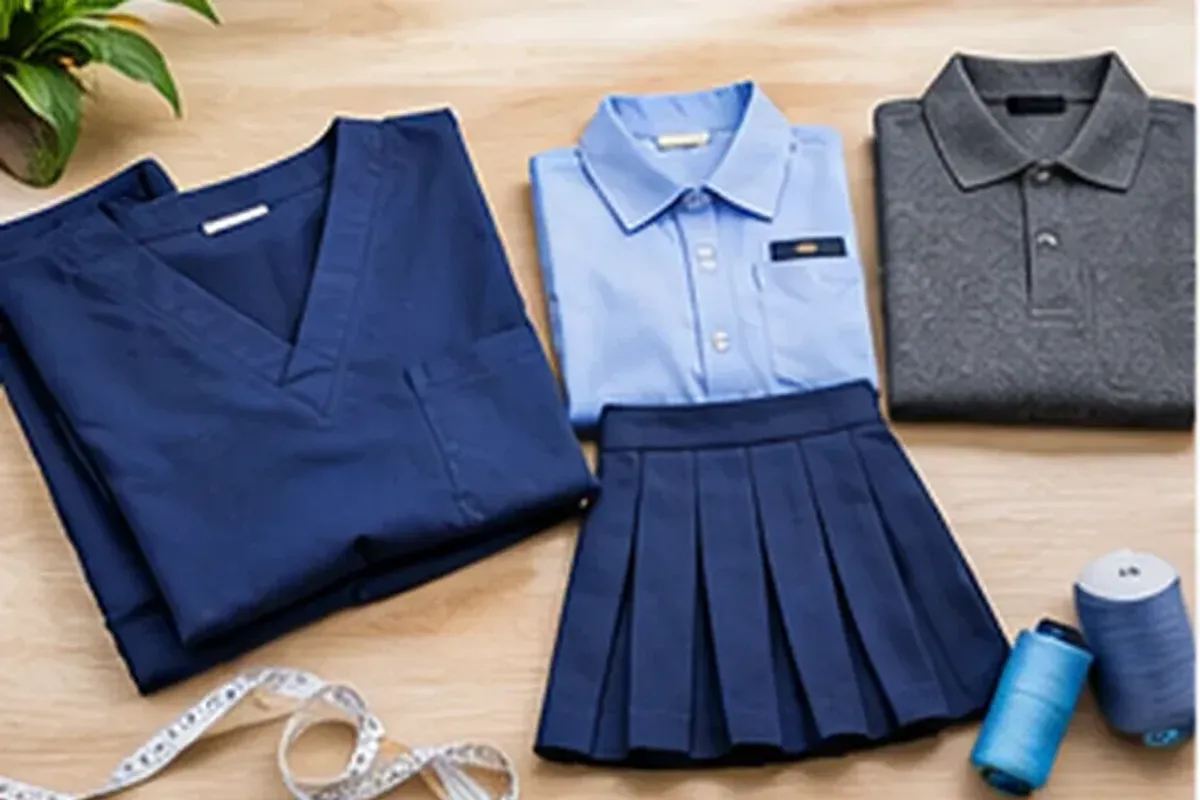
End of year uniform stock is not a problem to clear but the first input to next year’s order. A careful count by garment and size, followed by a decision on what carries forward, tells you exactly how much less to buy for the new year and which sizes you overbought. Shops that skip this step tend to repeat last year’s mistakes in the next opening order.
Step one: count everything by garment, style and size
Before any decision, know what you hold. Count the stockroom, the shop floor and any stock held at schools or fitting events. Record each garment by style, colour, logo and size.
Separate stock into three groups as you count:
- Sellable as new. Clean, packed and in a current style.
- Shop-soiled. Tried on, unpacked or marked, but still a current style.
- Obsolete. A style, logo or colour that the school no longer lists.
Obsolete stock needs its own plan, and it should never be counted against next year’s needs.
Step two: decide what carries forward
Most end-of-year stock is still useful, because school uniforms rarely change from one year to the next. The question is whether each item will sell before it ages on the shelf. Use the garment’s character to decide.
| Garment | Carry forward? | What to watch |
|---|---|---|
| Shirts, blouses, polo shirts | Yes | Packaging yellowing on white garments; check packs before the new year |
| Trousers, skirts, pinafores | Yes | Small waists that may not sell again for years |
| Knitwear and sweatshirts | Yes, if the season matches | Stock bought for winter may wait most of a year to sell |
| Blazers | Yes | Large senior sizes that move slowly; keep them, but buy none |
| Summer dresses and shorts | Yes, if the school year begins in warm weather | Otherwise they wait until the next warm season |
| PE kit and house tops | Yes | House colours; check the school has not renamed or changed houses |
| Leavers’ hoodies | No | Each is made for one year group and one date |
Leavers’ hoodies are the clear exception. They carry a year and often names, so any surplus has no future market and should be ordered closely in the first place.
Step three: turn the count into next year’s order
With carried-forward stock known, next year’s opening order becomes a subtraction:
- Estimate next year’s need for each garment and size from the roll and your sales records.
- Subtract the sellable stock you are carrying forward.
- Check the remainder against the minimum for each style.
- Where the remainder is below the minimum, decide whether to order the minimum, move quantity from another size of the same style, or skip that style for now.
Sizes can be mixed within a style, so the minimum does not force you to buy more of an overstocked size. It applies to the style as a whole: 50 pieces for woven garments and 100 for knitwear and sportswear. Our minimum order and samples page explains what counts as one style.
What to do with shop-soiled and obsolete stock
Shop-soiled garments can often be repacked and sold as new, or offered at a lower price at the end of term. Decide quickly, because they do not improve with age.
Obsolete stock is harder. Some shops sell it to families for whom an older style is still allowed during a changeover period. Others pass it to charity uniform schemes, where the school allows it. Whatever you choose, record why it became obsolete. If a logo change or a new colour caught you with stock, that is a lesson for how far ahead you buy logo items.
Reading the lessons from the count
The end-of-year count is your clearest view of how well the year’s plan worked. Look for patterns:
- Sizes with large leftovers in several garments suggest your size ratio was set too wide.
- Leftovers in one garment only point to a habit specific to it, such as families sizing up on jumpers.
- No leftovers at all, combined with lost sales, means you bought too lightly and should add depth.
Write these notes down beside the count. When you send next year’s enquiry, they turn a guess into a plan. If you supply knitwear, our knitted jumpers and cardigans page shows the styles that most often carry across a summer. Send us your carry-forward figures and next year’s needs, and we will quote the gap style by style.
Questions buyers ask
Is it worth discounting uniform stock at the end of the year?
Only for stock unlikely to sell at full price, such as shop-soiled items or a style the school is phasing out. Current, clean uniform will usually sell next year, so discounting it simply reduces the margin on garments you would have sold anyway.
How should end-of-year stock be stored over the break?
Keep it packed, dry and away from direct sunlight, sorted by school, garment and size. Clear labelling on each carton saves time at the start of the next year, when you need to find sizes quickly during the busiest weeks.
Should next year’s order wait until the end-of-year count is done?
Ideally the count comes first, but lead times may not allow it. A practical approach is to place the core order early using a rough count, then adjust the follow-up order once the full end-of-year figures are in.