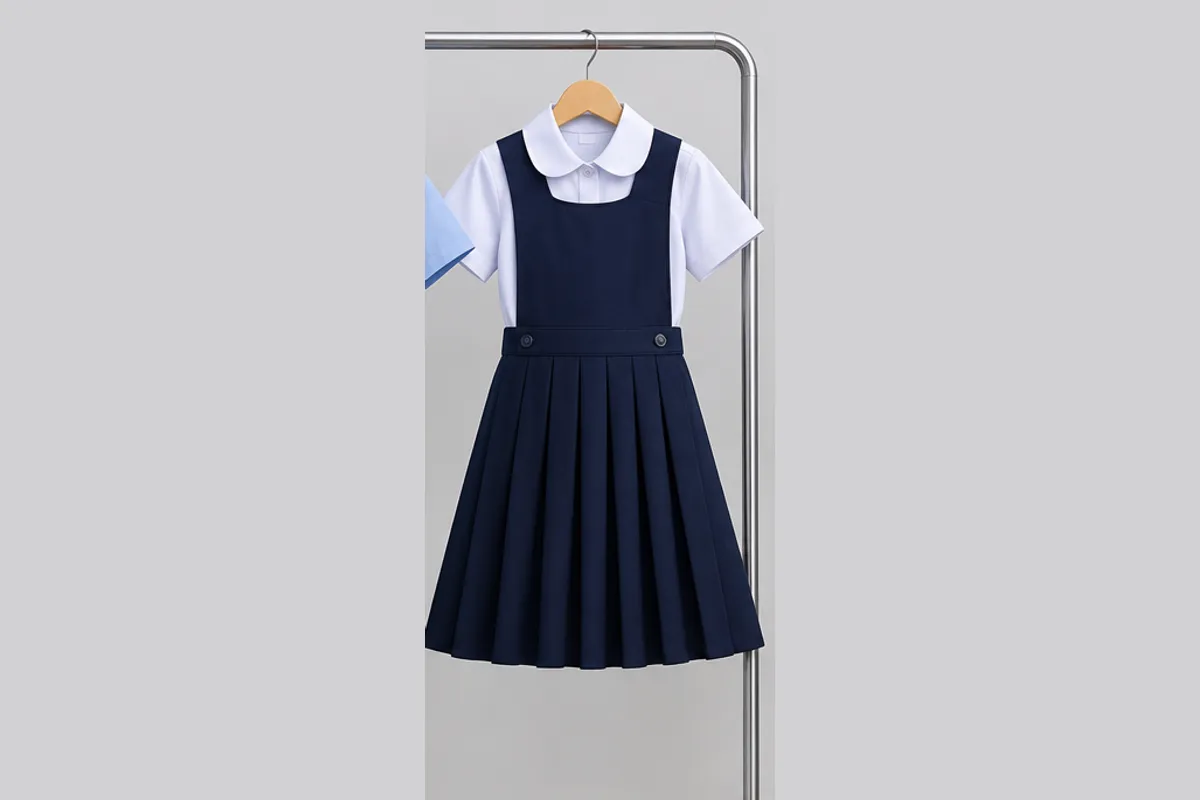
A pinafore sample check is the step where you confirm the garment is right before bulk cutting starts: colour, fabric, measurements, construction and how it behaves when worn. Do it in five passes, write down every change you want, and send one clear reply. Once you approve the sample, bulk production follows it, so time spent here prevents problems on hundreds of garments later.
We make a sample of each style in your colours, with your logo or label, and bulk starts only after your approval.
Pass 1: colour
Look at the sample in daylight, beside the reference you sent and the garments it will be worn with.
- Does the shade match your reference, or the approved swatch?
- Does it sit well beside the school’s skirt, trousers and knitwear?
- Are the zip tape, buttons and thread close enough in shade?
Avoid judging colour under shop or office lighting alone; it can hide differences. If the school has a uniform officer or governor who signs off colours, include them at this stage, because changing a shade after bulk fabric is dyed is far harder than adjusting a swatch.
Pass 2: fabric
Handle the fabric and compare it with what you expected.
- Is the cloth the one confirmed in the quotation, poly-viscose or polyester twill?
- Does the weight feel right against your current garments?
- Do the pleats hang straight?
Pass 3: measurements
Lay the sample flat and measure against the size chart agreed for your order.
| Measurement | Where to take it |
|---|---|
| Chest | Across the front, armhole to armhole, doubled |
| Length | Highest shoulder point to hem |
| Waist | Across the waist seam or waistband, doubled |
| Strap length | Bib top or shoulder to the back waist, on bib styles |
| Neckline depth | Shoulder line to the lowest point of the neckline |
| Hem allowance | Depth of the turned-up hem, if a let-down hem was specified |
Small differences are normal in sewn garments. Agree with us how close is close enough, and flag anything beyond that.
Pass 4: construction
Turn the sample inside out and look closely.
- Pleats: count, depth and stitch-down as specified
- Seams: finished, straight and free of loose threads
- Waist seam: flat where pleats join the bodice
- Fastenings: buttons secure, buttonholes neat, zip smooth
- Neckline and armholes: lying flat, facings tacked down
- Logo: position, size, thread colours and the back of the embroidery
- Labels: your neck label, size label and care label with the agreed wording
Pass 5: wear test
If you can, put the sample on a child of the right size over the blouse you sell. Ask them to sit on the floor, raise their arms and do up the fastenings themselves. Note anything that pulls, gapes or slips. If not, use a mannequin and move the garment by hand to see how it falls. Wash the sample once if you can spare it, following the care label, and look again at the pleats, the colour and the seams after it dries.
Sending your comments
Group your notes by pass and by size. Photographs with arrows help. Say clearly whether you approve the sample, approve it subject to small changes, or want a revised sample. We manufacture in India and adjust the pattern or method as needed, then confirm the changes before bulk. Our fabrics and colour matching page explains how the colour standard is set, and you can see the styles on our school pinafores and tunics page. The approval process sits within the wider ordering steps on our page on how to order.
Keep the approved sample. It is your reference for checking the delivered goods and for every repeat order.
Questions buyers ask
Should we ask for samples in more than one size?
For a new pinafore, a small and a large size show whether the pattern grades well, especially the length and neckline. It adds a little time but catches problems at both ends of the range.
What if the colour is close but not exact?
Say so, with your reference beside the sample in a daylight photo. We can adjust the shade and send a new swatch. Agree it before bulk, because the bulk fabric follows the approved shade.
Can we approve a sample by photograph?
Photos help with comments, but colour and handle are hard to judge on screen. Approving the physical sample in your hands is safer, especially for a first order or a new colour.