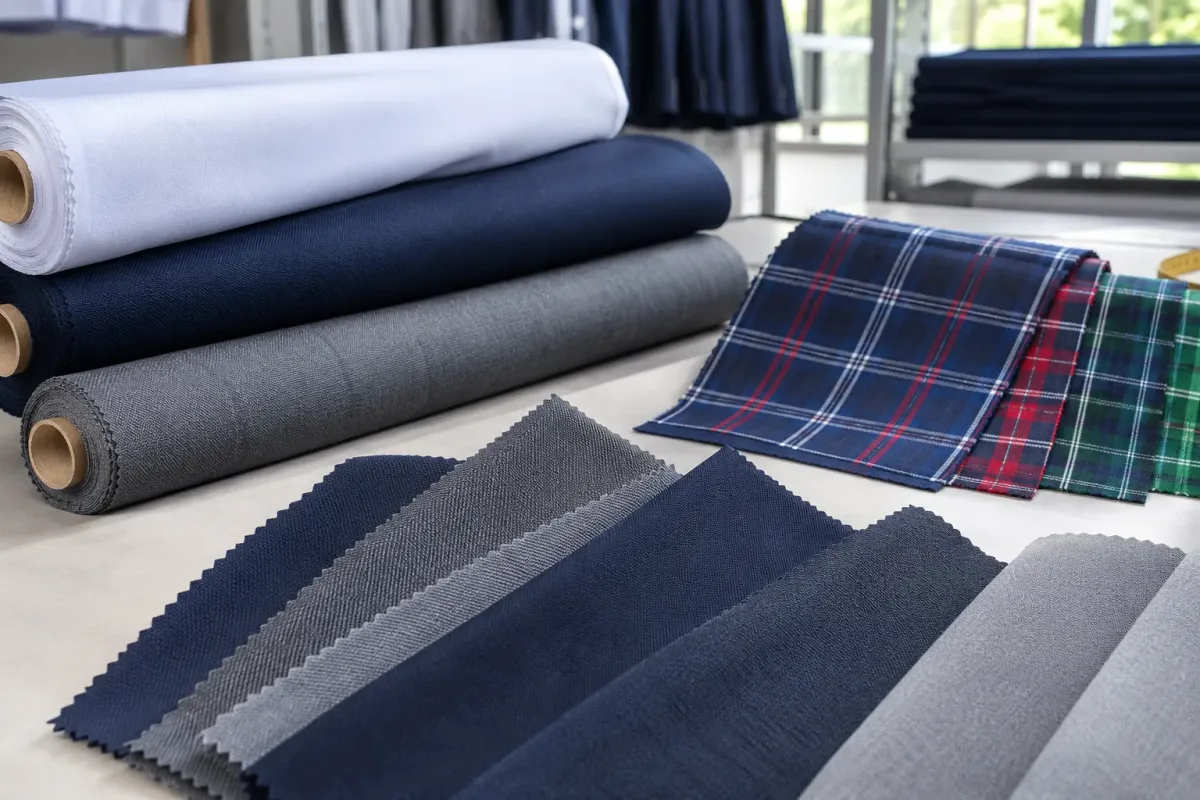
School jumper bobbling happens when short fibres work loose from the yarn surface during wear and washing, then tangle into small balls that cling to the knit. All knitted jumpers bobble to some degree, whatever the fibre. The amount depends on the yarn, how tightly it is spun and knitted, and how the jumper is worn and washed.
We do not publish pilling ratings for our knitwear. What follows is general background to help you judge a sample and answer questions from families.
How a bobble forms
A spun yarn is made of many short fibres twisted together. Friction teases some fibre ends out to the surface. Those loose ends rub together, twist round each other and form a small ball. If the fibres are strong, as synthetic fibres usually are, the ball stays anchored to the knit rather than falling off. That is why synthetic and blended knitwear can keep bobbles visible until they are removed.
Where school jumpers bobble first
- Underarms and sides, where the arms rub the body
- Cuffs, which rub on desks and are pulled over hands
- Front hem, rubbed by bag tops and desk edges
- Across the chest, under bag straps
- Seat of a long jumper, if pupils sit on the hem
What affects bobbling
| Factor | More bobbling | Less bobbling |
|---|---|---|
| Fibre length | Short fibres | Longer fibres |
| Yarn twist | Loosely spun, soft yarn | More tightly spun yarn |
| Knit | Loose, open knit | Firm, close knit |
| Surface | Brushed or fluffy | Smooth |
| Washing | Hot, long, mixed with rough items | Gentle, inside out, similar items |
| Wear | Rubbing against bags and Velcro | Less friction |
These factors pull in different directions. A very soft yarn feels pleasant but may bobble sooner; a firmer one may bobble less but feel less soft. The balance is chosen on the sample.
Acrylic and cotton-acrylic compared
Both yarns are used for school knitwear and both can bobble. Acrylic fibres are strong, so bobbles that form tend to stay attached until removed. Cotton-acrylic includes cotton fibres, which are weaker and can break away, though the acrylic part still behaves as acrylic. In practice, how a particular yarn is spun and knitted matters more than the fibre name alone. That is why we suggest comparing samples rather than relying on a fibre label.
Checking a sample for bobbling
You cannot reproduce a full term of wear on a sample, but you can spot obvious differences:
- Rub the underarm area of the sample against itself for a minute and look for fluff
- Rub the cuff on a rough surface, like a wooden desk, and compare with your current jumper
- Wash the sample once inside out on a gentle cycle and look at the surface again
- Compare the surface firmness of the sample and your current jumper by touch
- Ask staff who see worn jumpers which areas bobble first, and test those
Our fabrics and colour matching page explains how yarn is confirmed with colour on the sample.
What shops can say to families
Bobbling is a normal sign of wear on knitwear rather than a fault. Shops can suggest washing inside out on a gentle cycle, keeping jumpers away from Velcro and zips, drying flat, and removing bobbles with a fabric shaver rather than pulling them off. A jumper cared for this way looks tidier for longer.
We manufacture in India and make every repeat order to the same approved sample, so the yarn you approve for surface and feel stays the same. If bobbling has been a concern with your current knitwear, send one of those jumpers and we will quote your knitted jumpers and cardigans per style, by fabric, quantity and branding.
Questions buyers ask
Does bobbling mean the jumper is poor quality?
Not on its own. Every knitted jumper bobbles to some extent. Heavy bobbling after very little wear is worth investigating, but a few bobbles at the underarms after weeks of daily wear are normal.
Is it safe to shave bobbles off a school jumper?
Yes, with a fabric shaver used lightly on a flat surface. Pulling bobbles off by hand drags more fibre out and can make the area worse. Shave gently and avoid the stripes and badge.
Do darker jumpers show bobbles more?
Bobbles catch light and can look paler against a dark colour, so they are more visible on navy, black or bottle green. The amount of bobbling is the same; only how noticeable it is changes.