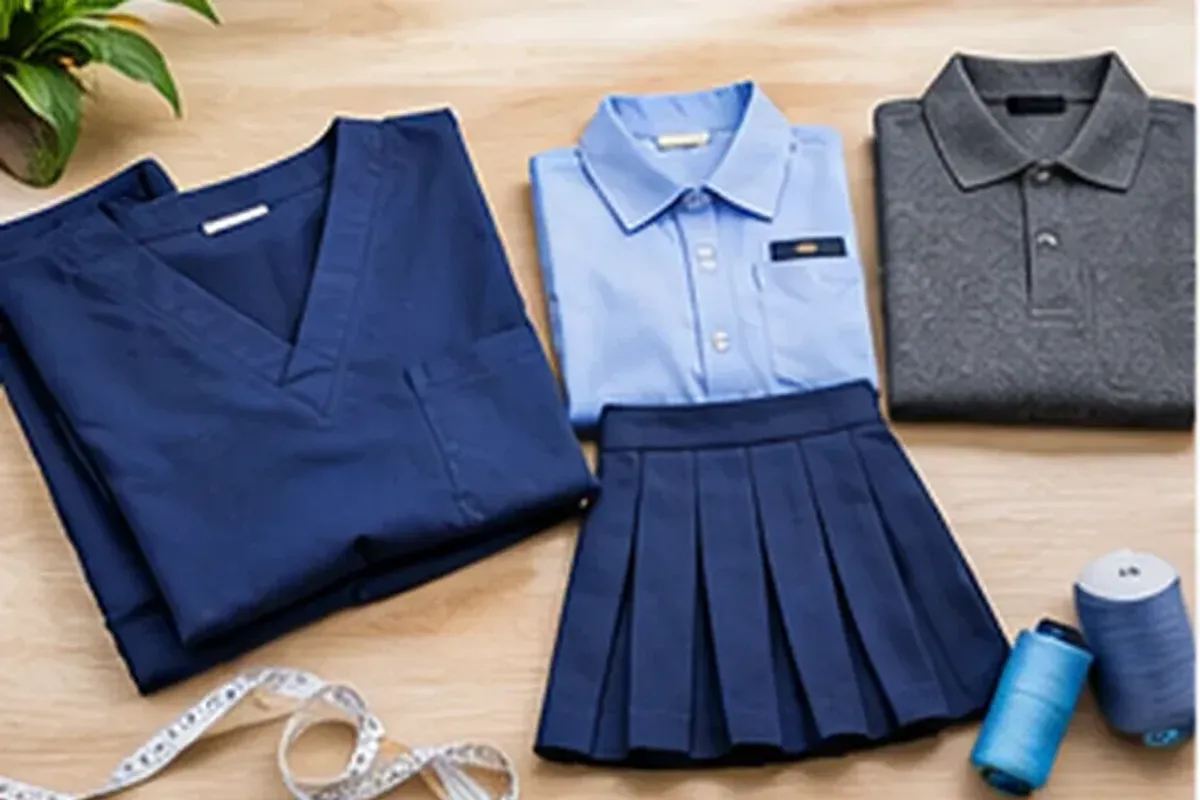
Growing school uniform stock has to be planned a year ahead of the school itself: each new year group brings new sizes and sometimes new garments, while existing year groups move up into larger sizes. A school opening with its youngest classes and adding one year group a year will need a different size range, a different garment list and larger quantities every year until it is full. Planning this growth in advance keeps orders steady and avoids a scramble each time a new year group arrives.
How growing schools change their uniform needs
Growth comes in a few patterns, and each one affects stock differently.
Adding a year group each year. A new school often opens with its first classes and fills upward. Each year, the oldest students move into sizes the shop has never needed for this school.
Adding a class within each year group. A popular school expands its intake. Sizes stay the same, but depth rises.
Adding a new phase. A primary school adds a secondary section, or a nursery class is added below reception. New garments appear, such as blazers for seniors or smocks for nursery children.
Opening a second site. The uniform may be shared, but stock must be split between locations.
Projecting the size range forward
The core of planning for a growing school is a simple forward projection. List each year group the school will have over the next few years, and the sizes it will wear.
| School year | Year groups open | Size bands needed (example) | New garments |
|---|---|---|---|
| Year 1 of operation | Youngest two year groups | Age 3–4 to 5–6 | Nursery-style items, polos, trousers, pinafores |
| Year 2 | Three year groups | Age 3–4 to 7–8 | Add jumpers in larger sizes |
| Year 3 | Four year groups | Age 3–4 to 9–10 | Possibly a sports polo for older students |
| Year 4 | Five year groups | Age 3–4 to 11–12 | Upper sizes in every garment |
| Later | Secondary phase opens | Age 11–12 and up | Blazers, senior shirts, tracksuits |
The table is an illustration. Swap in your school’s actual opening plan, and update it each year as admissions are confirmed.
What changes in each year’s order
As the school grows, each year’s order differs from the last in three ways.
- New upper sizes. The oldest year group moves into a size the shop has not stocked before. These need adding to the order a year in advance, along with an estimate of depth.
- Thicker middle sizes. As more year groups pass through, the middle sizes accumulate demand from several cohorts.
- New garments at transition points. A secondary phase may add blazers, senior collar shirts, tracksuits or leavers’ hoodies.
The smallest sizes stay roughly constant if the intake is stable, but grow if the school is expanding its entry year too.
Keeping orders efficient during growth
In the early years, a growing school is small. Each style may need fewer pieces in a year than the minimum: 50 per style for woven garments and 100 for knitwear and sportswear, with sizes mixed. Two approaches help.
- Order ahead for the next year group. Pieces bought to reach the minimum this year can be the next year group’s stock. Choose sizes they will need, rather than adding depth to sizes already well stocked.
- Keep the style list stable. Every new style starts its own minimum. Where possible, let the uniform list grow by sizes rather than by new garments until the school is larger.
Repeat orders follow the approved sample, so stock bought across several years still matches in fabric and colour.
Questions to ask the school each year
- Which year groups will be open next year, and how many classes in each?
- Are any new garments planned for older students?
- Is a second site or new phase planned, and when?
- Has the expected intake changed?
- Are there any changes to the uniform list or logo?
The answers feed directly into the next year’s projection. A school that shares its growth plan early gets more reliable stock, and the shop avoids paying for rushed top-ups.
Our schools and school groups page covers how we work with schools ordering directly, including those still filling their year groups. Younger year groups often start in nursery and early years garments, so our nursery and kindergarten uniforms page is a good reference in the first years. Send us your growth plan and current roll, and we will quote each style by fabric, quantity and branding.
Questions buyers ask
When should a growing school’s new sizes be ordered?
Order them in the main order before the year when the oldest students will need them. Children often move into the next size during the year, so having the new top size on the shelf from the start of that year avoids gaps.
Do growing schools need a bigger safety margin?
Usually yes. Enrolment for a new or expanding school is less predictable, and late admissions are common. Keep some budget back for a follow-up order once numbers settle, rather than putting a large margin into the first order.
Should a growing school change its uniform as it gets bigger?
That is the school’s decision. Many keep the same uniform and simply add sizes and garments for older students. Keeping the core garments unchanged makes stock planning easier, because existing stock stays sellable as the school grows.