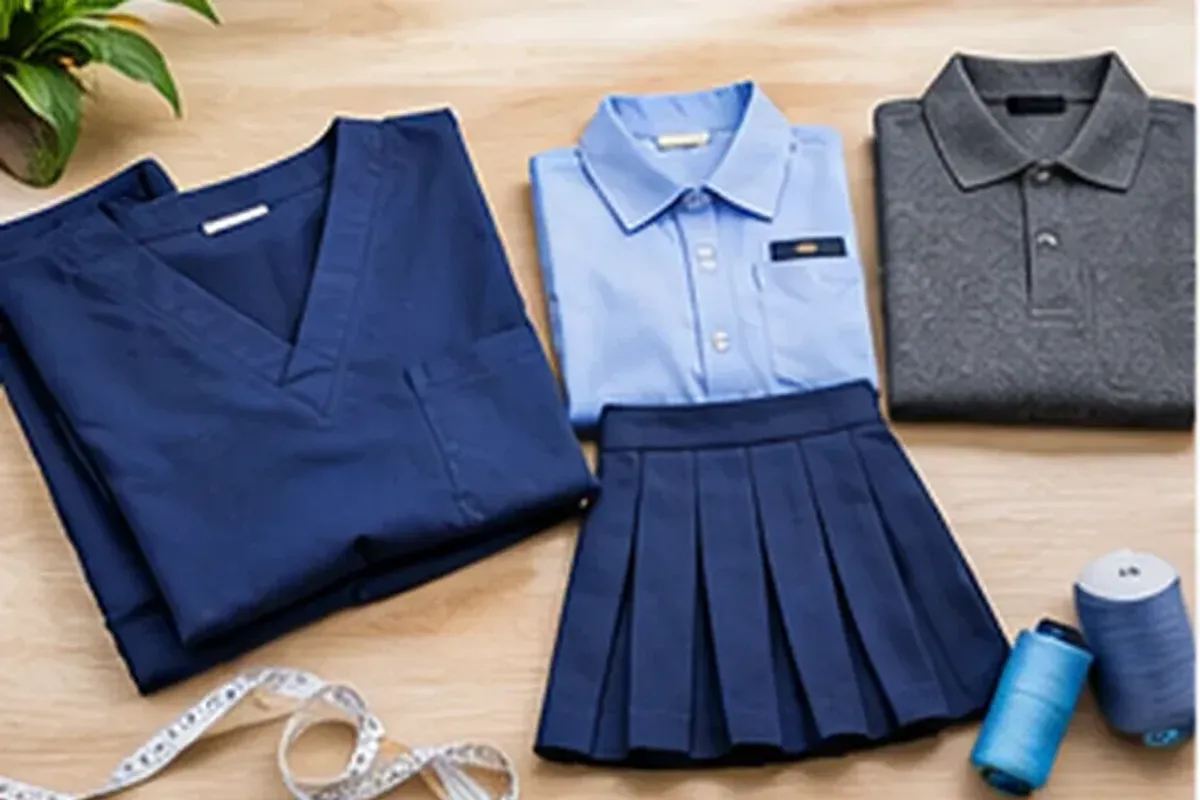
Uniform stockroom space planning means checking, before you order, that the cartons will physically fit, then staggering deliveries so bulky garments do not all arrive at once. Knitwear, sweatshirts and blazers take far more shelf space than shirts or PE kit, so a shop that orders everything for one delivery date can find its back room full before half the stock has arrived.
Space is a sourcing constraint like cash or lead time. It belongs in the plan from the start.
Which garments take up the most room?
Bulk varies a lot between garment types, even at the same piece count.
| Garment | Bulk when folded and bagged | Notes |
|---|---|---|
| PE T-shirts and polo shirts | Low | Fold flat, stack high |
| Shirts and blouses | Low to medium | Often packed with card; keep flat |
| Skirts and shorts | Medium | Pleated skirts need care to keep pleats |
| Trousers | Medium | Long; shelf depth matters |
| Sweatshirts and knitted jumpers | High | Soft and lofty, cartons fill fast |
| Tracksuits and fleece jackets | High | Bulky, especially fleece |
| Blazers | Highest | Keep hanging or in deep cartons; crushing shows |
A blazer delivery of the same size as a polo delivery can need several times the space. Look at your order by bulk, not just by piece count.
How do you estimate the space before ordering?
- Ask for carton details at quotation. Carton size and pieces per carton for each style, so you can count cartons.
- Count cartons per delivery. Add them up by delivery date.
- Measure your space in carton units: how many cartons fit on each shelf bay and how much floor space you can spare.
- Compare. If a delivery is bigger than your free space, split it, or arrange temporary storage.
- Remember the existing stock. Space is what is free on the delivery day, not the empty room.
Carton details and packing are confirmed in the quotation. Our shipping and documents page covers how goods are prepared for dispatch.
How can deliveries be staggered?
Staggering by garment type matches arrivals to space and to selling time.
- First: compact year-round items such as shirts, polos and PE kit, which sell from the first day.
- Second: trousers and skirts, which fill shelves steadily.
- Third: bulky knitwear, sweatshirts and tracksuits, timed for when the weather turns, if your schools allow.
- Blazers: as late as the selling peak allows, so they spend the least time crushed in storage.
Each staggered order is a separate order, so each style in it must reach its minimum: 50 pieces per style for woven garments and 100 for knitwear and sportswear, with sizes mixed. Plan the split style by style, not by cutting every style in half.
How should the stockroom be laid out?
A layout that matches the way you sell saves time in the rush.
- Group by school for branded items, by garment for shared plain items
- Shelve by size from smallest to largest, left to right
- Keep the fastest sizes at waist height, nearest the shop floor
- Hang blazers rather than stacking them, if you can
- Keep approved samples apart from sale stock
- Leave a clear area for checking new deliveries before shelving
- Label each bay with the style code and size
Ask your manufacturer to label cartons with style and size on the outside. Then cartons can go straight to the right bay without being opened.
When space is too tight
If your stockroom cannot hold a full season, consider a short-term storage unit for the peak, delivery straight to a school for pre-ordered packs, or a smaller main order with planned top-ups. Each has a cost, so compare them with the cost of lost sales from a cramped stockroom.
If you are planning a season’s orders around limited space, send us your style list and we will quote each style with carton details, so you can count space before you commit.
Questions buyers ask
Can uniform be vacuum-packed to save space?
Some soft garments compress, but pressing can leave creases, flatten pile and mark pleats. Ask about packing options at quotation, and test any compressed garment by unpacking a sample before applying it to a whole order.
Should blazers be stored flat or hanging?
Hanging keeps shape and avoids crush marks on lapels and sleeves. If you must store them flat, use deep cartons, avoid heavy stacking, and allow a little time to hang them before sale.
How much empty space should a stockroom keep?
Enough to receive and check one delivery without moving other stock around. A clear checking area near the door makes deliveries faster and reduces mistakes in shelving.