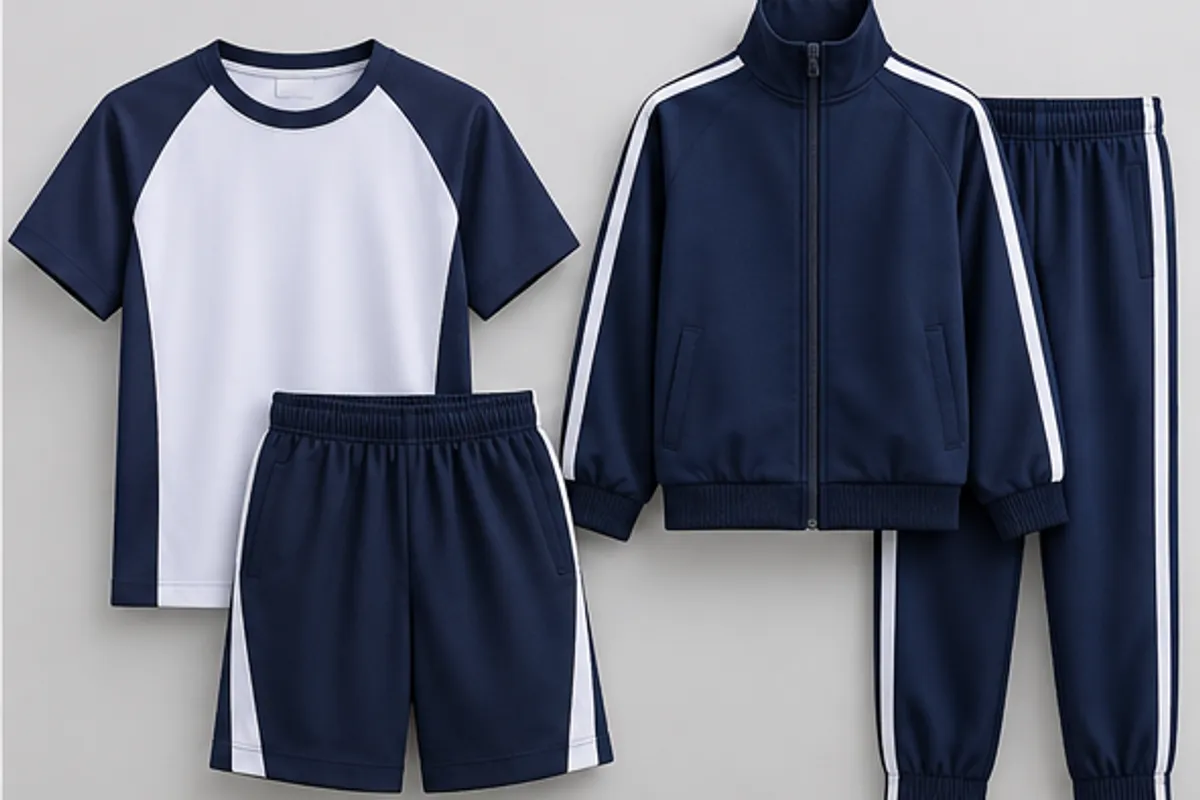
Winter tracksuit stock should be ordered so it lands on the shelf before the first cold week, not when families start asking for it. Demand for tracksuit tops, bottoms and fleece jackets rises sharply with the weather, and a reorder placed once the rush has begun will usually arrive after it peaks. Work back from your local cold-weather date, allowing for quotation, sample, production and shipping.
This post shows how to find your target date, how to build a timeline backwards from it, and what to do if you are already late.
When does winter demand start in your market?
The date depends on hemisphere and climate, and on your school calendar. These are general patterns to help you place your own date, not fixed rules.
| Market | When cold-weather demand usually builds | Note |
|---|---|---|
| UK and Ireland | October into November | Often after the autumn half-term break |
| Northern USA and Canada | October onwards | Also driven by autumn and winter sports seasons |
| Australia and New Zealand | April into May | Term 2 brings the cool months |
| South Africa | May into June | Mid-year winter; winter sport season |
| Gulf states | December to February | Mild winters; lighter layers |
Pick the week when your shop or school usually sees the first rush, then subtract two or three weeks so stock is unpacked and on the shelf in time.
Working back from the shelf date
Lead time is not published; it is confirmed in the quotation, and depends on quantity, fabric and branding. Build your plan with the confirmed time once you have it. The stages are the same every year:
- Shelf date. Stock unpacked and on display.
- Arrival. Allow time for receiving, checking and labelling.
- Dispatch from us. Add the shipping time for your chosen method.
- Production and quality check. As confirmed in the quotation.
- Advance payment. Production starts once the advance is received.
- Sample approval. For a new design, allow time to see and approve the sample.
- Quotation. Begin here, with enough slack for questions.
For a reorder of an existing tracksuit, step 6 is usually short, because the approved sample already exists. For a new fleece or a changed colourway, it is the step most likely to take longer than planned. Our how to order page sets out each stage.
What to order first
If budget or storage forces a choice, prioritise in this order:
- Fleece jackets. They have the sharpest seasonal peak and are hard to replace quickly.
- Tracksuit tops. Worn as an extra layer in cold weather as well as for PE.
- Tracksuit bottoms. Demand rises with the cold too, but more gently.
Each piece is its own style with a minimum of 100, so you cannot split one style across two deliveries below that figure. You can, however, time the three styles differently.
If you are already late
Late orders are common, especially in a first year. Some options:
- Ask whether a reduced quantity can be dispatched sooner, as confirmed in the quotation
- Discuss faster shipping for part of the order
- Take pre-orders from families so the first delivery goes straight to names
- Note the dates for next year and set a reminder to start earlier
The same approach applies whichever pieces you stock; see our school tracksuits and jackets page for the tops, bottoms and fleece jackets we make.
Tell us your shelf date and approximate quantities, and we will quote each style and confirm the lead time so you can plan the rest of the timeline.
Questions buyers ask
Should winter tracksuit stock be ordered with the start-of-year order?
It can be. Ordering everything together reduces shipments and catches the new intake, though it means holding tracksuits and fleeces through the warmer weeks. Shops with limited storage often split the winter pieces into a second order.
Do sports seasons change the timing?
Yes. A school whose main sports season falls in the cold months may need tracksuits earlier than the weather alone suggests. Ask the PE department for fixture dates and add them to your timeline.
What happens to unsold winter stock in spring?
Tracksuits and fleeces keep well when stored folded and dry, so leftover stock can carry over to the next winter. Make a note of which sizes were left and reduce them in the following order.