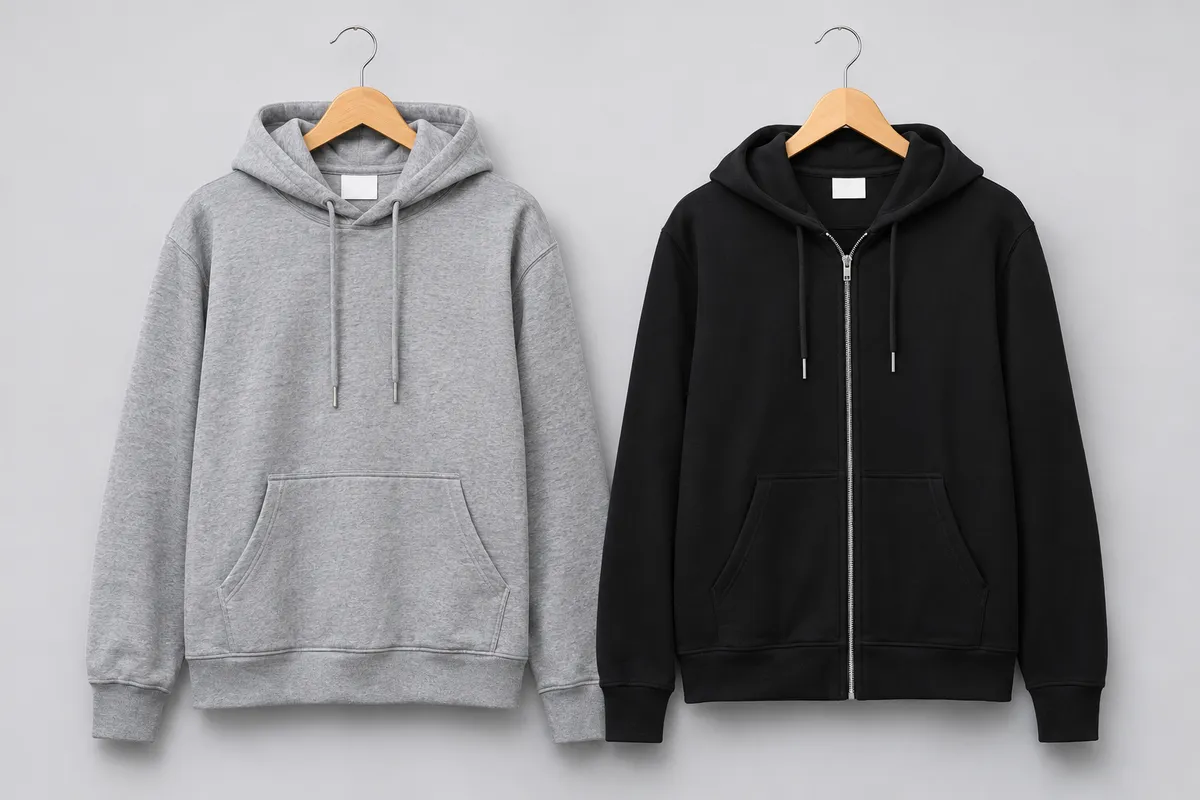
A sweatshirt and polo colour match is needed when a school wants both garments in the same shade, such as a royal blue polo under a royal blue sweatshirt. Because sweatshirt fleece and polo piqué are different knitted fabrics with different surfaces, the same dye looks slightly different on each. The way to get a close match is to send the polo as the physical reference, approve the sweatshirt colour next to it in daylight, and keep that pair as the standard for reorders.
Many uniforms avoid the problem by pairing a coloured sweatshirt with a white or contrasting polo. When both garments are in one colour, the match is noticed at the neck and cuffs every day.
Why do fleece and piqué look different in one colour?
Three things change how a colour reads, even when the dye is the same:
- Surface texture. Piqué has a small raised pattern that catches light in tiny shadows. Fleece has a flatter outer face. A textured surface usually looks a touch darker.
- Fibre and yarn. Polos and sweatshirts may use different blends or yarns, and different fibres take up dye differently.
- Lighting. Two fabrics can match under shop lights and drift apart in daylight. This effect is common when fabrics are dyed separately.
None of this means a match is impossible. It means a match has to be judged by eye, on the real garments, under more than one kind of light.
Which approach suits your uniform?
| Uniform design | What to match | How to approach it |
|---|---|---|
| Polo and sweatshirt in the same colour | Polo body against sweatshirt body | Send the polo; we match the fleece to it |
| White polo, coloured sweatshirt | Sweatshirt against other coloured items, such as PE kit | Match to the PE kit or a swatch |
| Coloured polo with contrast sweatshirt | Neither to each other | Match each to its own reference |
| Polo collar tipping in the sweatshirt colour | Tipping stripe against sweatshirt | Send both; compare the stripe with the fleece |
| House-colour polos, one school sweatshirt | Sweatshirt only | Match to the school’s main colour reference |
Sending the right reference
The polo you send should be one that represents what families see: a garment from current stock, not a faded one from lost property. If polos are bought from more than one source and vary in shade, choose the one the school considers correct and say so.
If you cannot send a polo, a fabric swatch or a colour-standard number is the next choice, as our fabrics and colour matching page explains. A colour name alone, such as “royal”, is not enough, because every maker’s royal is slightly different.
Approving the match
When the sweatshirt sample and matched colour arrive:
- Lay the polo and sweatshirt together flat, then with the polo worn under the sweatshirt as it will be.
- Look in daylight, near a window but out of direct sun.
- Look under indoor light, such as a classroom or your shop.
- Check the ribs at the neck and cuffs, which sit closest to the polo.
- Step back. Judge from a few paces away, as people will see it, not only up close.
- Approve or comment in writing, saying whether the sweatshirt should be lighter, darker, warmer or cooler.
Once approved, the colour is the reference for every reorder. Small differences between dye lots can occur in any fabric, so keep one approved sweatshirt and polo pair aside to compare future deliveries against.
A checklist for colour-matched pairs
- Polo reference from current stock.
- Which colour the school considers correct.
- Rib colour as well as body colour.
- Daylight and indoor-light comparison.
- A reference pair kept for reorders.
We manufacture in India and match the fleece to your reference before cutting. Send your polo with your enquiry, and we will quote your school sweatshirts and send the matched colour for approval.
Questions buyers ask
Can the polos and sweatshirts both be made by the same maker?
Yes. If both garments are on your order, we match each to the same reference, which usually brings them closer together. Each is still a separate style with its own minimum and its own sample.
How close is close enough for a colour match?
The test is whether the pair looks like one colour when worn, from normal viewing distance, in daylight. Slight differences under very close inspection are normal between different fabrics and rarely noticed by families.
What if the existing polos vary in colour?
Choose the polo the school considers correct and send that one. Matching the sweatshirt to a middle shade among varying polos is a compromise that can leave it slightly off against all of them.