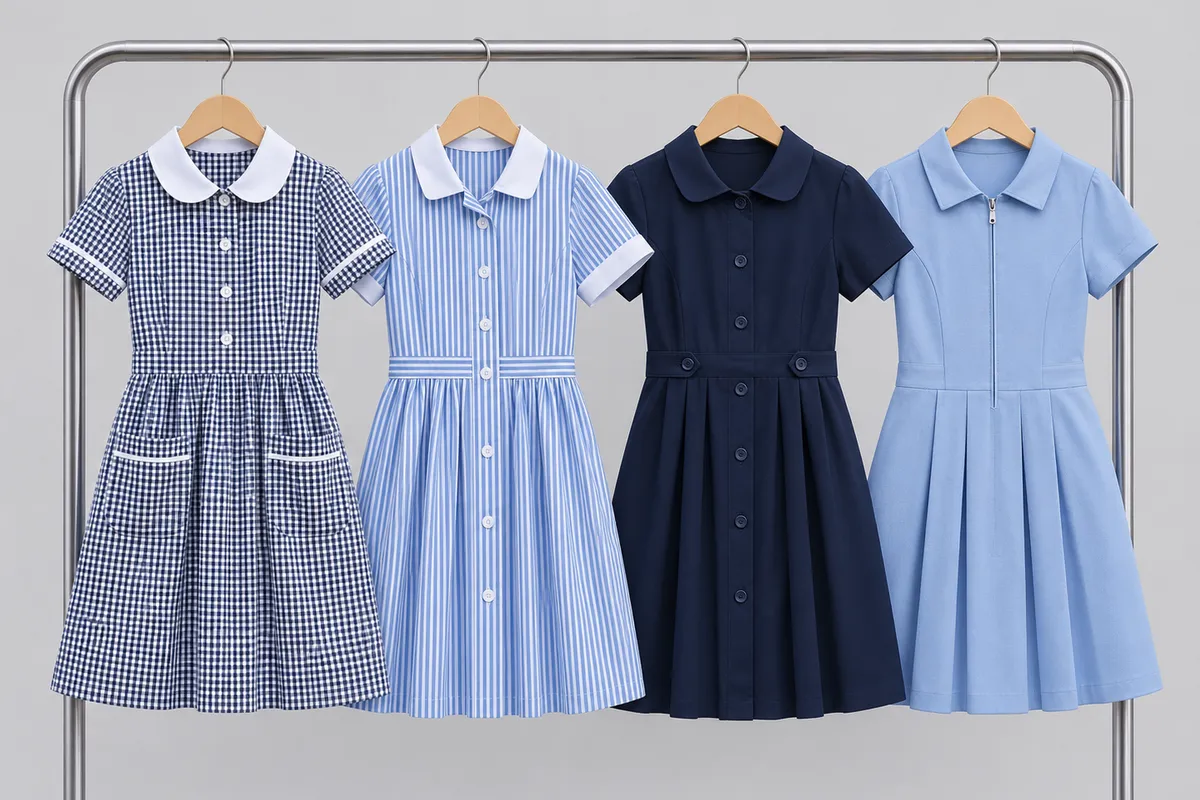
Uniform changeover dates are the days on which a school switches from its summer uniform to its winter uniform and back again. Most schools set a fixed date for each switch with a flexible period either side, during which students may wear either set. Writing those dates into the uniform policy early lets families, shops and suppliers plan their buying and stock around them.
Fixed date, flexible window or weather-based?
Schools tend to use one of three methods. Each has a different effect on stock.
| Method | How it works | Effect on stock and families |
|---|---|---|
| Fixed date | Winter uniform from a named day, summer uniform from another | Clear for families; shops know exactly when demand peaks |
| Flexible window | Either set allowed for a few weeks around the switch | Spreads buying; less pressure in the first week |
| Weather-based | Head teacher announces the change when the weather turns | Fits local conditions; harder for shops to plan |
A fixed date with a short flexible window is the most common compromise. It gives a clear target while allowing for an early cold spell or a warm start to the new term.
Which garments change and which stay?
A changeover is simpler if only a few garments switch. A typical rule might be:
- Switch: short-sleeve shirts or polos to long-sleeve; summer dresses to pinafores or skirts with a blouse; school shorts to trousers.
- Add: knitted jumper or sweatshirt, blazer, fleece jacket, tracksuit for outdoor PE.
- Stay: PE T-shirts and shorts, house T-shirts, the school logo and colours.
Listing the garments in these three groups helps families see what they need to buy, and gives shops a short, clear list of seasonal lines. The shorter the switch list, the smaller the cost and effort of each changeover for everyone involved.
Writing the changeover into the uniform policy
A clear policy line saves many questions at the school office. A model wording a school might adapt:
- State the date winter uniform becomes required.
- State the date summer uniform becomes required again.
- Give the length of the flexible window, if any.
- List the garments that change.
- Say whether a fleece or tracksuit may be worn on cold days during the summer period.
Our page for schools and school groups covers how we support a school ordering both sets, and the school polo shirts page shows the short- and long-sleeve polos that often sit either side of the change.
Telling shops and suppliers early
The changeover drives the busiest weeks of a uniform shop’s year. Seasonal garments need to be in stock before the window opens, not on the day it closes. Lead time is confirmed in the quotation, so a shop must count back from the opening of the window, allowing for sampling, production, quality check and shipping.
A school can help by:
- Publishing both changeover dates at the start of the school year
- Sending the dates to every shop that stocks its uniform
- Giving notice of any garment being added or dropped
- Sharing roll numbers so shops can estimate quantities
- Keeping the dates the same each year where possible
Consistency matters. Moving the date by a few weeks from one year to the next can leave a shop with winter stock arriving after families have already bought elsewhere.
We manufacture both summer and winter garments in India and quote each style by fabric, quantity and branding. If you are fixing changeover dates and want stock in place before them, send us the garment list and the dates.
Questions buyers ask
Can students wear a sweatshirt with summer uniform on a cold day?
Many schools allow it, and it is worth stating in the policy. A sweatshirt or fleece over a short-sleeve polo is a common compromise during the flexible window or on unseasonably cool days.
What happens to unsold summer stock after the changeover?
Shops usually keep it for the next season, because summer garments in a consistent specification do not date. Repeat orders are made to the same approved sample, so next year’s stock matches what remains on the shelf.
Do schools in hot countries need a changeover at all?
Some do not. Schools with little seasonal change often keep one uniform all year, perhaps adding a sweatshirt for a short cool spell. Others in places with a distinct cool season still switch to long sleeves.